
| Provenienza | South Africa |
|---|---|
| Famiglia | Crassulaceae |
| Esposizione | Direct sun at least half a day from early spring to autumn. Come back when the temperature approaches ten degrees. |
| Annaffiature | Regular (every 10 days) from spring to late summer. Check that the earth is completely dry before watering again. |
| Concimazioni | In spring and autumn |
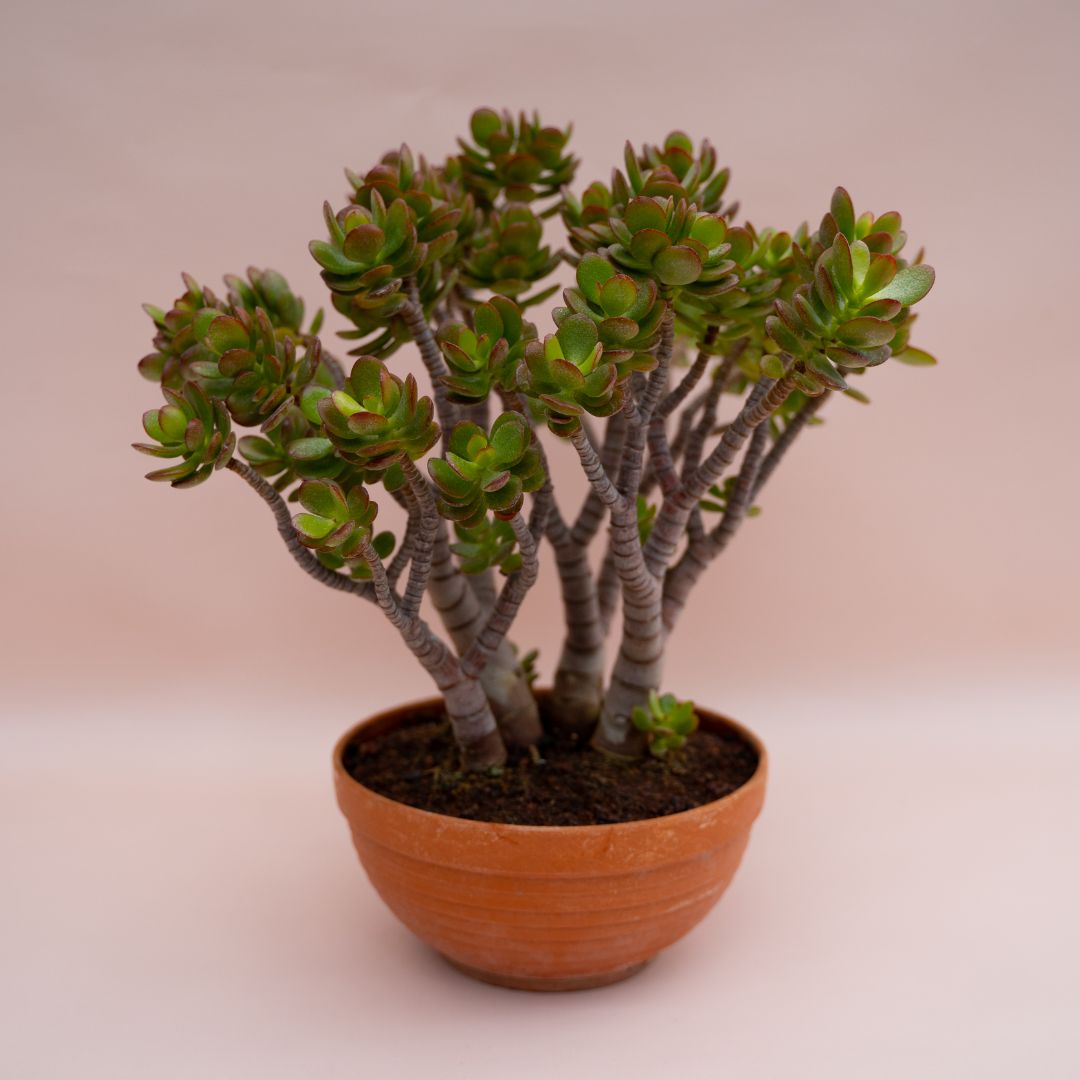
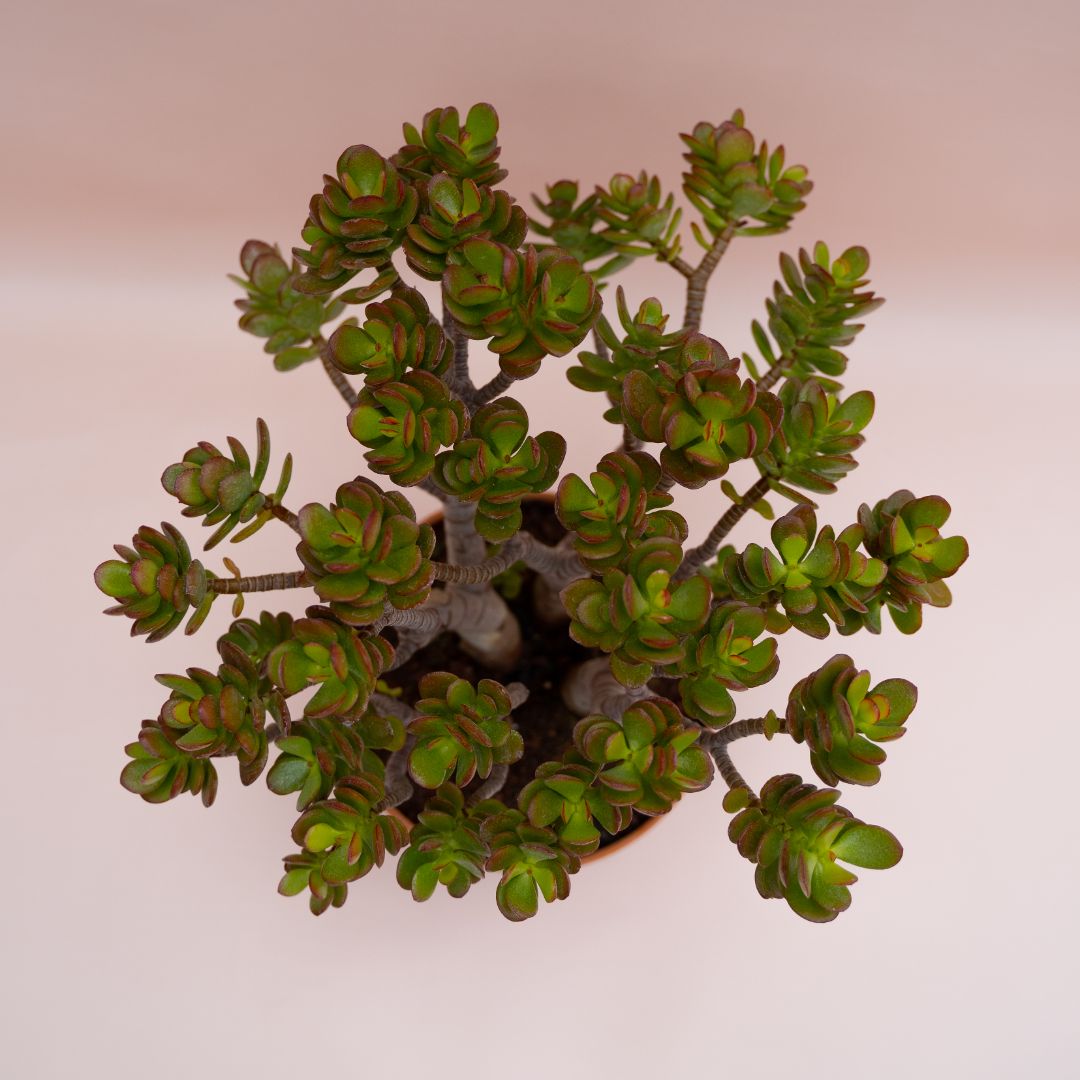
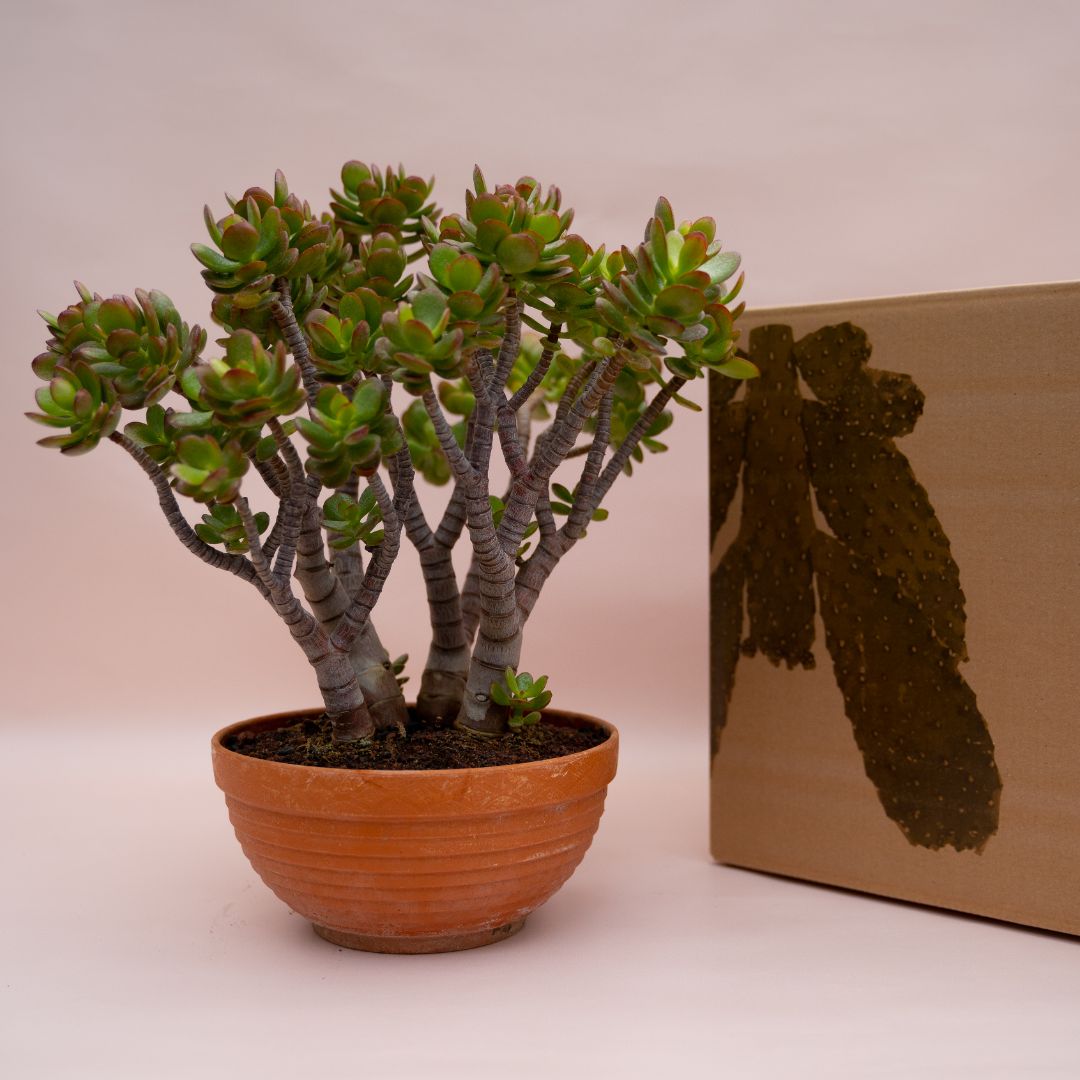

Crassula portulacea minor Ø 20 cm
Belonging to the family of Crassulaceae, this Crassula portulacea minor plant is supplied in a Ø 20 cm pot with a label indicating its botanical name.
€58,00
The Crassula portulacea minor, a variety of the Crassulaceae family, is a succulent plant commonly appreciated for its ornamental appearance. Native to South Africa, this plant is characterized by fleshy, glossy, deep green leaves that can develop a reddish hue at the edges when exposed to sunlight.
Regarding cultivation conditions, the Crassula portulacea minor prefers direct sunlight for at least half a day, from early spring through autumn. It is crucial to bring the plant indoors when temperatures approach ten degrees Celsius to protect it from the cold. Watering should be regular, approximately every 10 days, from spring until the end of summer. It is recommended to ensure the soil is completely dry before proceeding with the next watering, as the plant is prone to root rot in constantly moist soil.
The ideal soil should offer good drainage, and a cactus or succulent mix is often suitable. It is helpful to repot the Crassula every two to three years in spring to ensure healthy growth. This species grows slowly but can reach significant sizes if cultivated in the right environment.
Fertilization of the Crassula portulacea minor should occur in spring and autumn using a specific fertilizer for succulents and cacti. Although resistant to many pests, it is important to watch out for potential mealybug infestations. The plant may occasionally flower, producing small white or pale pink flowers arranged in clusters. Beyond its decorative value, this plant is appreciated for its low maintenance and adaptability to various indoor and outdoor environments.