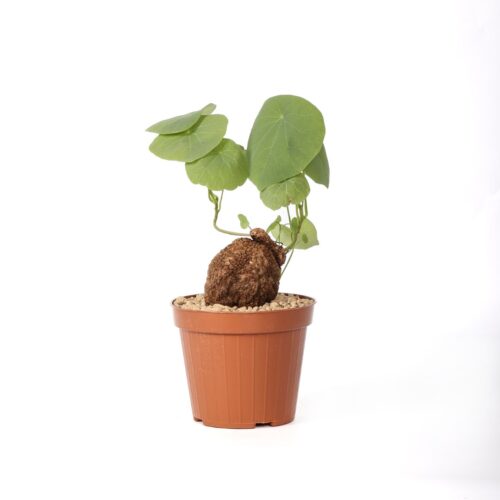
Stephania erecta is a rare and spectacular ornamental plant, prized for its distinctive caudex (swollen stem base) and heart-shaped leaves. Native to tropical regions of Southeast Asia, this plant has become highly sought-after among collectors of unusual specimens.
In this comprehensive guide, we’ll explore:
- Botanical characteristics of Stephania erecta
- How to grow it indoors or in a greenhouse
- Essential care tips to keep it healthy
- Practical advice on germination, dormancy, and more
Whether you’re a rare plant enthusiast or simply want to add a unique specimen to your collection, read on!
1. Characteristics of Stephania erecta
Appearance and morphology
- Caudex: a woody, bulbous base that stores water.
- Leaves: heart-shaped, bright green, with prominent veining.
- Flowers: small and yellow, though rarely seen in cultivation.
- Growth habit: a climbing or trailing vine with long, slender stems.
Natural habitat
Stephania erecta thrives in tropical and subtropical regions, growing in well-draining soil with moderate moisture. In the wild, it is a seasonal plant—shedding leaves in the dry season and regrowing them when rains return.

2. How to grow Stephania erecta
Ideal soil mix
- Well-draining: a blend of cactus soil (50%), perlite (30%), and sand (20%).
- Slightly acidic pH: between 6.0 and 6.5.
- Avoid waterlogging: compact soil can lead to caudex rot.
Light requirements
- Bright, indirect light: near an east- or west-facing window is ideal.
- No direct sun: can scorch the leaves.
- Grows well under grow lights: a great option for low-light spaces.
Temperature and humidity
- Ideal temperature: 20-30°C (68-86°F) in summer, never below 15°C (59°F) in winter.
- Moderate humidity: 50-60%. Mist leaves if the air is too dry.
3. Watering and fertilization
Watering guidelines
- During active growth (spring-summer): water when the topsoil is dry.
- Dormant period (fall-winter): reduce watering significantly, keeping soil nearly dry.
- Avoid overwatering: excess moisture causes caudex rot.
Fertilizer
- Balanced liquid fertilizer (e.g., 10-10-10 NPK) every 2-3 weeks during growth.
- Stop in winter: the plant is dormant and doesn’t need nutrients.
4. How to germinate Stephania erecta
Germination method
- Prepare the soil: use a light, well-draining mix.
- Plant the caudex: bury it halfway, leaving the top exposed.
- Maintain moderate moisture: mist lightly (don’t overwater).
- Warm temperatures (25-30°C / 77-86°F): a heat mat can help.
- Indirect light: avoid complete darkness.
Germination time: 2 weeks to several months, depending on conditions.
5. Dormancy period of Stephania erecta
When and how to manage it
- Dormancy begins: typically in fall, when leaves yellow and drop.
- Care during dormancy:
- Gradually reduce watering.
- Move to a cooler spot (15-18°C / 59-64°F).
- Stop fertilizing.
- End of dormancy: in spring, resume watering when new shoots appear.
6. How to care for Stephania erecta
Common issues and solutions
- Yellow leaves: overwatering or nutrient deficiency.
- Soft caudex: root rot—stop watering and repot in fresh soil.
- No growth: could be dormant or lacking light.
Pruning and repotting
- Pruning: Trim dead or overgrown stems to maintain shape.
- Repotting: Every 2-3 years, moving to a slightly larger pot.
7. Fun facts about Stephania erecta
- “Sleeping” plant: appears dead in winter but is just dormant.
- Traditional uses: used in herbal medicine in some cultures.
- Collector’s item: highly prized for its unique, decorative look.
Stephania erecta is a captivating plant that requires specific care but rewards growers with its striking appearance.
With proper attention, its caudex will grow more impressive over time, and its foliage will flourish.