Stephania suberosa: the living sculpture for your caudiciform collection
In the varied world of succulent and caudiciform plants, there are specimens that go beyond simple cultivation to become true living works of art. Stephania suberosa is one of these: a plant with an ancient and sculptural appearance, capable of fascinating at first glance and winning the hearts of true enthusiasts.
If you are looking for a rare plant, of unusual beauty and with simple yet precise needs, this article is your complete guide to discovering (and cultivating) this tropical gem.
Characteristics: a rugged caudex and a green heart
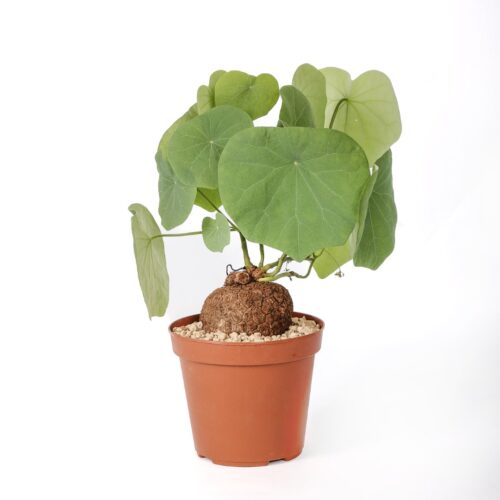
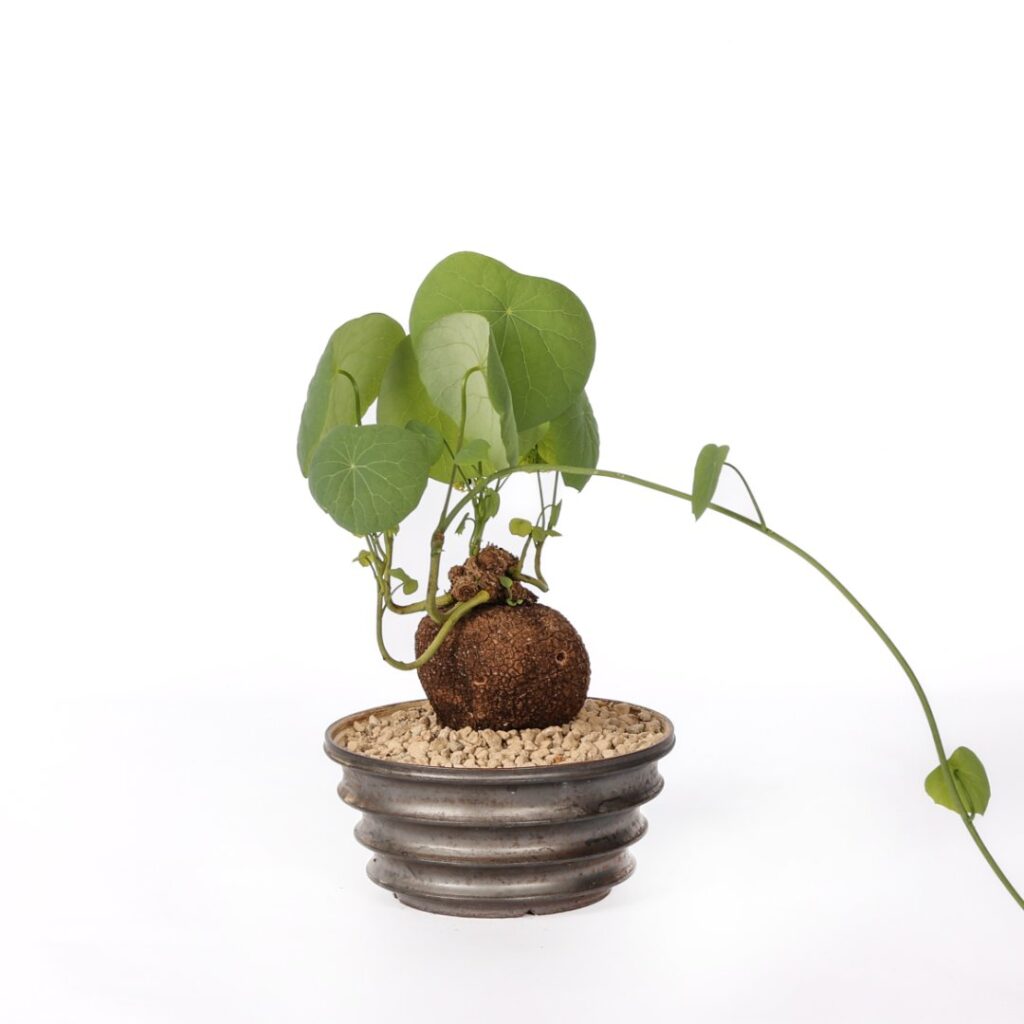
Stephania suberosa is a deciduous caudiciform plant from the Menispermaceae family. Its most distinctive characteristic, and the reason it is so sought after, is its caudex: a swollen base, underground or partially above ground, which functions as a water reserve. This storage organ is not smooth, but features a suberose bark (from which its name derives), meaning corky, thick, and deeply wrinkled, with cracks and grooves that give it a unique, ancient, and artistic appearance.
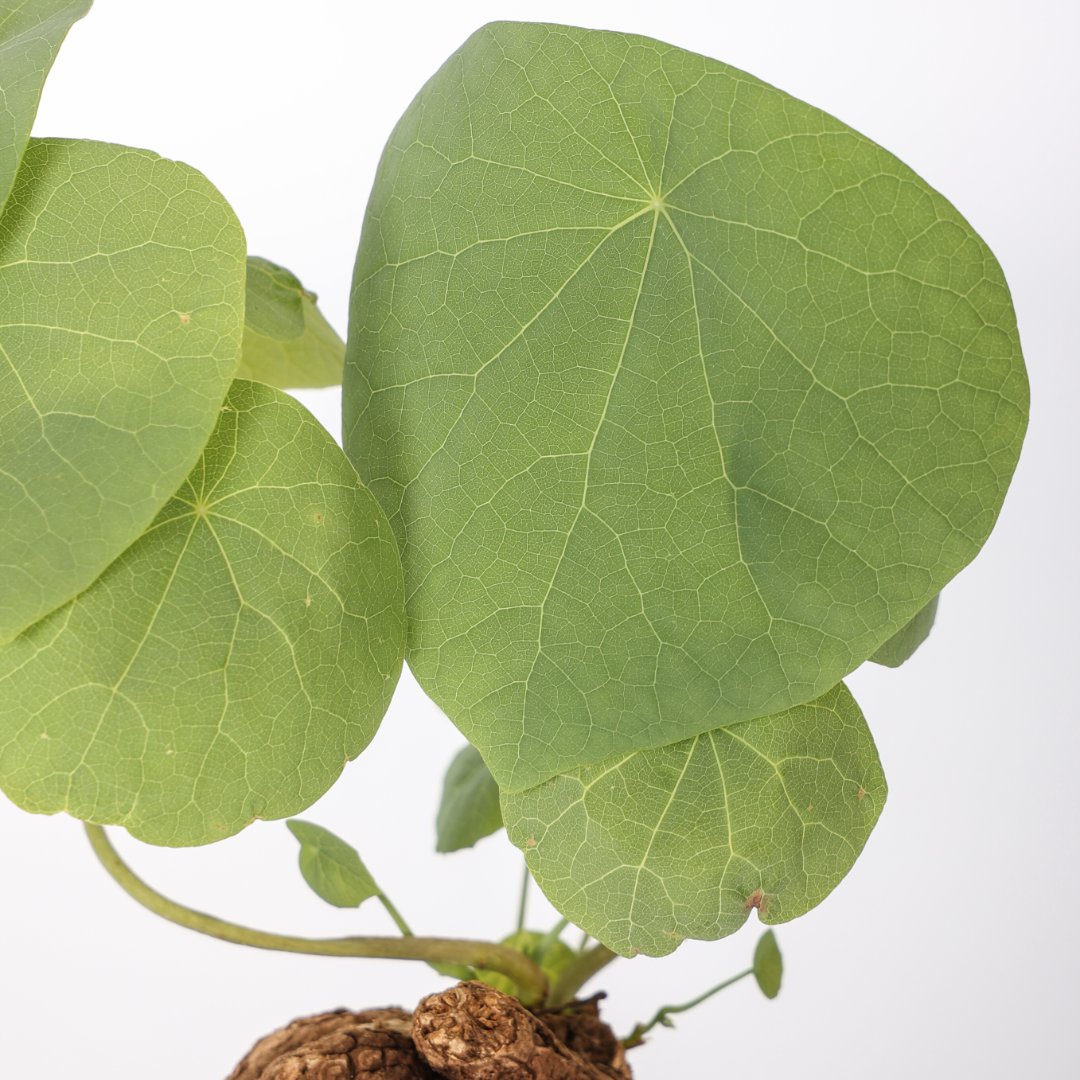
From the caudex, during the growing season, slender reddish-green climbing stems develop, which bear alternate leaves. The leaves are its other distinctive trait: they are a beautiful bright green, thin, and have a delightful heart (cordate) shape. The combination of the gnarled caudex and the tender heart-shaped leaves creates an extraordinary visual contrast.
It is a slow-growing and compact plant, making it perfect even for those with limited space. It will not become a bulky monster but will evolve slowly, providing satisfaction year after year.
Life cycle and dormancy: a long winter sleep
A fundamental aspect to understand to avoid worry is its dormancy cycle. Stephania suberosa is a deciduous plant:
- In spring/summer: With increasing temperatures and daylight hours, the caudex wakes up and begins to produce new stems and leaves.
- In autumn/winter: With the arrival of cold weather and decreased light, the plant goes dormant. The leaves yellow and fall off completely, leaving only the bare caudex. It is not dead! It is merely resting. This rest is crucial for its health and for a vigorous recovery in the following season.
Cultivation and care: a few simple rules
Its reputation as an “expert’s plant” is often linked to its dormancy, but in reality, its needs are simple and clear.
🌱 Soil: the secret is drainage
The most critical point. Stephania suberosa absolutely fears waterlogging, which can lead to rot of the precious caudex. Use an extremely well-draining and aerated potting mix. A perfect blend can be:
- 50% quality universal potting soil
- 30% draining material (pumice, volcanic lapilli, perlite)
- 20% coarse sand (not fine)
Ensure the pot has abundant drainage holes.
💧 Watering: water by listening to the plant
The golden rule is: water only when the soil is completely dry.
- During active period (with leaves): water thoroughly, letting all excess water drain out, and then wait for it to dry out again.
- During dormancy (without leaves): suspend watering completely. The caudex sustains itself from its reserves. A single watering during this period could be fatal.
☀️ Light: plenty of light, no scorching direct sun
It loves intense, bright light, which is essential for healthy growth. The ideal position is:
- Filtered light (sheer curtain)
- Direct sun only during the mildest hours (early morning or late afternoon)
Avoid intense direct sun during summer afternoons, which could scorch the delicate heart-shaped leaves.
🌡️ Temperature: warm in summer, protected in winter
Being a tropical plant, it loves warmth during its growth period. During winter dormancy, it is essential to protect it from the cold. Keep it in a dry environment with temperatures not lower than 12-15°C (54-59°F).
Flowers: a rare sight to behold
The flowering of Stephania suberosa in cultivation is a rather rare event, but possible under the right conditions. It produces small umbrella-like inflorescences with tiny yellow-green flowers. They are delicate and peculiar, a true reward for the most attentive grower.
Curiosities
- Origins: it is a plant native to Southeast Asia, where it grows in tropical habitats.
- Rarity: until a few years ago, it was almost impossible to find in cultivation. Today, thanks to propagation from seed, it is more accessible, but it remains a sought-after collector’s plant.
- Habit: its stems are climbing. In nature, they would twine around natural supports. In a pot, you can let them cascade elegantly or provide a small support (like a dead branch) for them to climb on.
In Conclusion:
Stephania suberosa is not a plant to water and glance at distractedly. It is a cultivation experience. It is the patience of waiting for its spring awakening, the joy of seeing the first leaf bud emerge from its rugged caudex, and the satisfaction of having respected its natural cycle. If you are looking for a rare succulent, full of character and with sculptural beauty, this caudiciform is the centerpiece your collection was missing.