The elephant’s foot plant: a collector’s living fossil
In the diverse world of succulents, some plants stand out not only for their beauty but also for their extraordinary uniqueness. Dioscorea elephantipes, also known as the “Elephant’s Foot” or “Turtle Shell” plant, is undoubtedly one of them—a true living fossil that captivates every enthusiast.
The sculptural caudex
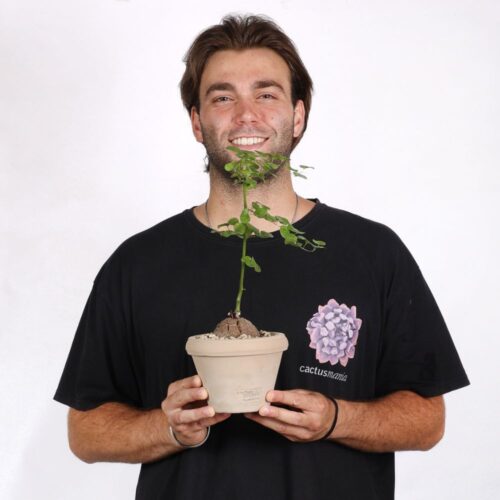
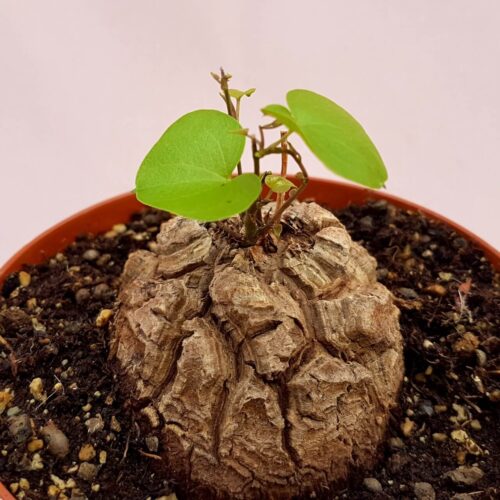
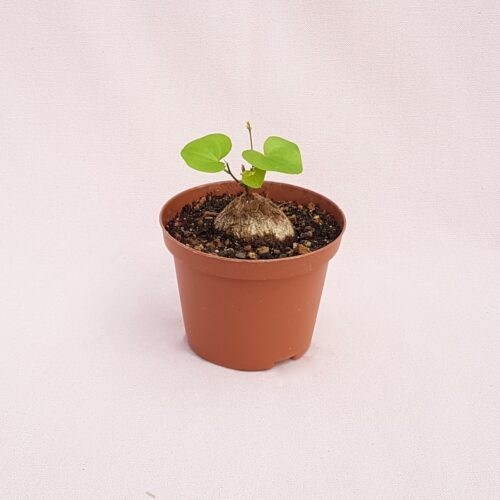
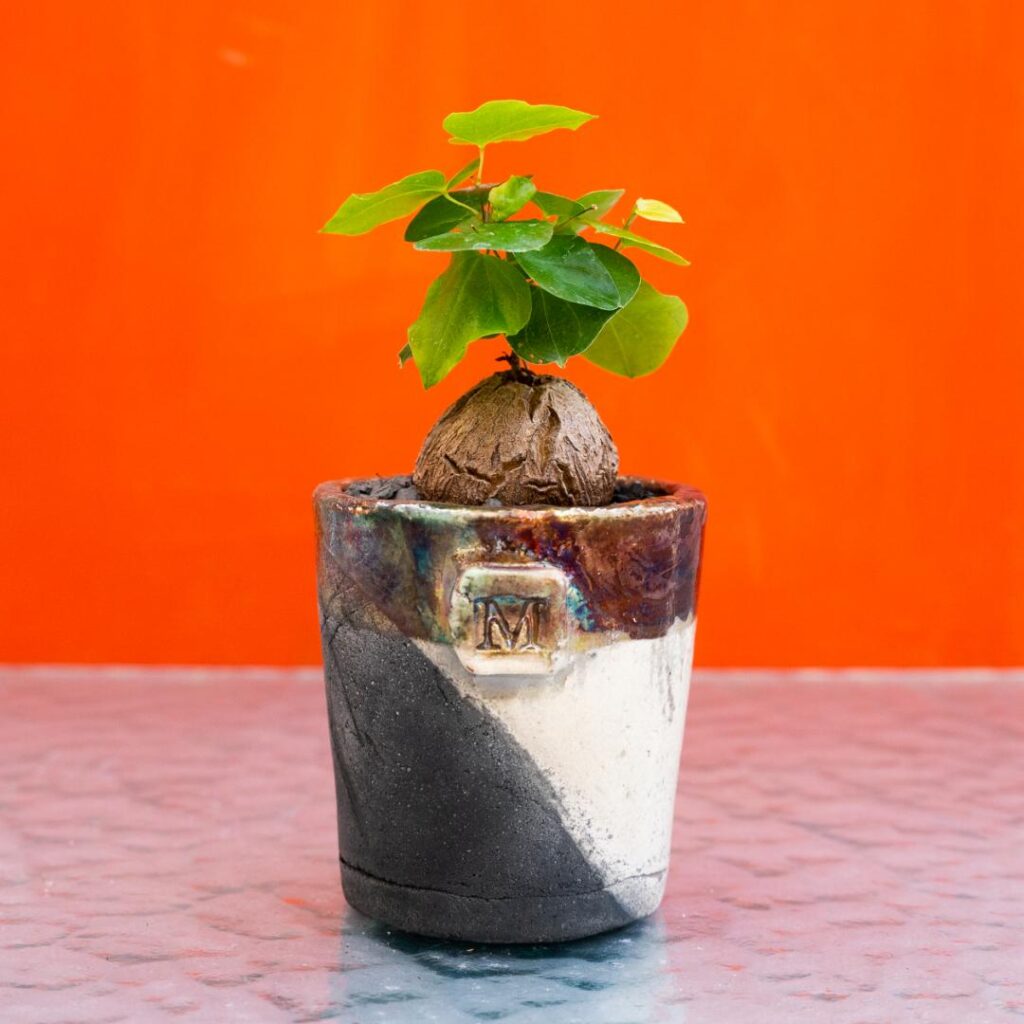
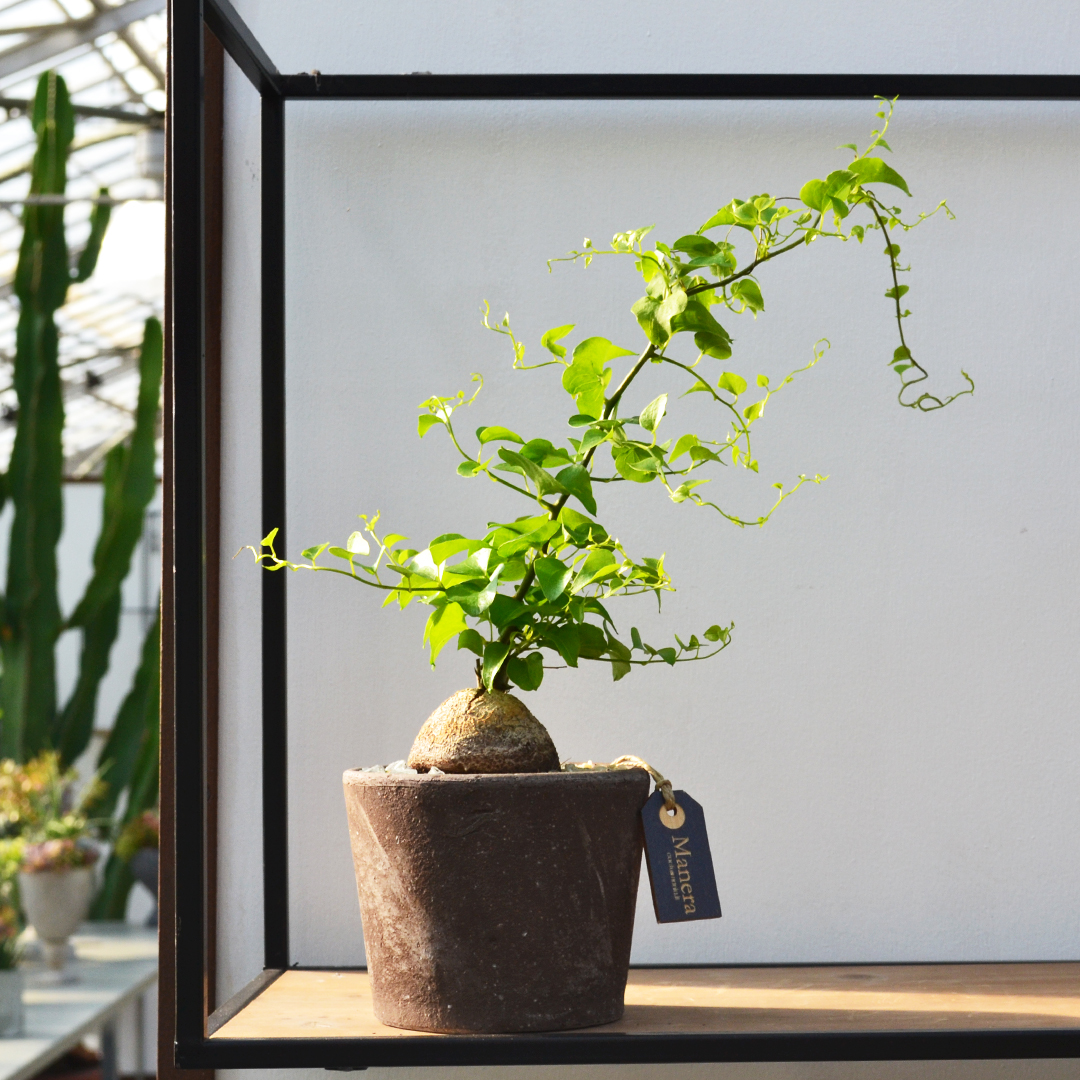
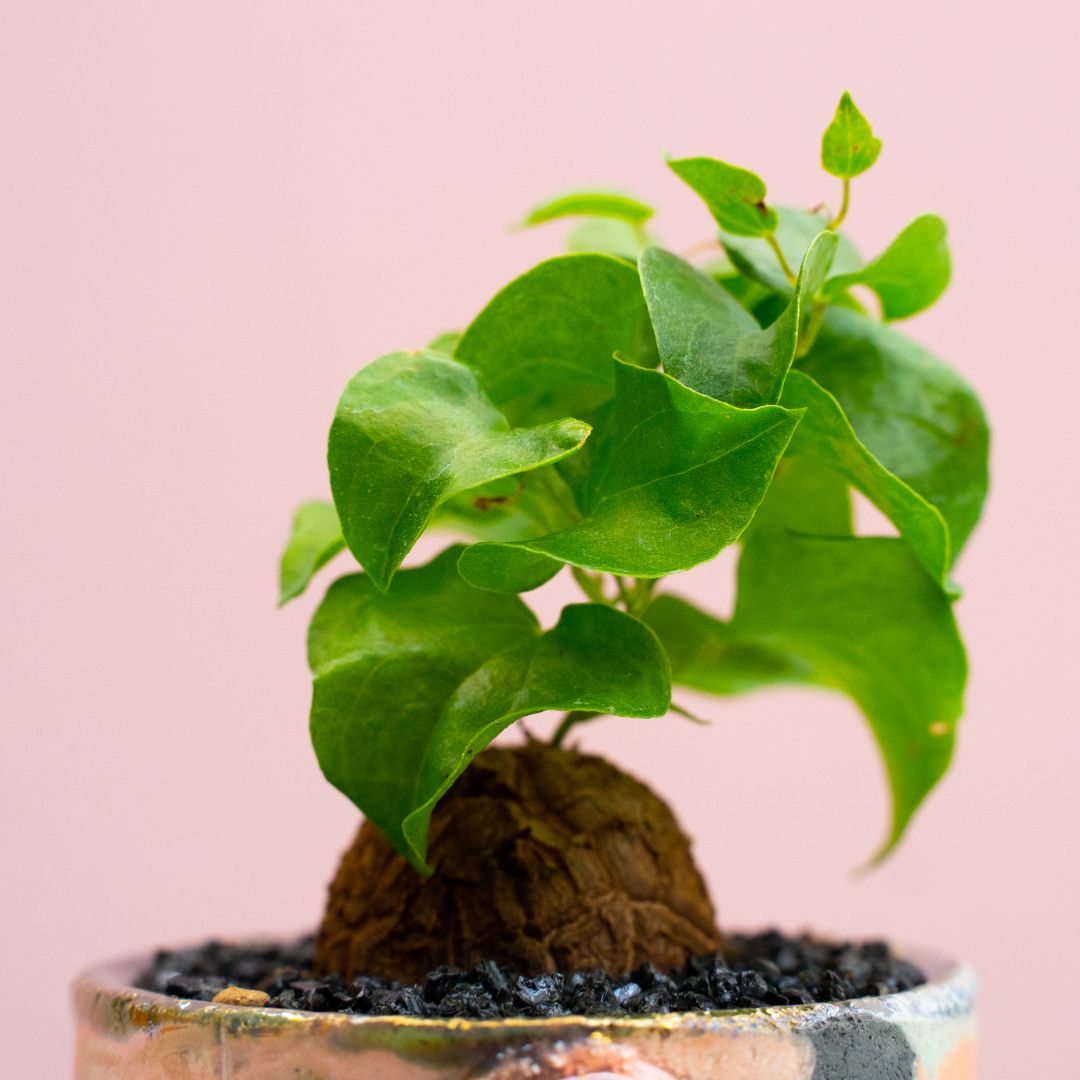
The defining feature of this South African native is its caudex—a swollen, woody base. In nature, this structure can grow over a meter in diameter. It develops very slowly, covered in thick, corky bark divided into polygonal sections resembling a turtle’s shell or an elephant’s skin. The caudex acts as a water-storage organ. During the growing season, slender, climbing stems with delicate heart-shaped (cordate) leaves emerge from it.
Cultivation and care: follow the natural cycle
The key to successfully growing Dioscorea elephantipes is respecting its seasonal cycle, typical of deciduous plants.
- Soil: must be extremely well-draining and mineral-based. Use a cactus mix enriched with pumice, fine gravel, or volcanic rock (at least 60-70%). A wide, shallow pot is preferable to accommodate the caudex’s horizontal growth.
- Watering: Crucial! Water only during the active growth period (usually autumn, winter, and spring, when stems and leaves are present), allowing the soil to dry out completely between waterings. As the leaves yellow, the plant enters summer dormancy: stop all watering completely during this phase.
- Light: prefers bright, indirect light or direct sun during cooler hours. During dormancy, keep it in a dry, shaded spot. Protect from frost, as it is sensitive to intense cold.
Flowers: an uncommon delicacy
Flowering, which occurs on mature specimens, is a special event. In late summer or autumn, just before vegetative growth resumes, small greenish-yellow star-shaped flowers may appear directly from the caudex. They are delicate and subtle, yet hold great botanical fascination. The plants are dioecious, meaning there are separate male and female specimens.
A survivor through time
- Living fossil: Dioscorea elephantipes is considered a relict plant, a form that evolved millions of years ago.
- Extreme adaptation: the caudex is a marvel of natural engineering, enabling survival through long droughts and fires in its native region.
- Botanical heritage: in the wild, it is a protected species due to over-collection. Commercially available specimens come from authorized cultivation or are grown from seed.
Growing a Dioscorea elephantipes is not only a rewarding challenge—it is like tending to a piece of botanical history.
Its slow growth and primordial appearance make it the crown jewel of any true collector’s assortment.