| Origin | Cultivar |
|---|---|
| Family | Cactaceae |
| Exposure | |
| Watering | Regular (every 10 days) from spring to late summer. Check that the earth is completely dry before watering again. |
| Fertilization | Cactaceae |
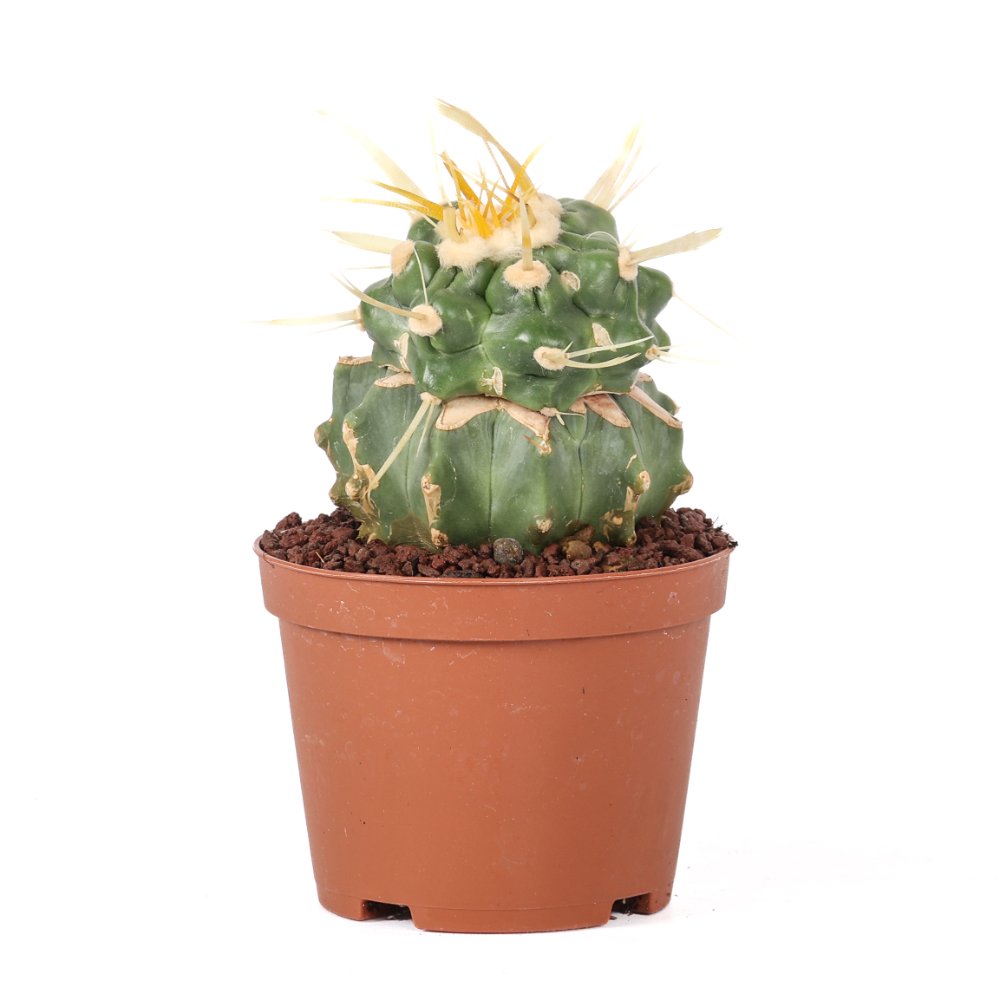
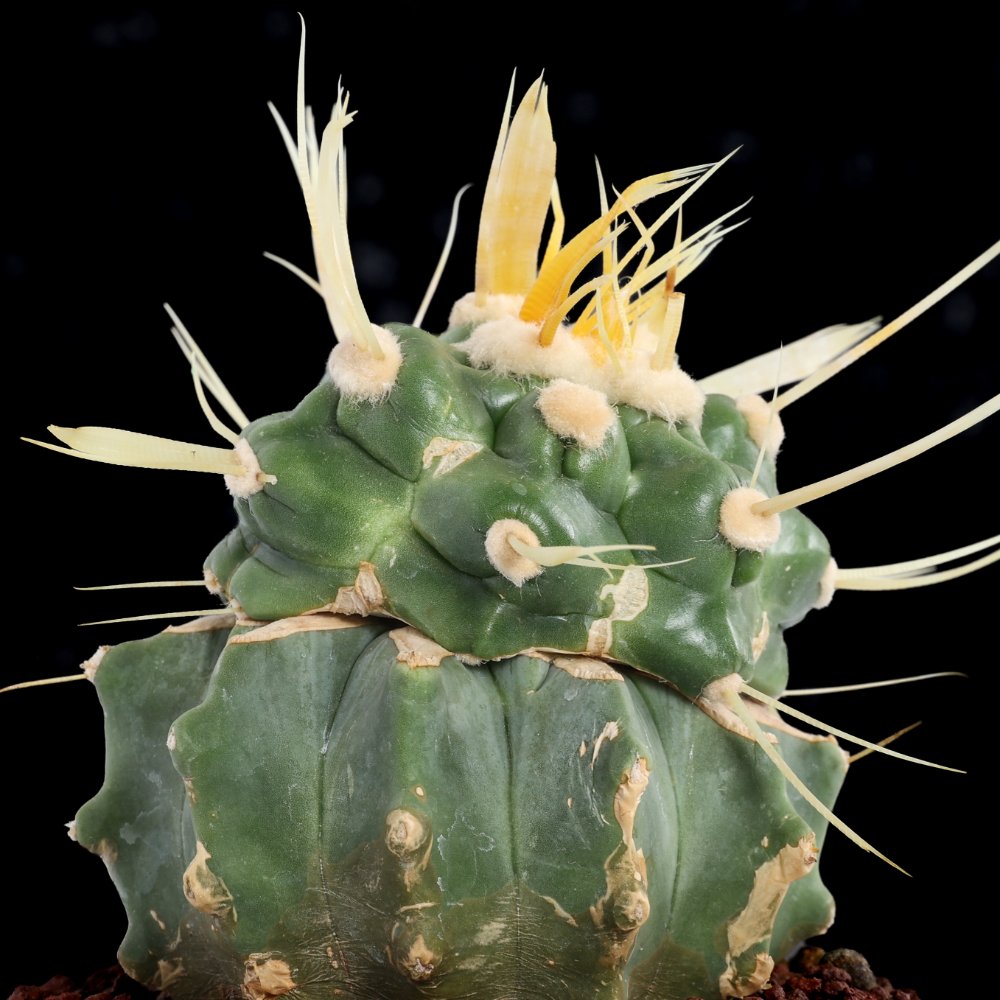

Echinocactus grusonii f. mostruosa Ø 10,5
The abstract sculpture that defies perfect geometry
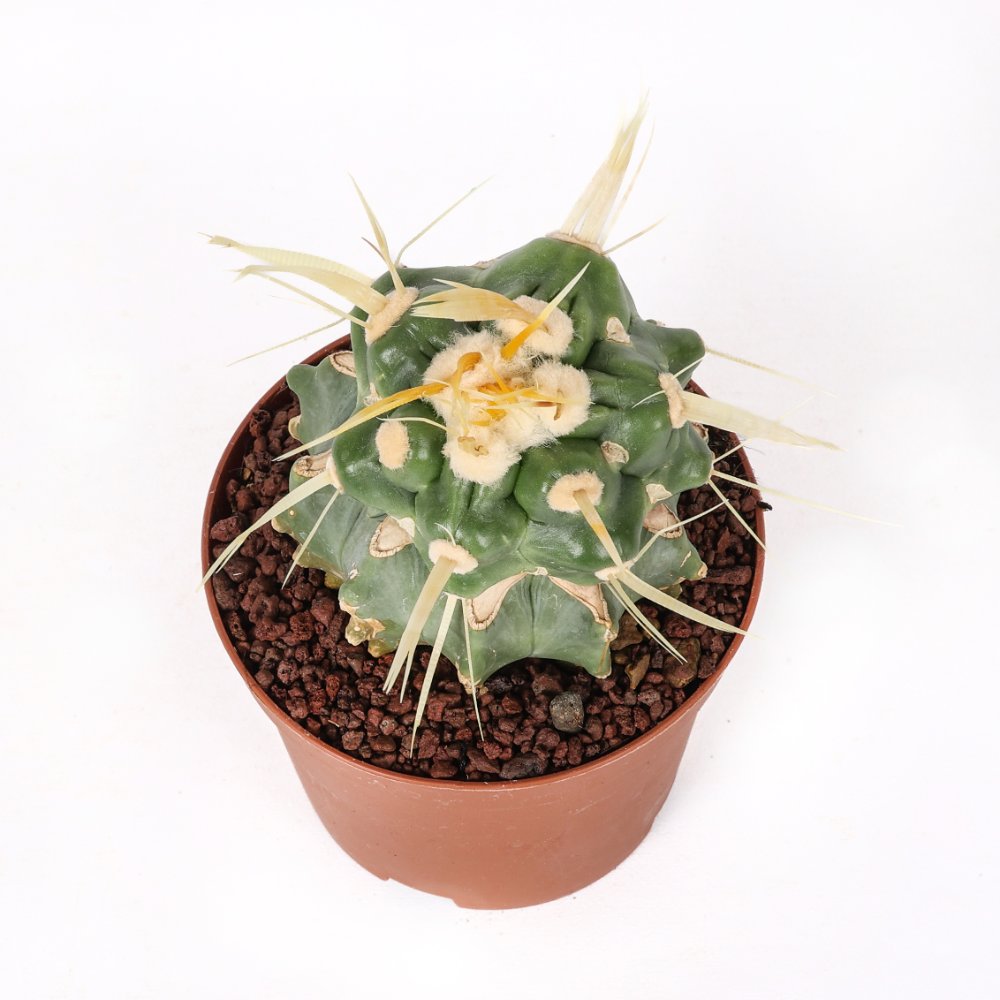
Echinocactus grusonii f. monstrosa is an extraordinary collector’s anomaly of the famous “Golden Barrel Cactus”. Due to a spontaneous genetic mutation, it abandons its rigorous perfect spherical geometry to develop irregular shapes, asymmetric or knotted ribs, and closely spaced areoles that generate unique sculptural clusters. Every single specimen grows differently, transforming into a true abstract sculpture.
This “monstrous” form alters the normal development of ribs and areoles, producing asymmetric ridges, disorderly tubercles, and sometimes phenomena of dichotomy or early clustering. Despite the mutation, the stem retains its typical bright light‑green colour and the characteristic white woolly covering.
Exposure: loves full, direct sun for many hours a day. In the wild, it grows under the scorching Mexican sun – the more light it receives, the more compact and healthy its development will be. Only during the hottest summer hours, especially when potted and temperatures exceed 38°C, is light afternoon shade advisable to prevent sunburn.
Watering: during the growing season (spring–summer), water abundantly but at spaced intervals, allowing the substrate to dry out completely between waterings. The monstrose form, having a more compact and irregular structure, can be slightly more sensitive to waterlogging than the standard form. In autumn, gradually reduce watering; in winter, withhold water almost entirely, only giving a light watering every 6‑8 weeks to prevent the roots from drying out.
Soil type: needs a very well‑draining substrate low in organic matter. Ideally, a mix of cactus soil, coarse sand, pumice, and volcanic grit in equal parts. The pH should be neutral to slightly acidic (6.5‑7.0).
Fertilising: from April to September, apply a specific cactus fertiliser with a balanced NPK ratio and low nitrogen content, diluted to half the recommended strength, once a month. Cease completely in autumn and winter.
Flowering: mature specimens (generally over 10‑15 years old) produce in summer the characteristic bright yellow flowers arranged in a crown at the top of the stem. Flowering is encouraged by a cool, dry winter (around 10‑12°C) and excellent light exposure. In the monstrose form, flowering may be less regular or more sporadic due to the morphological alteration.
Did you know? The “monstrosa” mutation is a rare genetic phenomenon that can occur in cultivation or in the wild, making every single specimen absolutely unique and unrepeatable – no two plants are alike. Growth is generally slower than the standard form, which makes mature specimens particularly prized. Caution with the spines: although short and golden‑yellow in colour, they are sturdy and sharp – always handle with thick gloves or using rolled‑up cardboard as protection.
A relatively easy cactus to grow, suitable even for those with some familiarity with cacti. Its irregular and unpredictable nature makes it a fascinating presence in any collection – a true living work of art that changes and evolves year after year.
Grafted
Code 1715
€75,00
Availability: 5 in stock
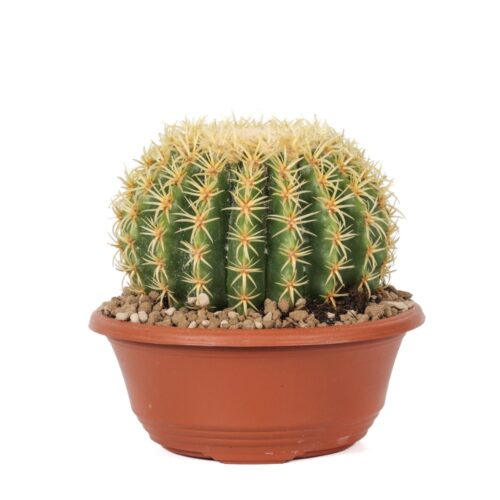
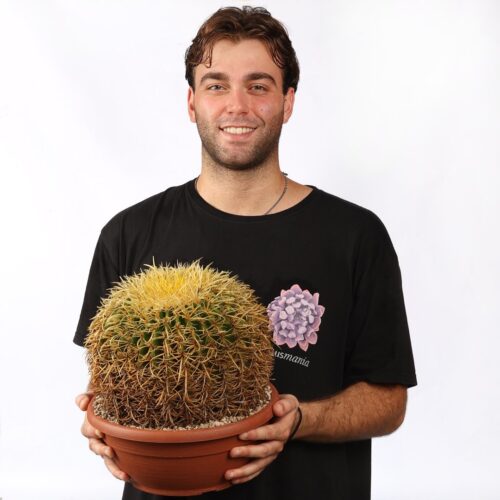
The Echinocactus grusonii, commonly known as the "mother-in-law's cushion" is a fascinating succulent that stands out for its round shape and the uniqueness of its spines. Native to Mexico, particularly arid and desert regions, this plant can reach significant sizes, growing up to one meter in height. Its cushion-like form, combined with a vibrant green color, makes it an interesting addition to both gardens and indoor spaces.
Botanical characteristics
The Echinocactus grusonii has a globular and cylindrical shape, with well-defined ribs that give it a distinctive appearance. The yellow spines, thin yet sturdy, are arranged in a captivating manner: some extend elegantly, while others embrace the plant's body. During the summer months, flowering occurs with the emergence of stunning yellow flowers that bloom from the top. These flowers not only enhance the plant's visual appeal but also attract pollinators such as bees and butterflies.
Among the most unique varieties of Echinocactus grusonii is the Echinocactus grusonii intermedius uncinatus, characterized by more curved spines and a more elongated shape compared to the standard species. Another interesting variant is the Echinocactus grusonii setispinus, known for its long, thin spines that give the plant a particular elegance. Finally, the Echinocactus grusonii monstrosus stands out for its twisted and irregular forms, which evoke wonder in those who observe it.
Cultivation
Cultivating Echinocactus grusonii is not complicated, but it does require some specific care. It is essential to ensure well-drained soil; a mix of sand and universal soil is ideal to prevent waterlogging. For healthy and vigorous growth, it is crucial to place the plant in full sun. This succulent loves light and thrives in bright environments, where it receives at least 6-8 hours of sunlight per day.
Watering should be moderate; it is important to let the soil dry out between waterings to prevent root rot. During the growth phase, applying a specific cactus fertilizer can be beneficial, promoting healthy growth and abundant flowering. It is recommended to use it every 4-6 weeks during the spring and summer months.
This plant is drought-resistant, but beware: in winter, it is necessary to drastically reduce watering and protect the Echinocactus grusonii from frost.
Curiosities
The Echinocactus grusonii is not just a garden plant; its popularity has also grown in interior design. This succulent adapts well to various decorative styles, from minimalist to rustic, making the environment more welcoming and lively. Moreover, surprisingly, it can tolerate not only high temperatures but also cooler climates.
The botanical singularities of this plant are not limited to its appearance; gardening enthusiasts also appreciate its ease of care, making it ideal for beginners and those with limited time. The presence of Echinocactus grusonii in gardens and among houseplants testifies to the growing curiosity and interest in the world of succulents.
If you are drawn to the beauty and uniqueness of the Echinocactus grusonii, do not hesitate to further explore the cultivation and care of this extraordinary plant. You might consider visiting a botanical garden, where you will have the opportunity to admire it in all its splendor and, perhaps, embark on an exciting adventure into the fantastic world of succulents. Plant care, in fact, can prove to be a rewarding and enriching activity, both for experienced gardeners and beginners alike.