| Origin | Mexico |
|---|---|
| Family | Cactaceae |
| Exposure | |
| Watering | Regular (every 10 days) from spring to late summer. Check that the earth is completely dry before watering again. |
| Fertilization | Cactaceae |
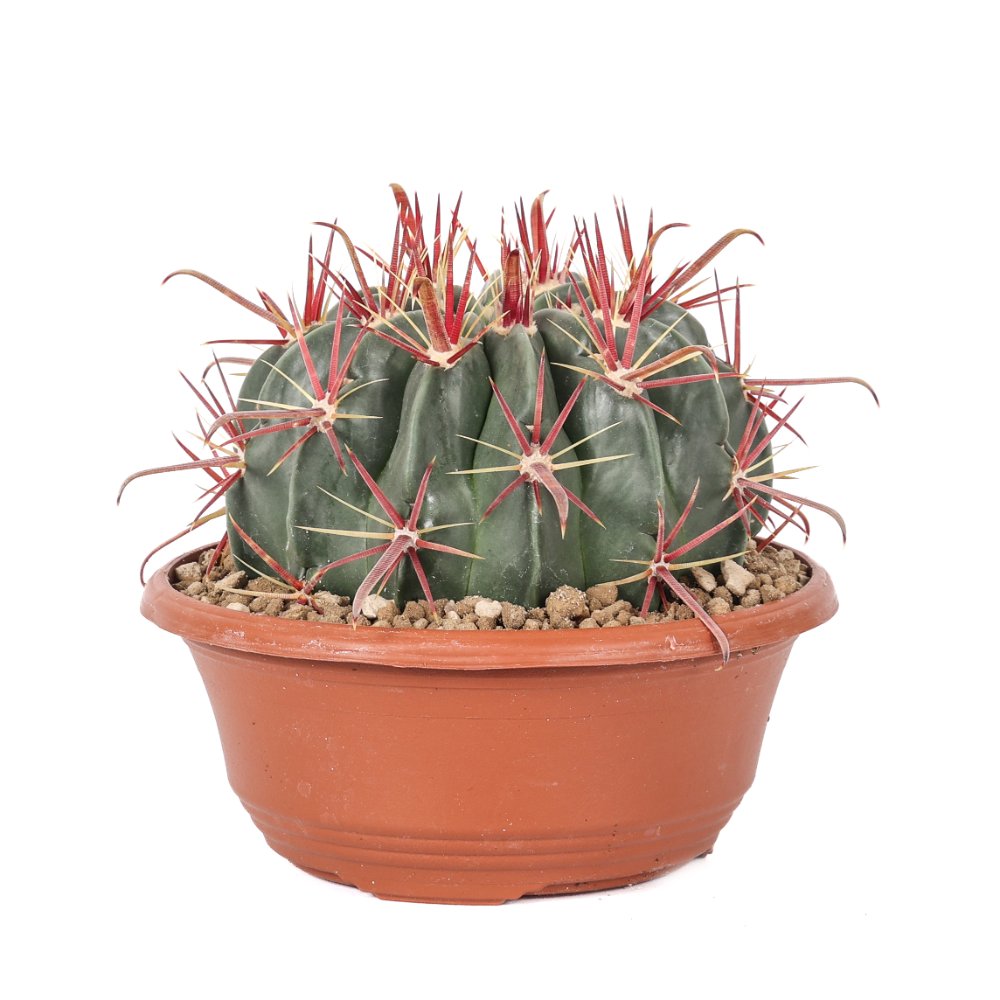
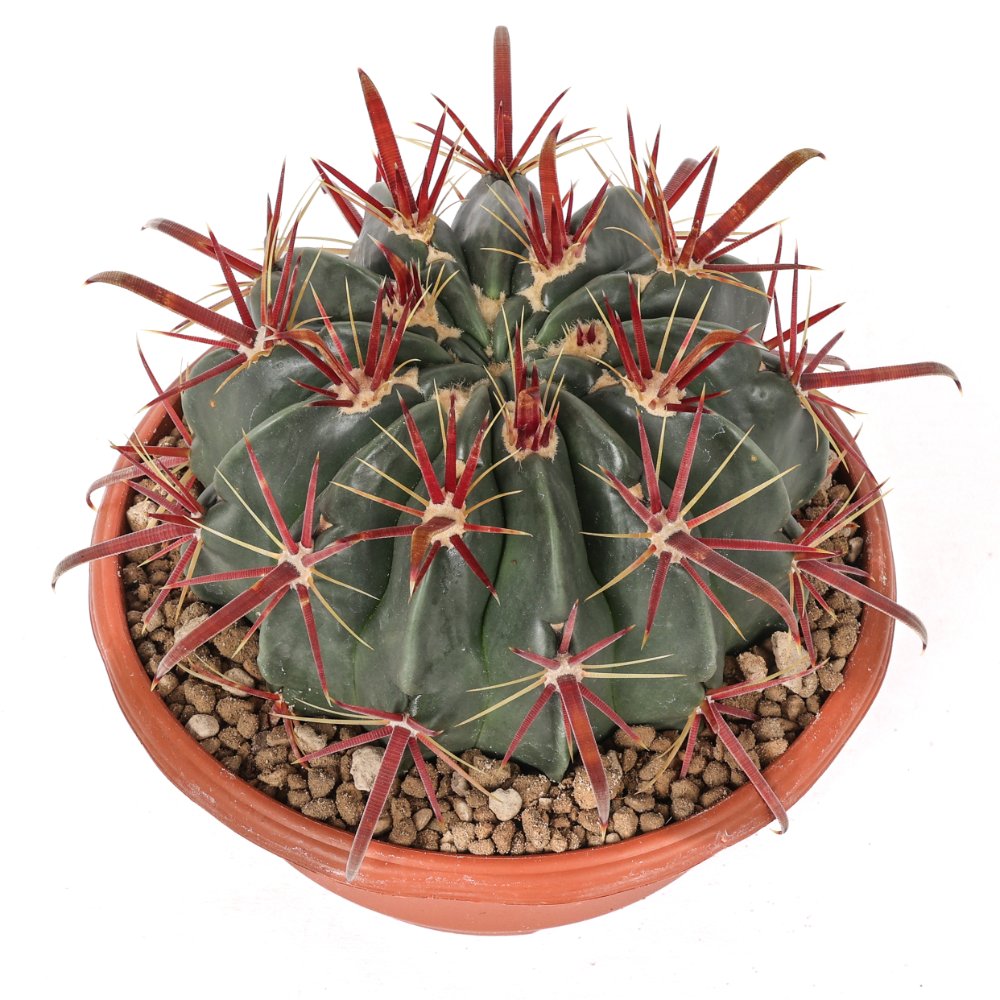

Ferocactus latispinus Ø 17
The Devil’s Tongue with enchanting spines and flowers
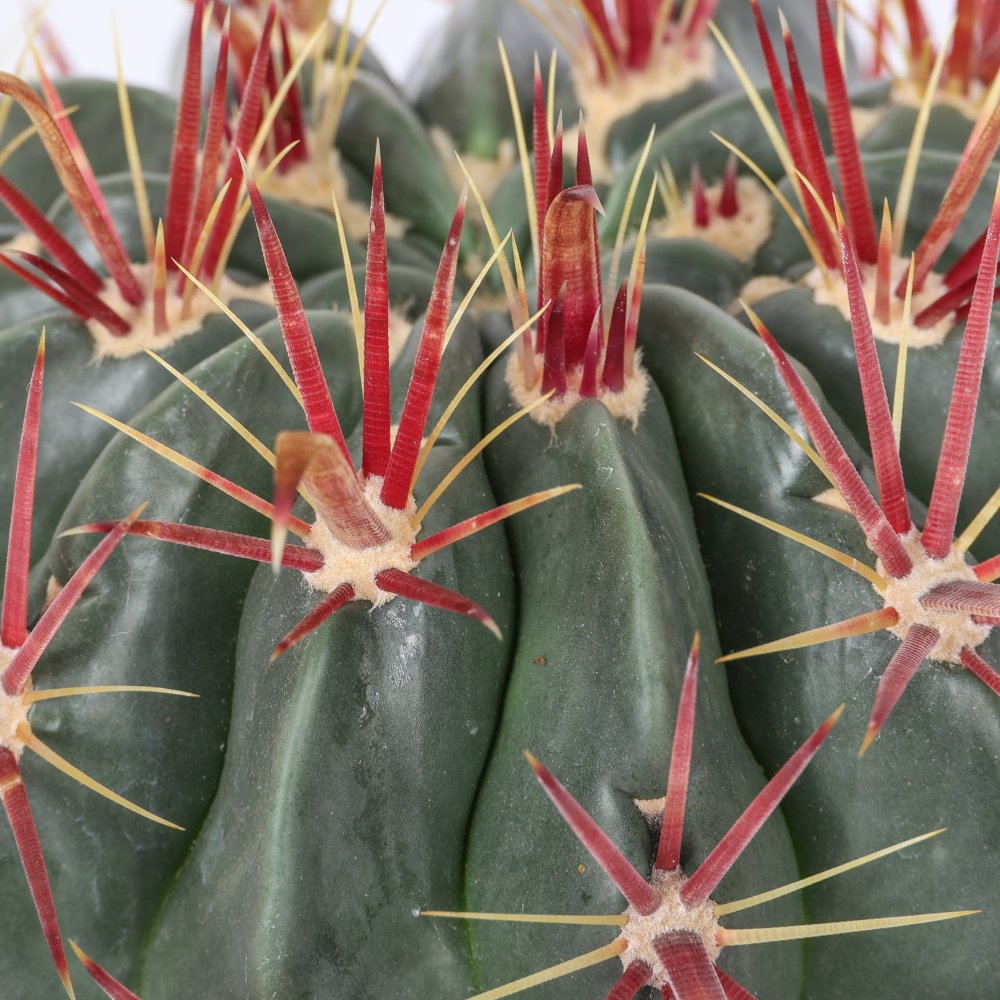
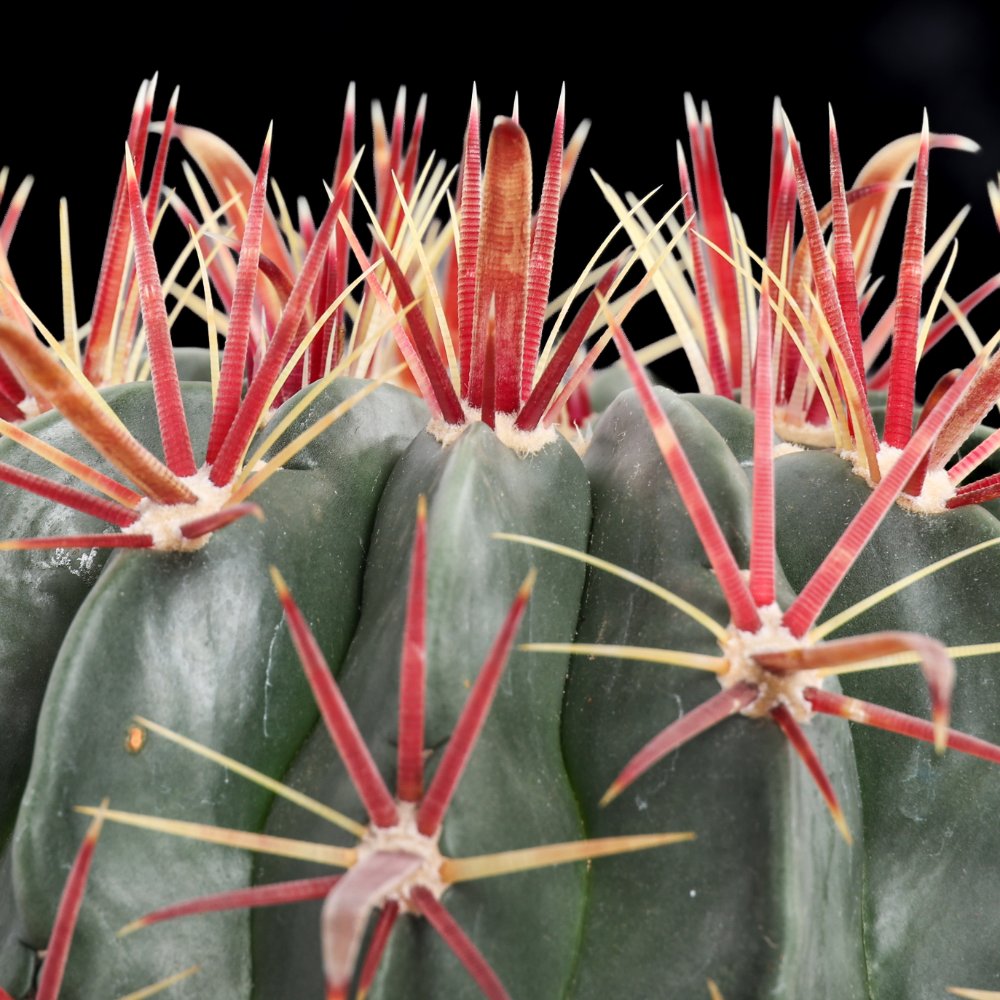
The Ferocactus latispinus stands out for its incredible flat, hooked spines of an intense reddish-purple color. Perfect for those seeking a sculptural, hardy, and easy-to-grow cactus. A plant that captures attention all year round, enhanced in late summer by fascinating purple bell-shaped flowers.
This solitary-growing cactus initially develops a globose and compact shape at the apex, then becomes slightly cylindrical in adulthood. Popularly known as the “Devil’s Tongue”, it is a robust, geometric plant with great visual impact.
Growing notes
Exposure: prefers full sun, which promotes compact growth and intensifies the reddish-purple coloration of the spines. In summer, during the hottest hours, light protection is advisable to prevent sunburn on the epidermis.
Temperature: tolerates heat well but is sensitive to frost. The winter minimum temperature should not drop below 5-8°C. During winter, it should be kept in a dry, well-ventilated location.
Watering: water moderately, only when the soil is completely dry. In spring and summer, watering every 7-10 days is sufficient; in autumn and winter, reduce drastically, almost to a stop, to prevent root rot.
Soil type: requires a highly draining substrate, composed of cactus soil and inert materials such as pumice, coarse sand, or lapilli in equal parts. Good drainage is essential for the health of the root system.
Fertilization: fertilize once a month during the growing season (spring-summer) with a specific cactus fertilizer, rich in potassium and low in nitrogen. Stop completely in autumn and winter.
Flowers: flowering occurs between late summer and early autumn, producing magnificent bell-shaped flowers in purple or magenta, emerging from the top of the plant. The flowers are diurnal and last a few days.
Curiosities: the name Ferocactus comes from the Latin “ferox” (fierce) and the Greek “kaktos” (thistle), referring to the aggressive spines. The epithet latispinus means “broad-spined,” due to the characteristic flat, hooked spines. In Mexico, the fruits of this plant are harvested and eaten fresh. Watch out for mealybugs, which can attack the areoles, and for excess water, which is the main cause of death in cultivation.
Not grafted
Code 1710
€45,00