| Origin | Mexico |
|---|---|
| Family | Cactaceae |
| Exposure | |
| Watering | Regular (every 10 days) from spring to late summer. Check that the earth is completely dry before watering again. |
| Fertilization | Cactaceae |
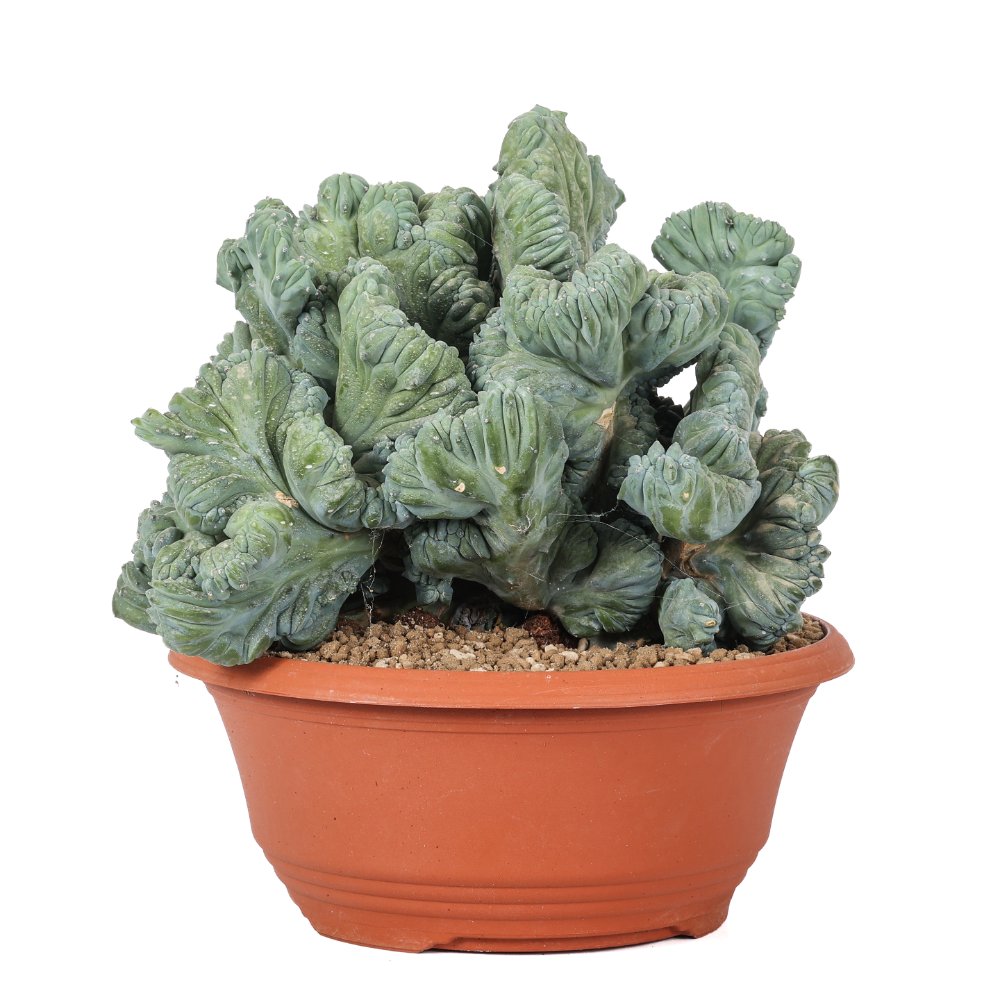
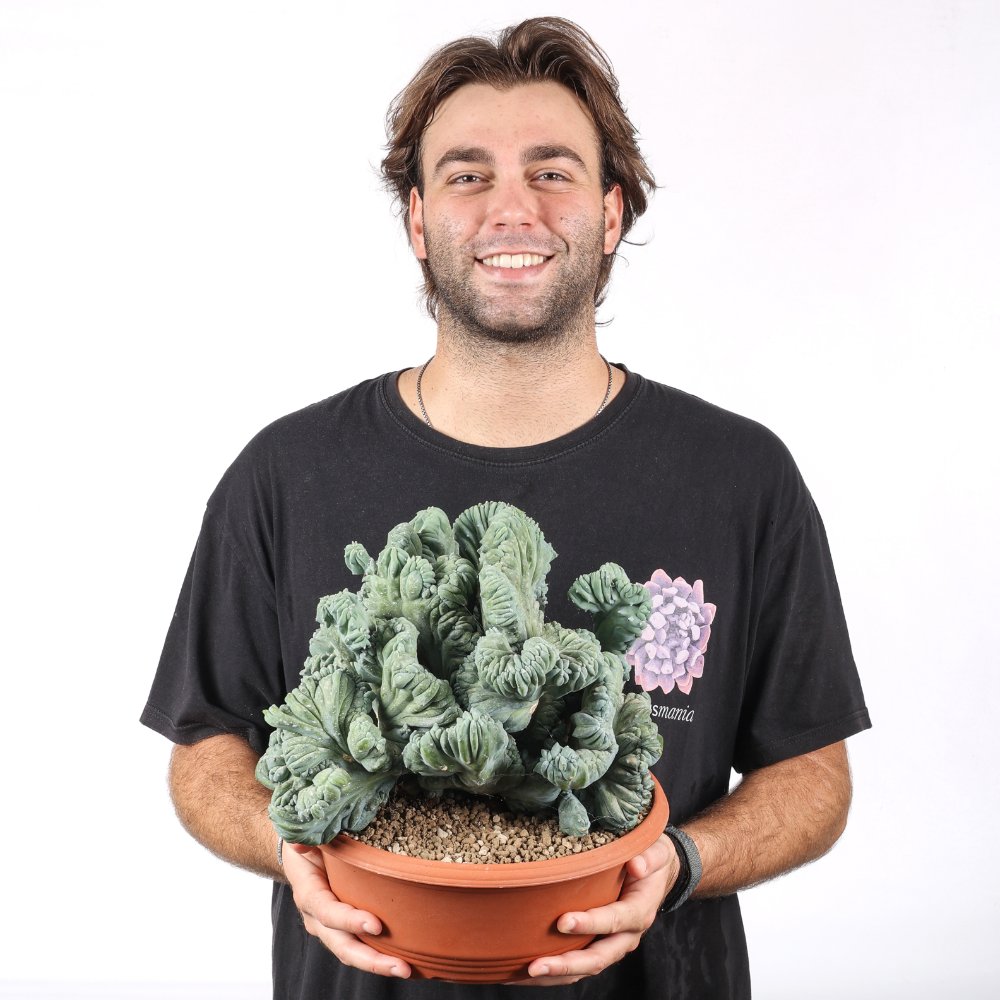
Myrtillocactus geometrizans f. crestata Ø 30
The living sculpture with a brain-like charm
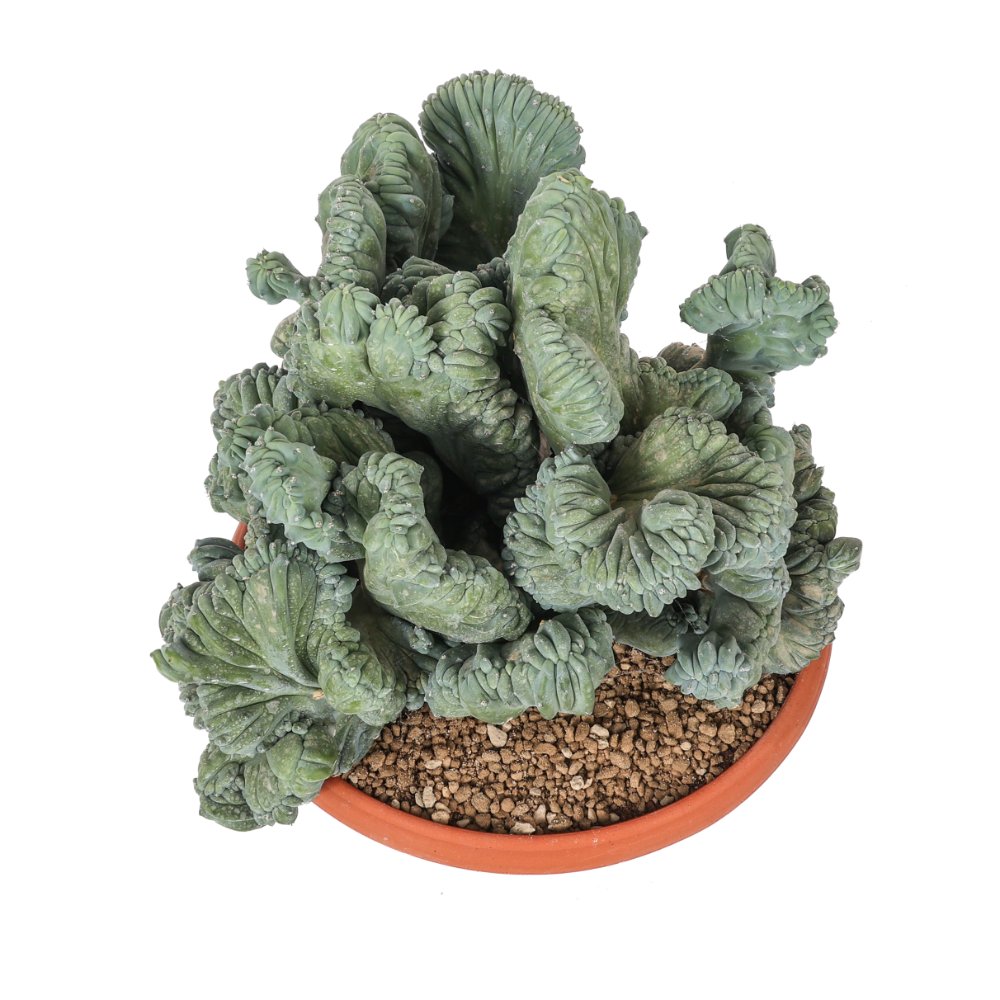
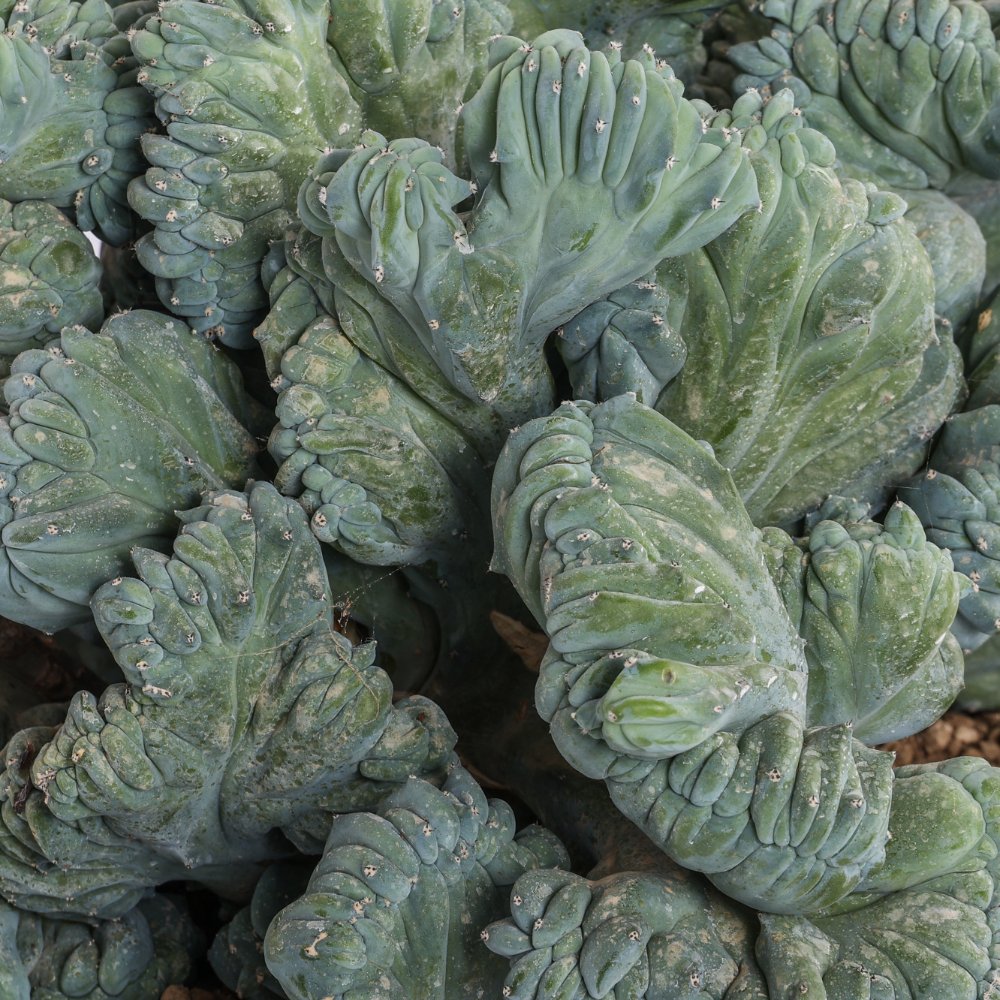
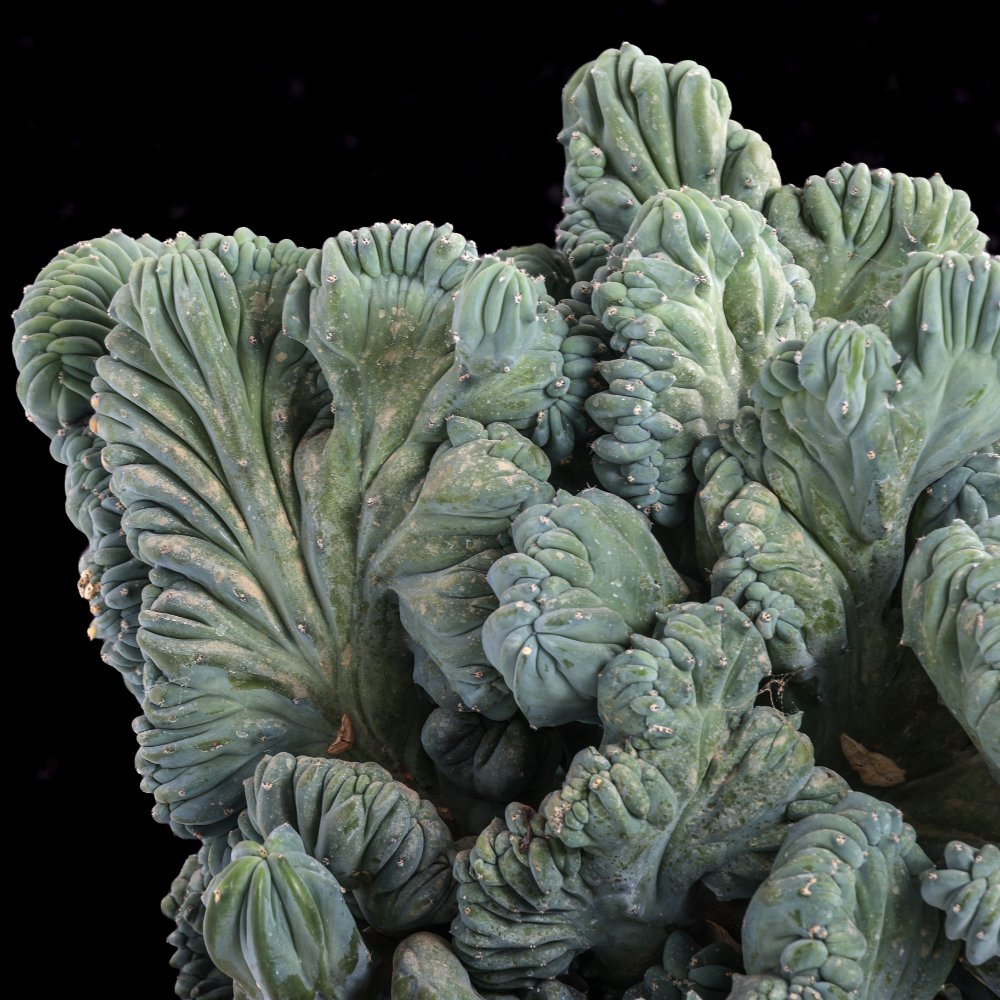
The Myrtillocactus geometrizans f. crestata is one of the most spectacular and sought-after anomalous forms in the succulent world. Due to a natural genetic mutation, the growing point expands into a fan shape rather than vertically, creating living sculptures of sinuous crests, waves, and brain-like folds. This fascinating mutation transforms the classic columnar cactus into a compact mass of undulating crests that resemble the shape of a brain or a coral reef.
The surface is nearly spineless, smooth, and covered with a bluish pruina that protects the plant from the sun and gives it a unique metallic appearance. When exposed to full sun, the crest can take on pinkish or purplish tones, enhancing its sculptural beauty. Growth is slow, which makes larger specimens like this one in a 30 cm diameter pot particularly precious and sought after by collectors.
Growing notes
Exposure: prefers full sun or very bright light, which promotes compact growth and accentuates the glaucous coloring of the stem. In summer, during the hottest hours, it is advisable to avoid direct sunlight to prevent scorching.
Temperature: does not tolerate frost. The winter minimum temperature should not drop below 10°C. During winter, it should be protected in sheltered, airy locations.
Watering: water moderately, only when the soil is completely dry. In spring and summer, once a week is sufficient; in autumn and winter, reduce drastically, almost to a complete stop.
Soil type: requires well-draining soil, enriched with inert materials such as pumice, sand, or lapilli to prevent waterlogging which causes root rot.
Fertilization: does not require frequent fertilization. Diluting a specific cactus fertilizer in the watering water once a year during the growing season is sufficient.
Flowers and fruits: flowering occurs between late winter and early spring, producing small greenish-white flowers. The fruits are edible, dark red in color, and their taste resembles that of blueberries, from which the genus derives its name.
Curiosities: each crested specimen is unique and unrepeatable, as the mutation occurs randomly. Propagation is exclusively by cuttings to preserve the characteristic crested form. Beware of the main enemies: mealybugs and root rot caused by excess water.
Not grafted
Code 1712
€220,00