| Origin | Cultivar |
|---|---|
| Family | Cactaceae |
| Exposure | |
| Watering | Regular (every 10 days) from spring to late summer. Check that the earth is completely dry before watering again. |
| Fertilization | Cactaceae |
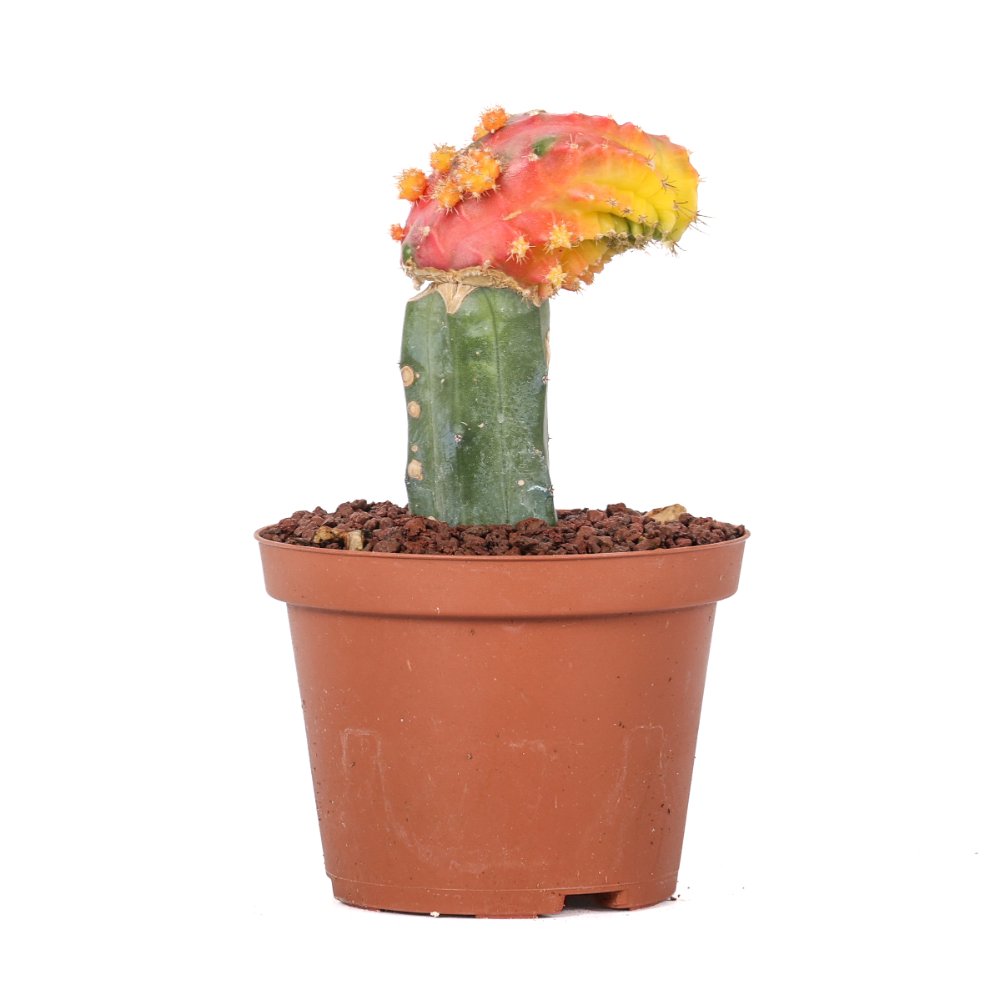
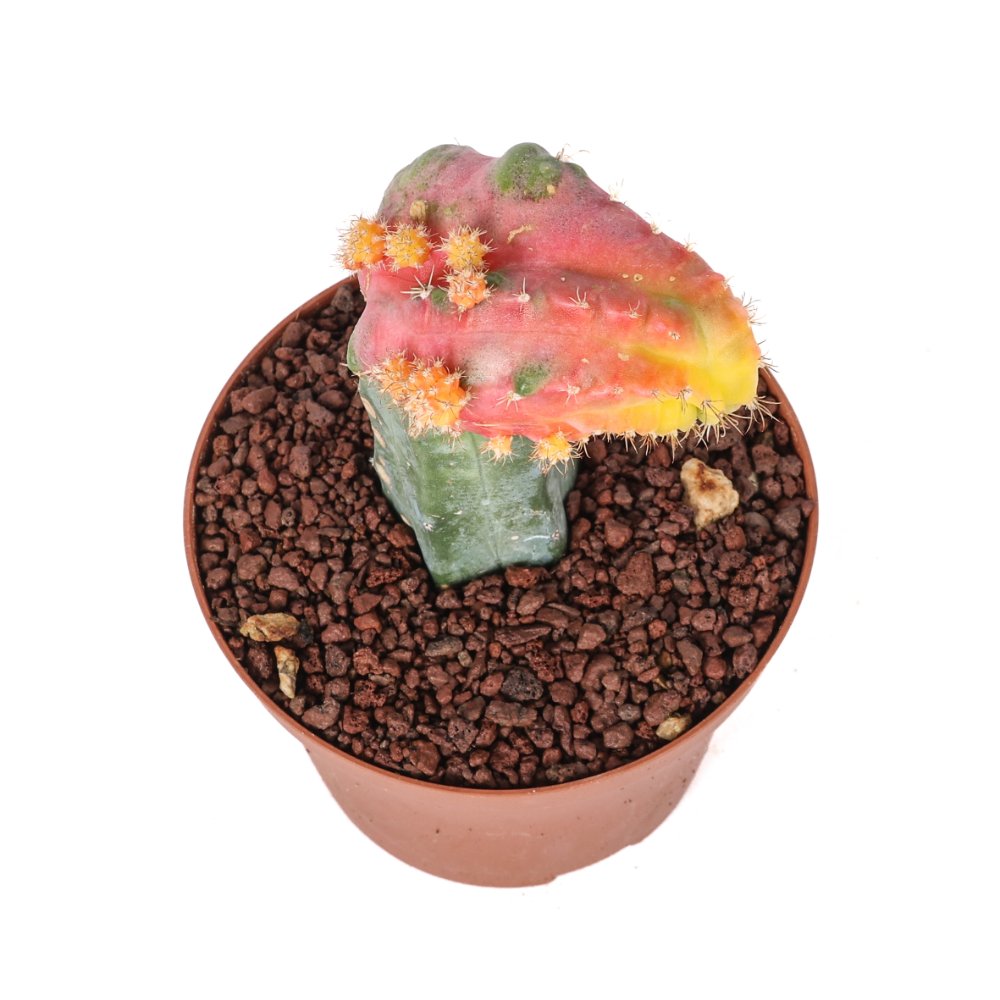
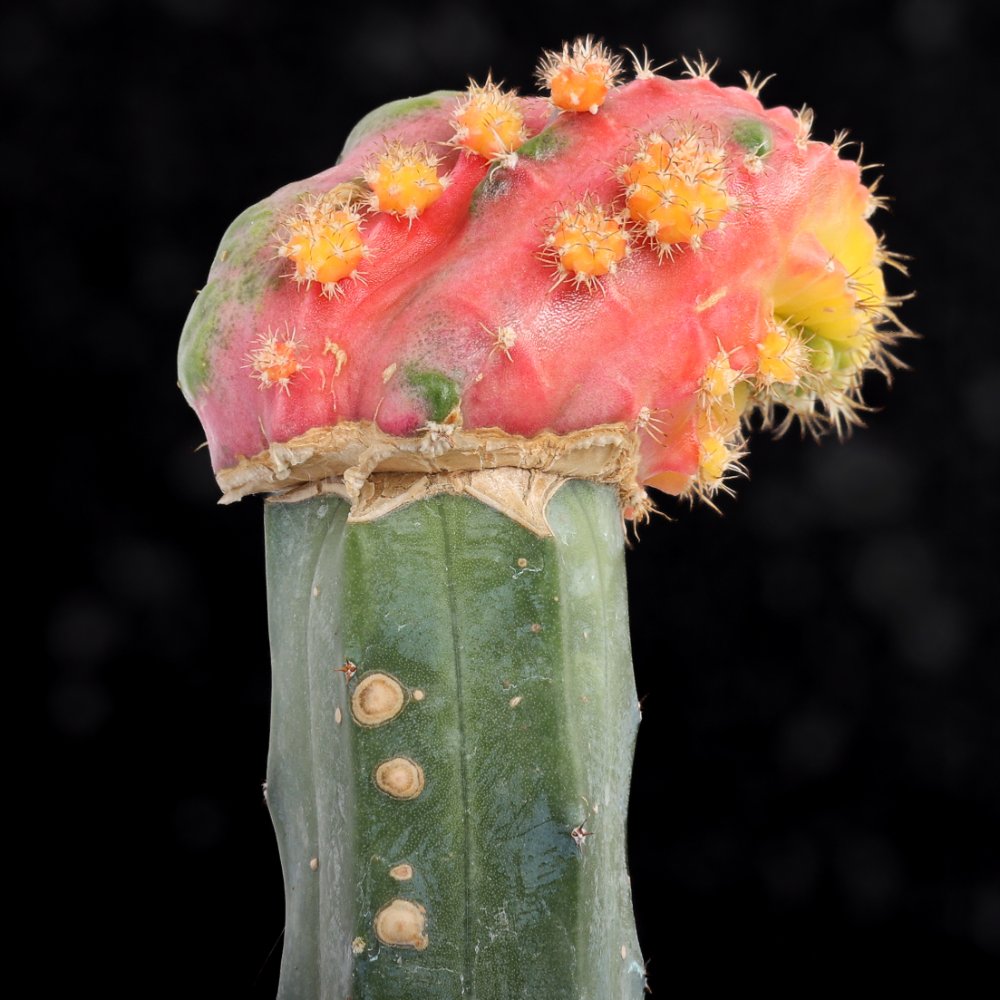
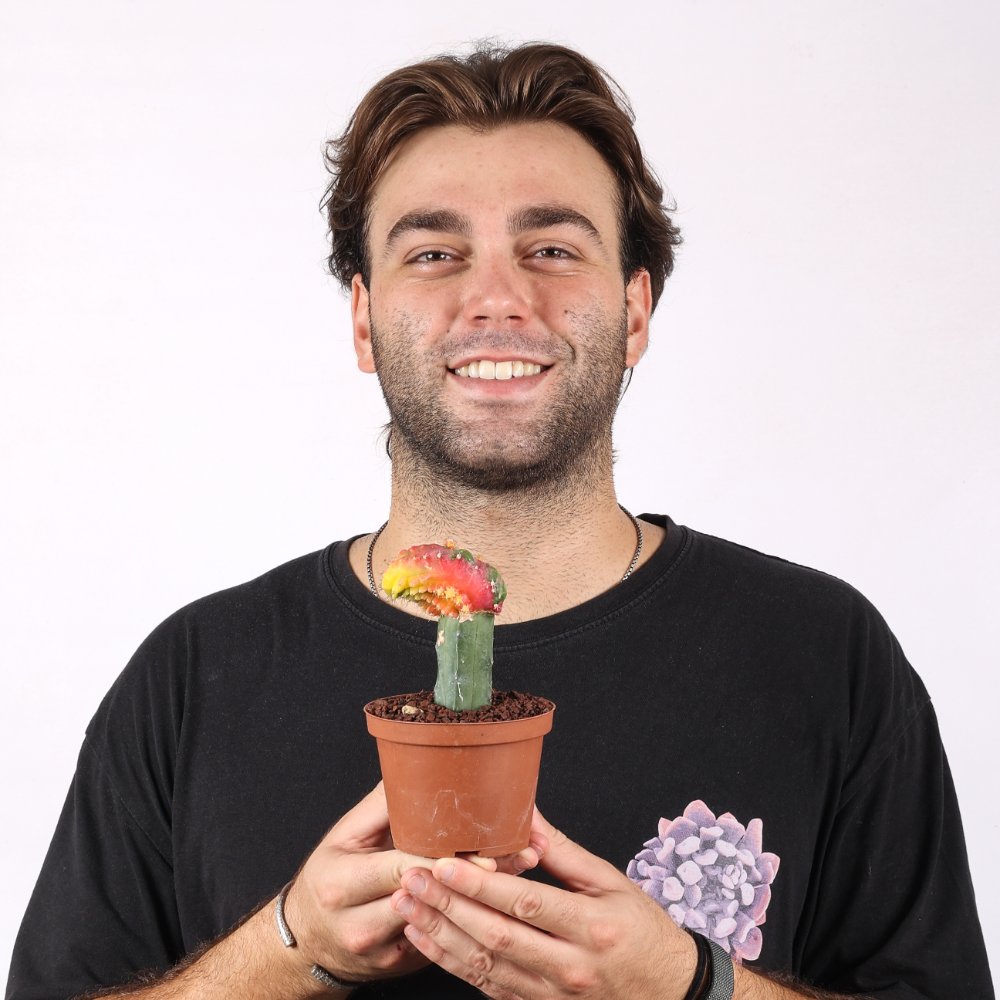
Myrtillocalycium polyp Ø 10,5
Living sculpture: the crested masterpiece
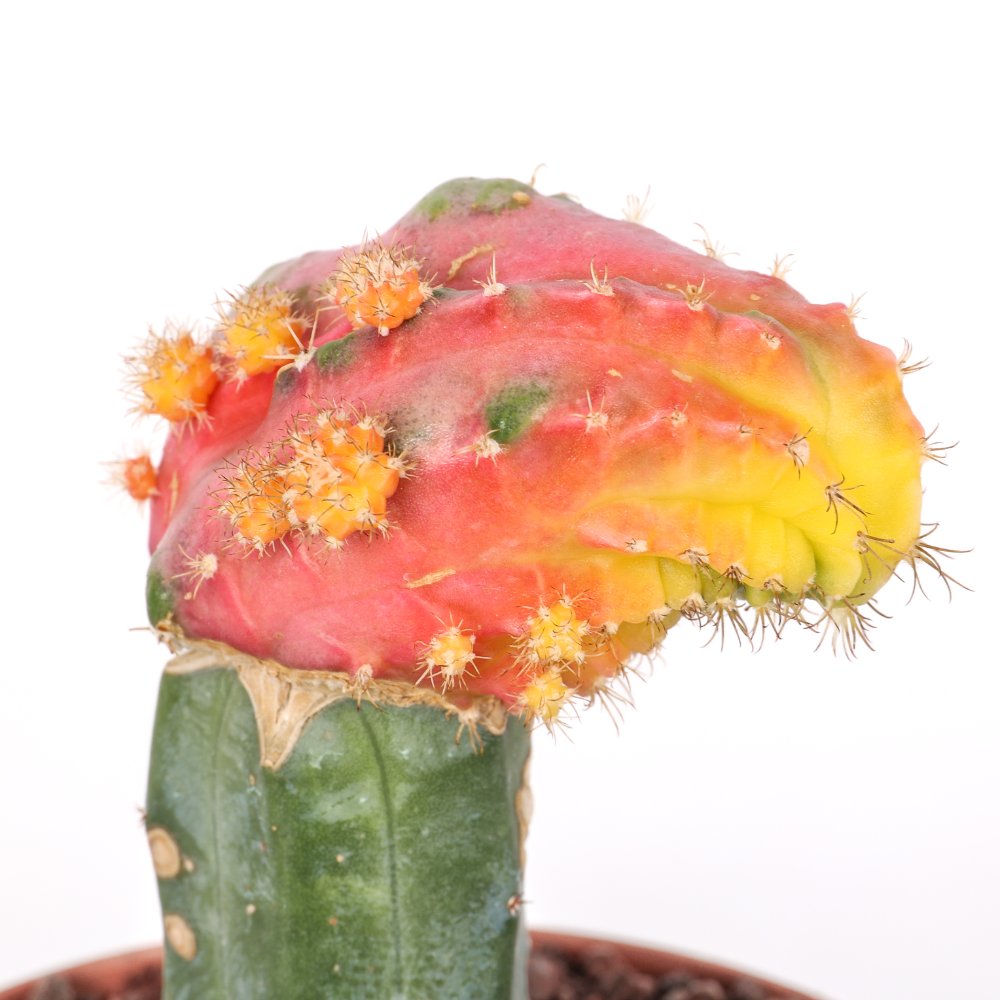
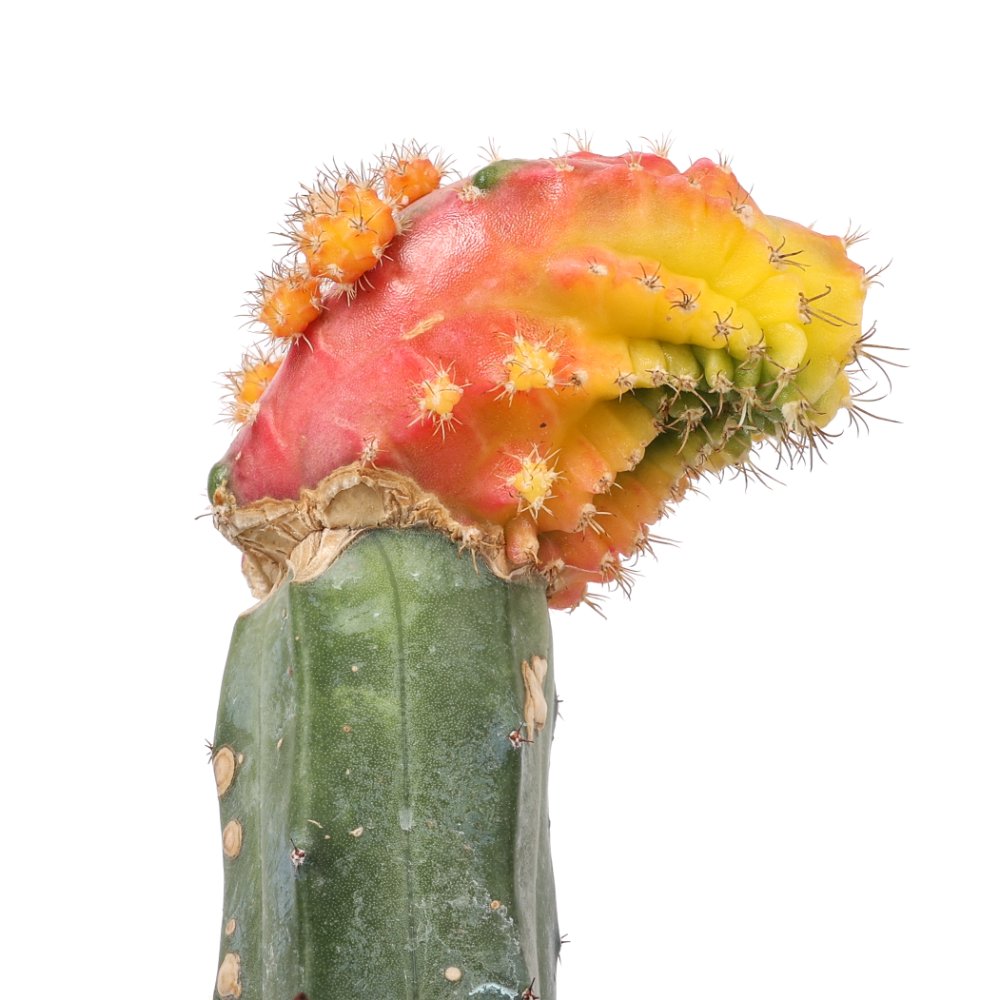
This ultra-rare intergeneric hybrid is a grafted specimen that develops a unique monstrous and crested growth. Its twisted sculptural forms, irregular ribs, and fascinating waxy epidermis shifting from bluish-green to bright pink make each specimen absolutely unrepeatable and of supreme collectible value. Born from the extremely rare botanical cross between Myrtillocactus and Gymnocalycium, this cactus is an exceptional morphological mutation that defies every rule of nature.
Exposure: prefers bright but filtered light. Direct sun during the hottest hours can burn the delicate epidermis, especially on the pink chlorophyll-free areas. Place it in a bright spot with morning or evening sun, or with light shade during midday hours.
Watering: moderate and spaced. In spring/summer, water only when the substrate is completely dry; in autumn/winter, reduce almost to zero. Being grafted, it is particularly sensitive to waterlogging, which can compromise the rootstock.
Soil type: extremely well-draining and mineral-rich. Use a cactus mix with coarse sand, pumice, and lapilli, with at least 60-70% inorganic components. The pot should have drainage holes, preferably terracotta, to ensure rapid drying.
Fertilization: from April to September, apply a specific cactus fertilizer, low in nitrogen and rich in potassium and phosphorus, diluted to half strength every 3-4 weeks. Variegated and crested forms need less nitrogen to avoid stressing their reduced metabolism.
Flowers: under optimal conditions, it may produce flowers that inherit traits from both parents, typically pink or white, reminiscent of Gymnocalycium hues. However, flowering is rare, and the true attraction remains the sculptural stem form.
Fun fact: the crest (cristate form) is a mutation of the vegetative growing point that transforms apical growth into a continuous, wavy line. This form does not exist in nature and is maintained only through vegetative propagation, making each plant absolutely unique. Grafting onto a vigorous rootstock makes cultivation easier and accelerates growth compared to the rooted form.
Spines: yes, but inconspicuous. They are short, sturdy, slightly curved spines, light or brownish in color, arranged along the irregular ribs. They are not particularly aggressive, but it is still advisable to handle the plant with care.
- Tip: to enhance the pink and blue-green shades, place it against a light, neutral background.
- Caution: avoid touching the waxy epidermis to preserve the protective pruina coating.
Grafted
Code 1716
€50,00