| Origin | Brazil |
|---|---|
| Family | Cactaceae |
| Exposure | |
| Watering | Regular (every 10 days) from spring to late summer. Check that the earth is completely dry before watering again. |
| Fertilization | Cactaceae |


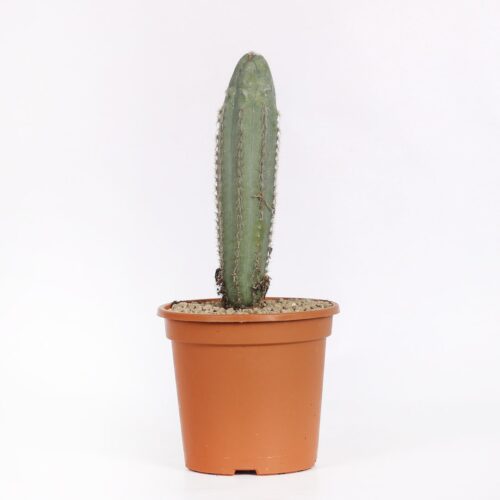
Pilosocereus azureus f. variegata Ø 17
A living masterpiece from Brazil
This extremely rare mutation combines the iconic glaucous blue stem of the classic Brazilian cactus with a striking golden-yellow and cream variegation. The chromatic contrast between the waxy blue skin, the chlorophyll-free golden streaks, and the white-woolly areoles with golden spines makes each specimen a one-of-a-kind work of art. Its collectible value is immense.
Exposure: loves bright light but fears direct sun during the hottest hours. Indoors, place it near a sunny window; outdoors, bright shade preserves the intense blue color.
Watering: moderate and sparse. In spring/summer, water only when the substrate is dry; in autumn/winter, reduce almost to none. Beware of waterlogging – root rot is the main threat.
Soil type: super well-draining, with coarse sand, pumice, and lapilli. A cactus mix with at least 60% inorganic material is ideal. The pot must have drainage holes, preferably terracotta.
Fertilization: from April to September, use a specific cactus fertilizer, low in nitrogen and rich in potassium and phosphorus, diluted to half strength every 3-4 weeks.
Flowers: in the wild, it produces large night-blooming white-pinkish flowers, but in cultivation – especially variegated forms – flowering is rare. The real beauty remains the stem.
Fun fact: the variegation is a genetic mutation that makes every plant absolutely unique. Also, the waxy coating (the “pruina”) regenerates if left untouched – avoid touching the surface to preserve its frosted effect.
- Tip: to enhance the golden streaks, place it against a dark background.
- Caution: the spines are not aggressive, but handle with gloves.
Not grafted
Code 1720
€95,00
Availability: 3 in stock