| Origin | South Africa |
|---|---|
| Family | Didiereaceae |
| Exposure | |
| Watering | Regolari (ogni 10 giorni) da primavera a fine estate. Controllare che la terra sia completamente asciutta prima di annaffiare nuovamente. In inverno annaffiare sporadicamente per evitare che la pianta avvizzisca. Sospendere le annaffiature se la pianta perde le foglie. |
| Fertilization | Didiereaceae |
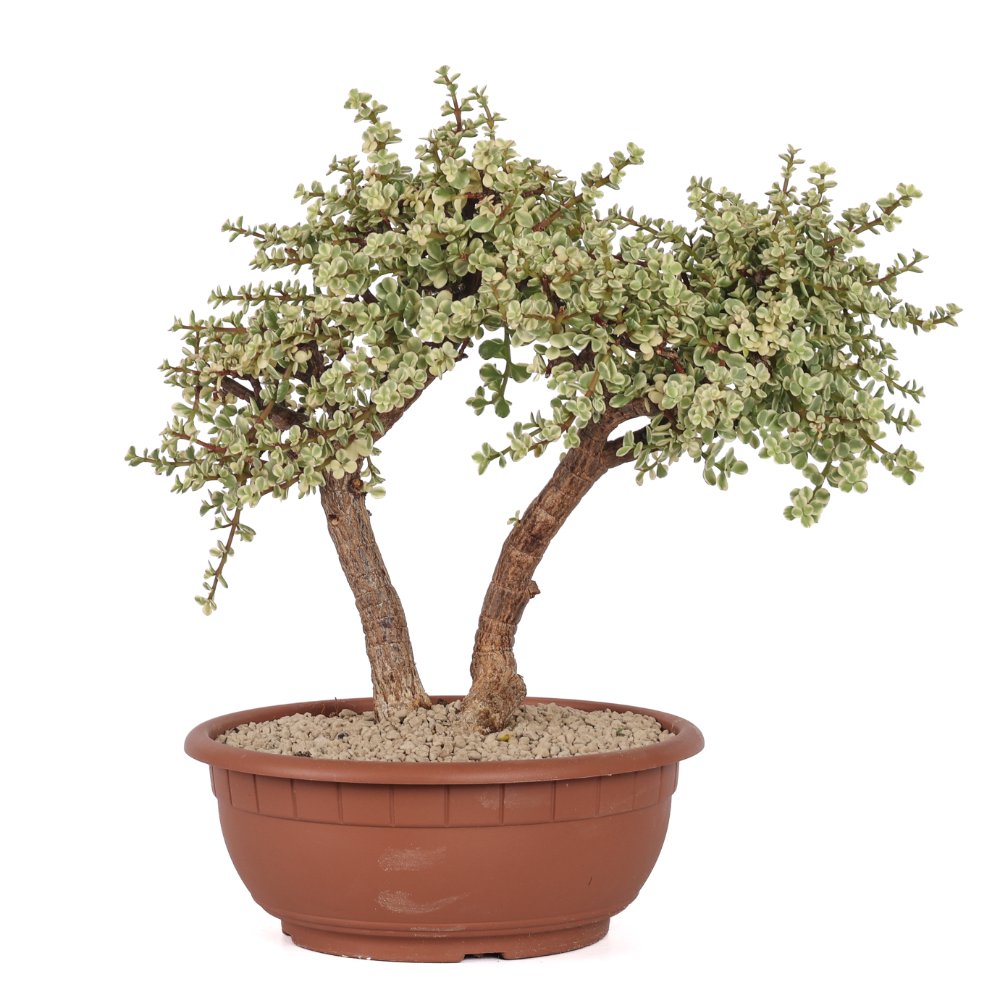
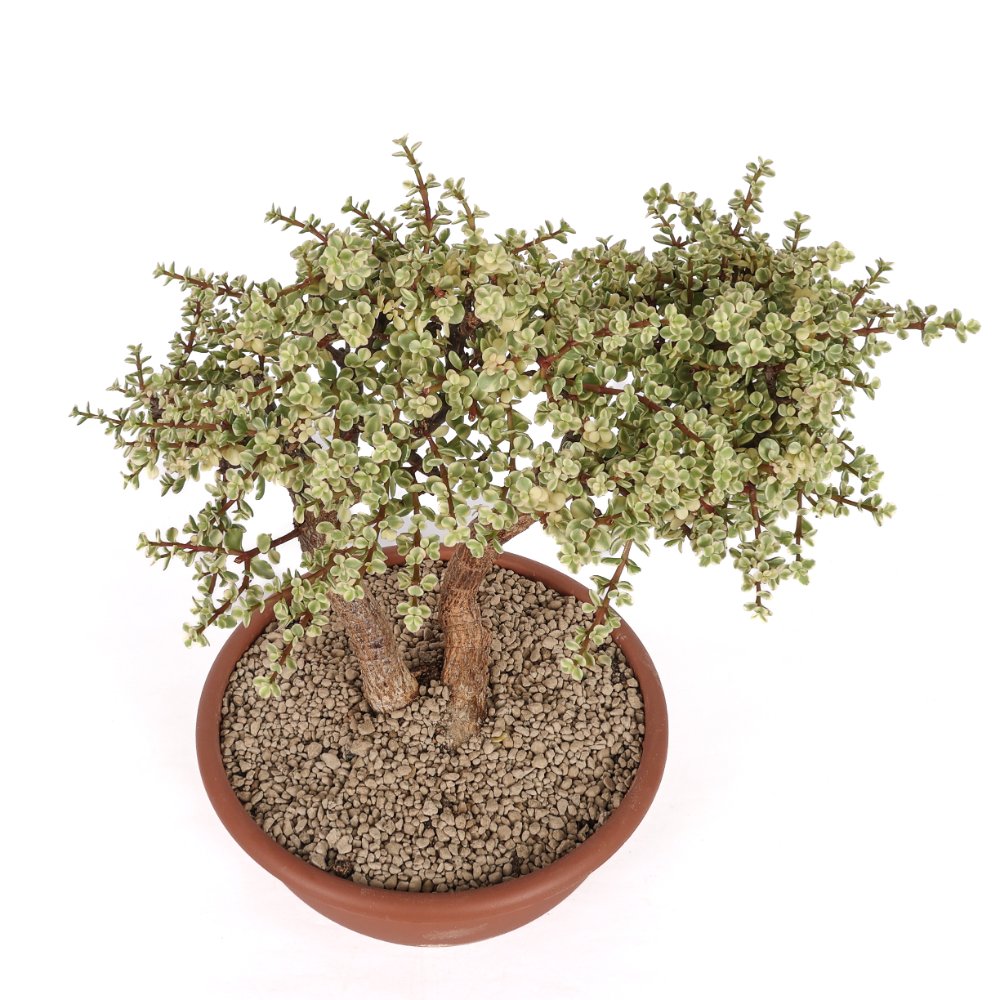
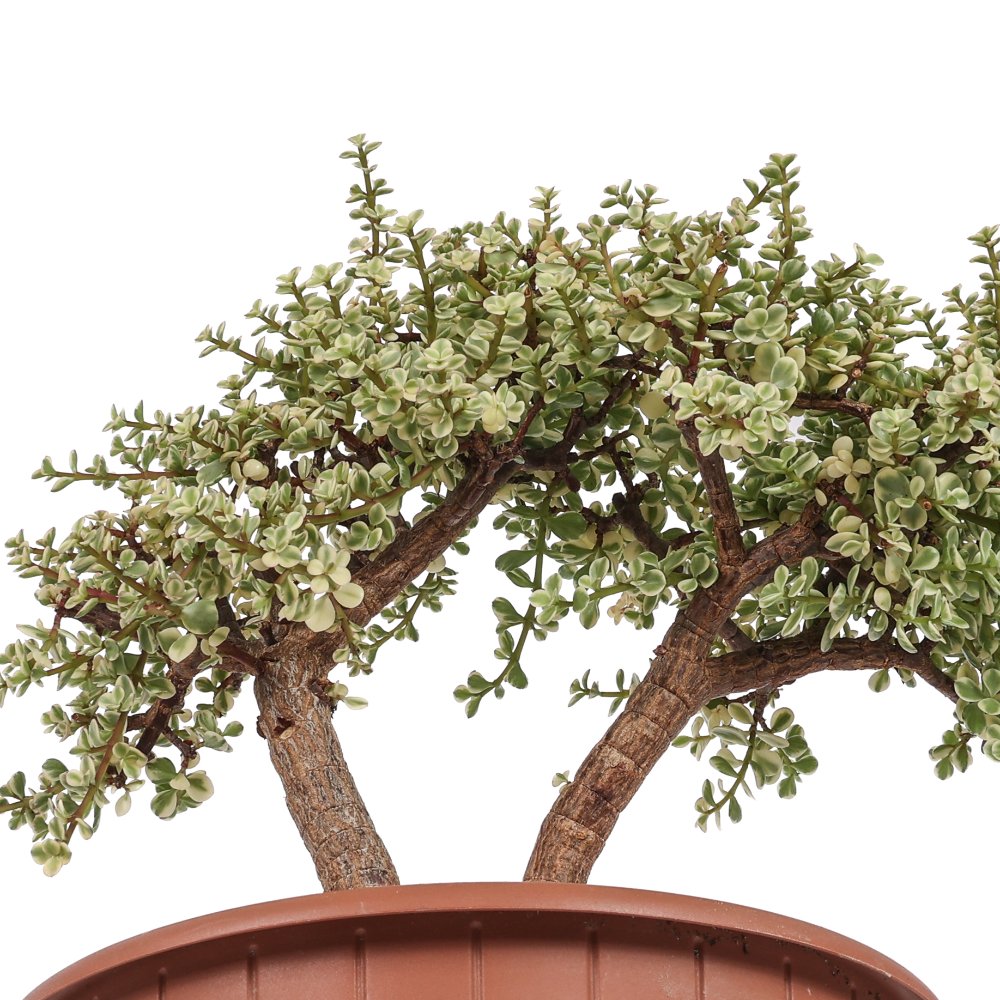
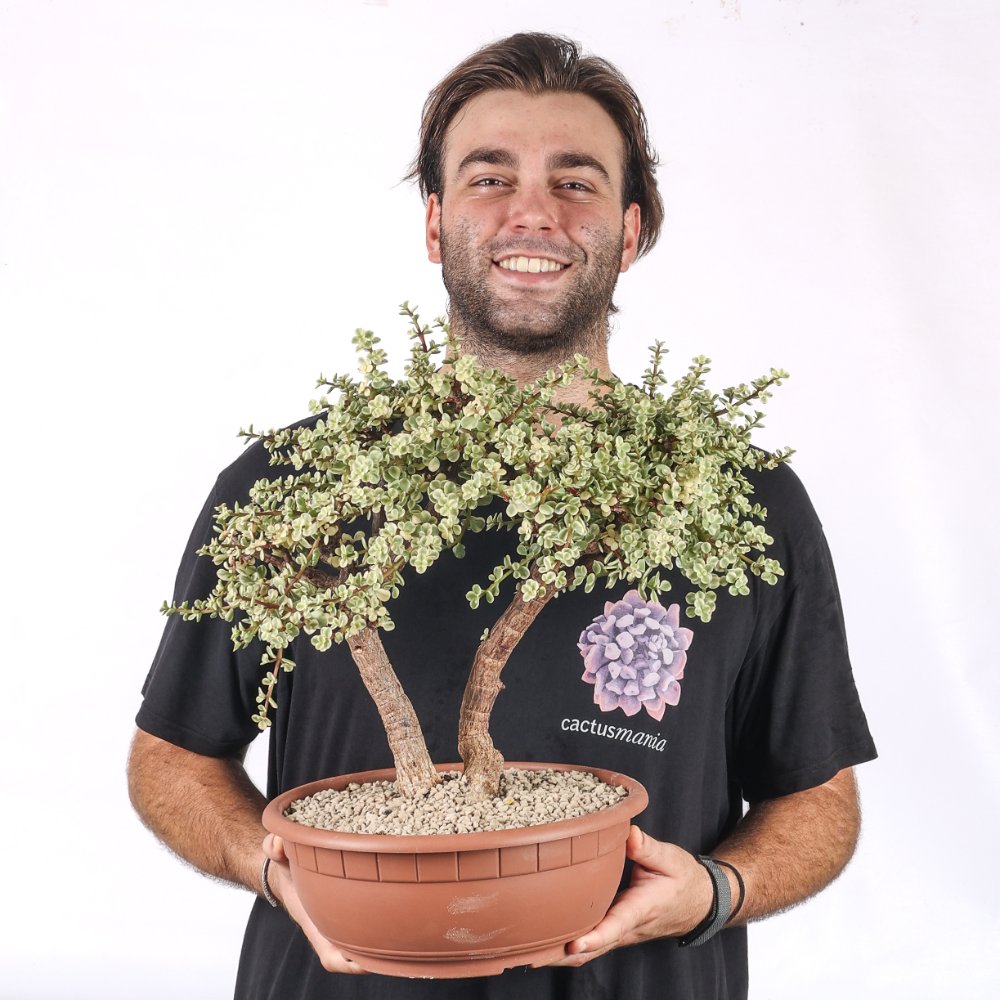
Portulacaria afra f. variegata Ø 23
A vibrant cascade of color for your green spaces
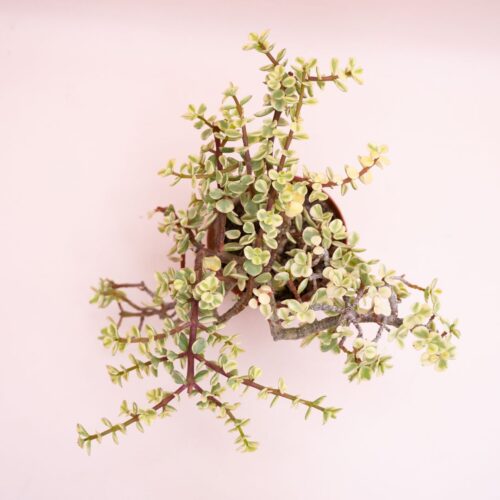
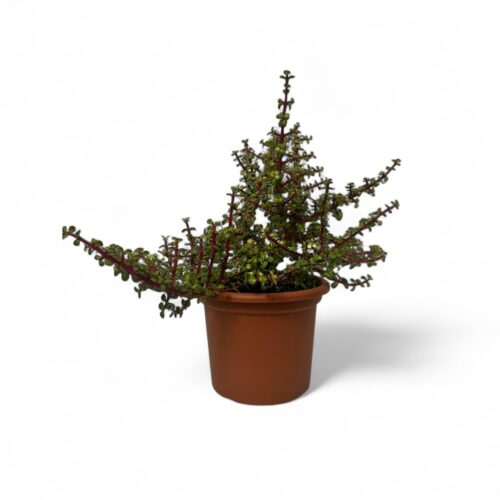
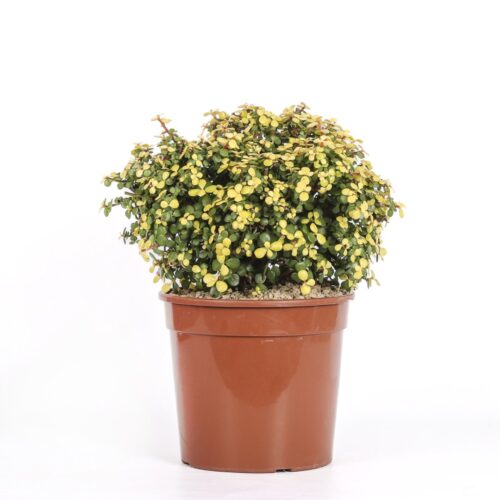
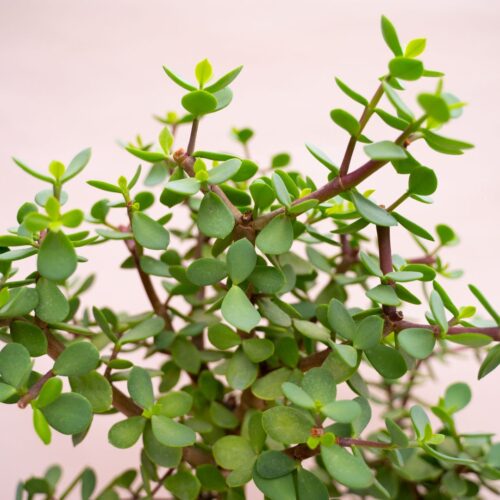
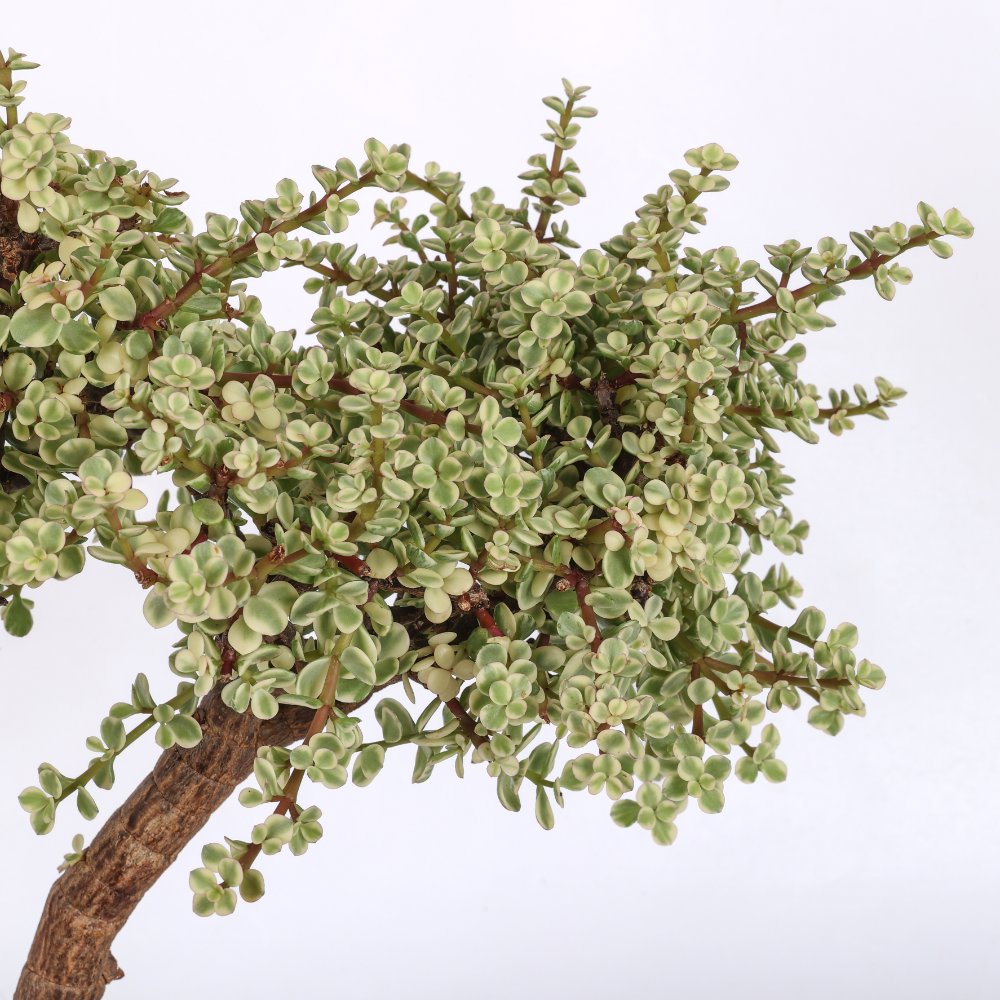
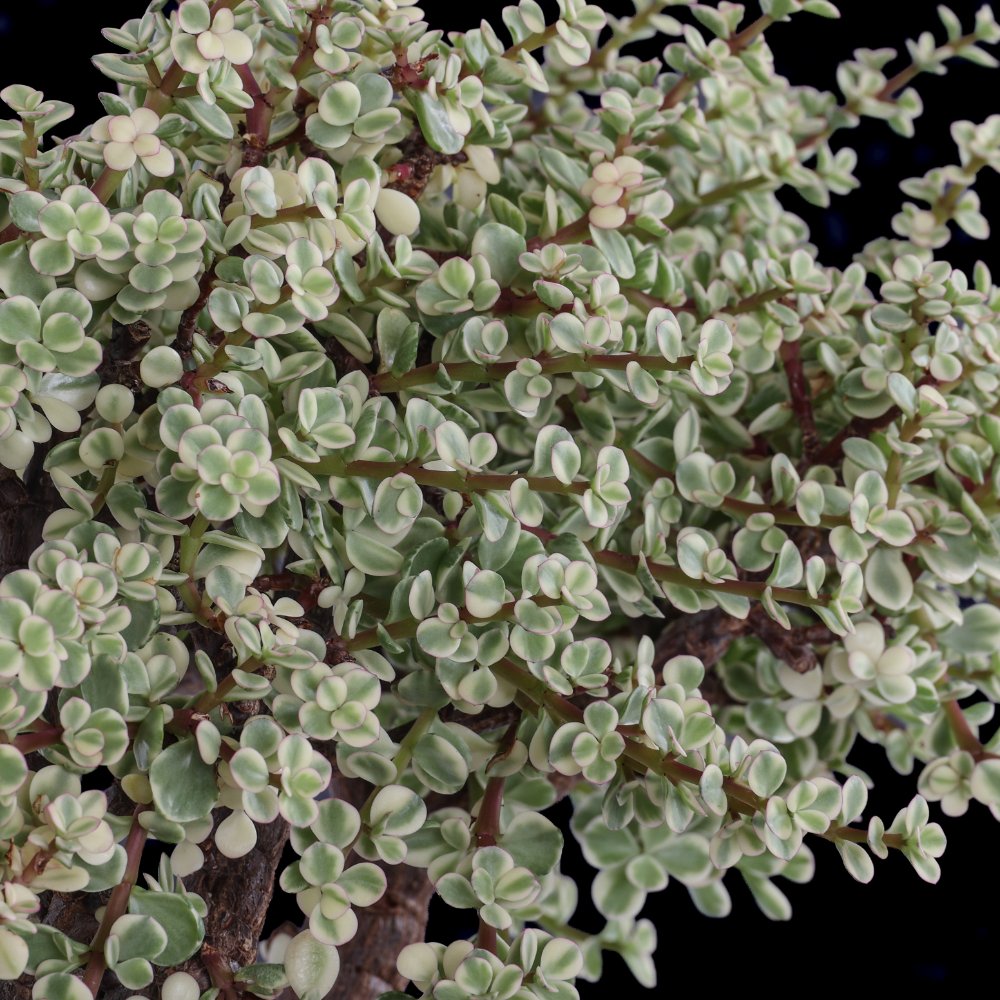
Stunning and versatile shrubby succulent plant, renowned for its vibrant chromatic contrast. Characterized by woody stems ranging from reddish to purplish brown, it develops a dense canopy of small fleshy emerald-green leaves finely edged with creamy white. When exposed to sun, leaf margins and new shoots take on a delightful candy-pink hue. Perfect for hanging baskets due to its trailing habit, or as an ideal base for creating spectacular and elegant succulent bonsai. Unlike the common form, the variegated variety has a slightly more compact growth and a flexible habit that makes it exceptional for creating leaf cascades in hanging pots or for being shaped as a miniature tree. Its cylindrical, fleshy stems store large water reserves, making it extremely tolerant to drought periods.
Growing notes:
- Exposure: loves bright light, even direct sunlight for a few hours a day (preferably in the morning or late afternoon). In full summer sun, variegation intensifies, bringing out rosy tones. Tolerates partial shade, but in that case the cream edges tend to fade and growth slows down.
- Watering: water only when the substrate is completely dry, even deep down. In summer every 7-10 days; in winter reduce drastically (once a month or less). Highly sensitive to waterlogging, which causes root rot.
- Soil type: needs a well-draining, porous mix. Ideal: a cactus and succulent potting soil, enriched with coarse sand or perlite (2:1 ratio). The ideal pH is neutral or slightly acidic.
- Fertilization: from spring to summer, apply a liquid fertilizer for succulents, low in nitrogen and high in potassium and phosphorus, diluted to half the recommended dose, every 3-4 weeks. Stop in autumn-winter.
- Flowers: under optimal conditions and with good exposure, in late spring-summer it produces small star-shaped flowers, pink or whitish-pink, clustered in terminal racemes. Flowering is more abundant if the plant receives a cool, dry winter rest period.
- Curiosities: in South Africa, where it is known as “Elephant Bush”, it is used as fodder for elephants. It is also one of the few succulents suitable for bonsai techniques, thanks to its rapid wound healing and pliable branches. Caution: it is toxic to dogs and cats if ingested.
Not grafted
Code 1723
€110,00
Availability: 3 in stock