| Origin | Mexico |
|---|---|
| Family | Cactaceae |
| Exposure | |
| Watering | Regular (every 10 days) from spring to late summer. Check that the earth is completely dry before watering again. |
| Fertilization | Cactaceae |


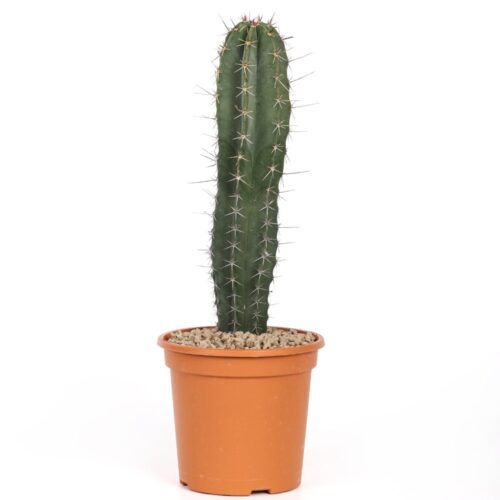
Stenocereus stellatus f. variegata Ø 20
The variegated cactus that is a living work of art
Stenocereus stellatus f. variegata: a botanical rarity of extraordinary ornamental value, a true collector’s piece for cactus lovers. This spectacular variegated form stands out for its geometric columnar stem, characterised by a unique alternation of green and yellow-cream streaks, making every single specimen an irreplaceable work of art. The areoles, topped with star-shaped spines from which it takes its name, create a perfect chromatic contrast with the variegated texture of the skin.
Exposure: enjoys bright light, preferably filtered or with a few hours of direct morning or late afternoon sun. In full summer sun, it can burn if not gradually acclimated: beware of sunburn, which compromises the beauty of the variegation.
Watering: water only when the substrate is completely dry. In summer, every 7–10 days; in winter, suspend almost entirely. It fears waterlogging, which causes irreversible root rot.
Soil type: use a well-draining cactus mix, with coarse sand, pumice, and perlite. The ideal pH is slightly acidic or neutral. Variegation makes this plant more delicate and less vigorous than the green form, so a well-aerated substrate is essential.
Fertilization: from spring to late summer, apply a specific cactus fertiliser, low in nitrogen and high in potassium and phosphorus, once a month diluted to half strength. Variegated plants need a more balanced nutritional supply to maintain their brilliance.
Flowers: under optimal conditions, it produces large nocturnal white-pink flowers, which bloom in late spring and attract nocturnal pollinators such as moths and bats. Flowering is rarer in variegated plants but spectacular when it occurs.
Curiosity: in Mexico, where it grows wild, its spiny fruits – called “pitaya” – are edible and highly prized. Variegation is a stable genetic mutation, making each plant absolutely unique. This plant is grafted onto a resistant rootstock, which promotes growth and makes it more suitable for pot cultivation. Perfect for those who want a rare plant that does not require constant attention. It needs little care, loves light, and fears waterlogging. One-of-a-kind piece.
- Geometric columnar stem with yellow-cream variegation
- Star-shaped spines creating chromatic contrast
- Nocturnal flowers white-pink in late spring
- Edible fruits (“pitaya”) in Mexico
- Stable genetic mutation – every plant is unique
- Grafted onto resistant rootstock
- One-of-a-kind – irreplaceable specimen
Code 1724F
€140,00
Availability: 1 in stock