| Origin | Cultivar |
|---|---|
| Family | Cactaceae |
| Exposure | |
| Watering | Regular (every 10 days) from spring to late summer. Check that the earth is completely dry before watering again. |
| Fertilization | Cactaceae |
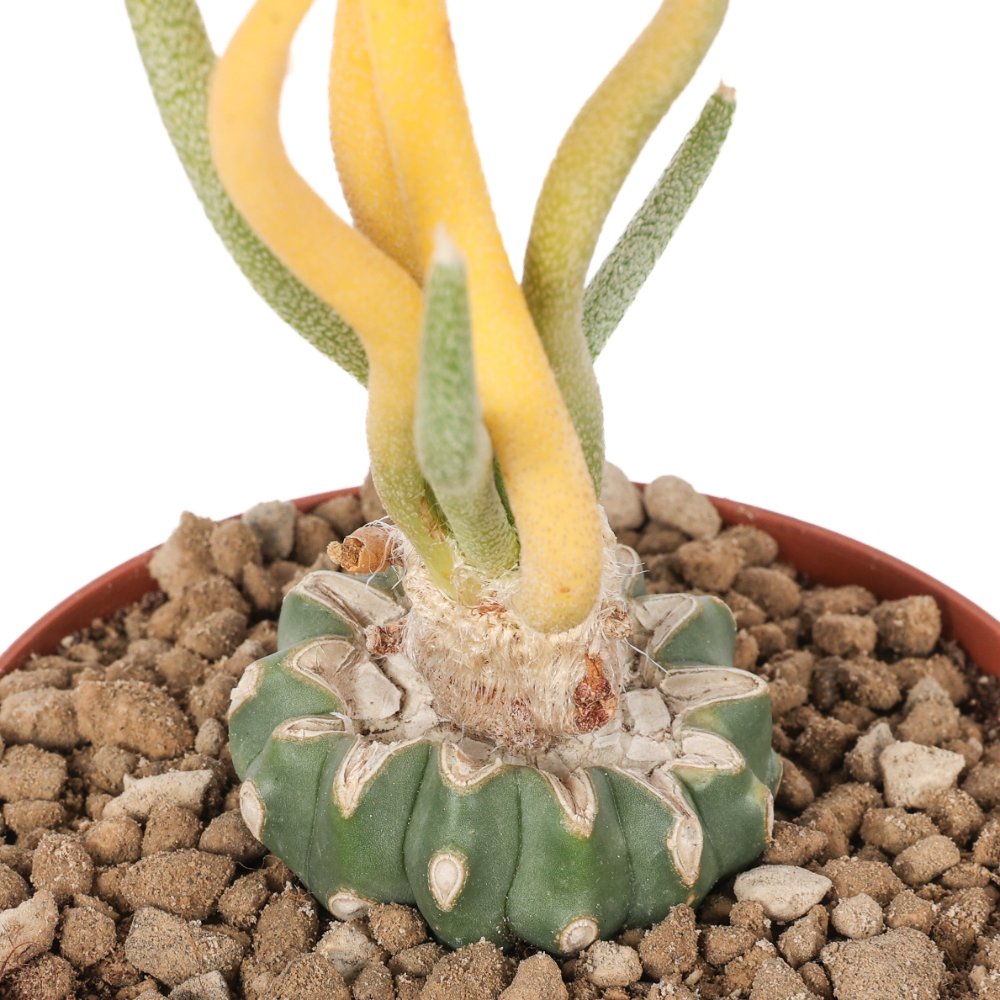
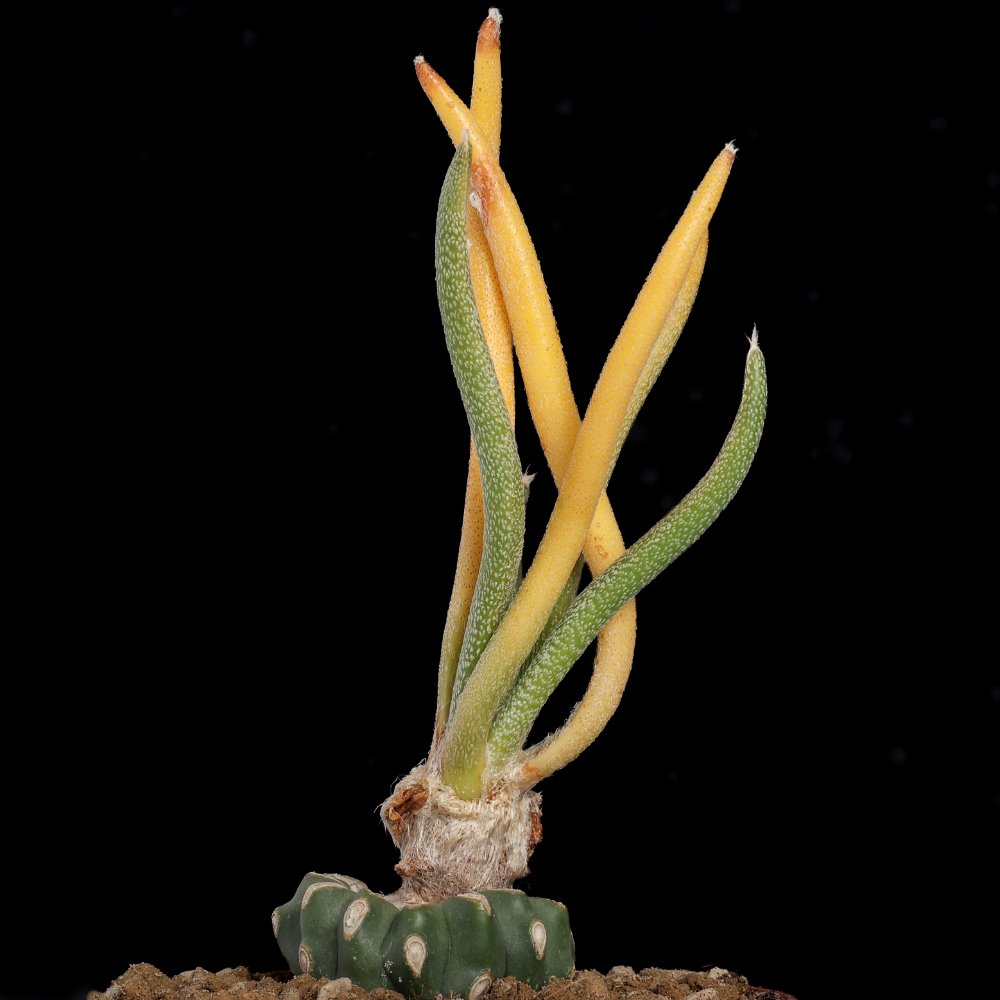
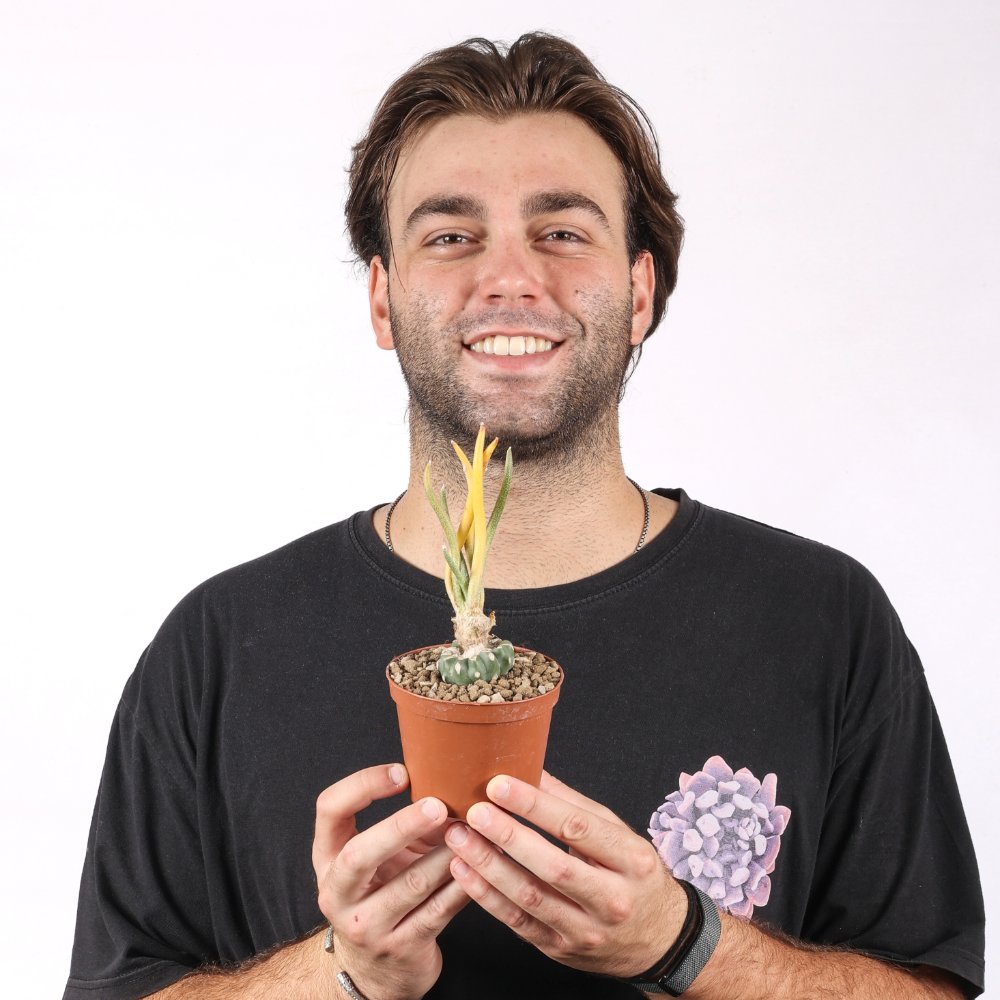
Astrophytum caput-medusae f. variegata Ø 10,5
The chromatic masterpiece among the world’s rarest cacti
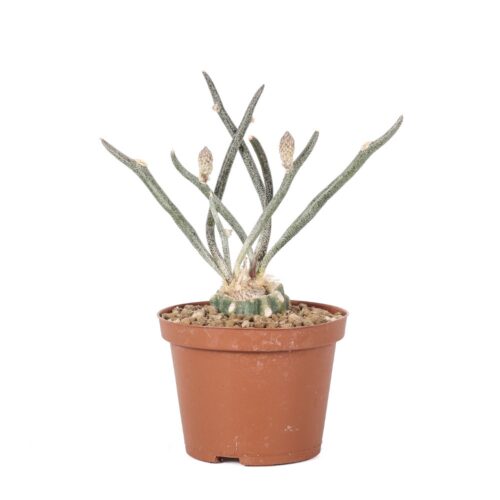
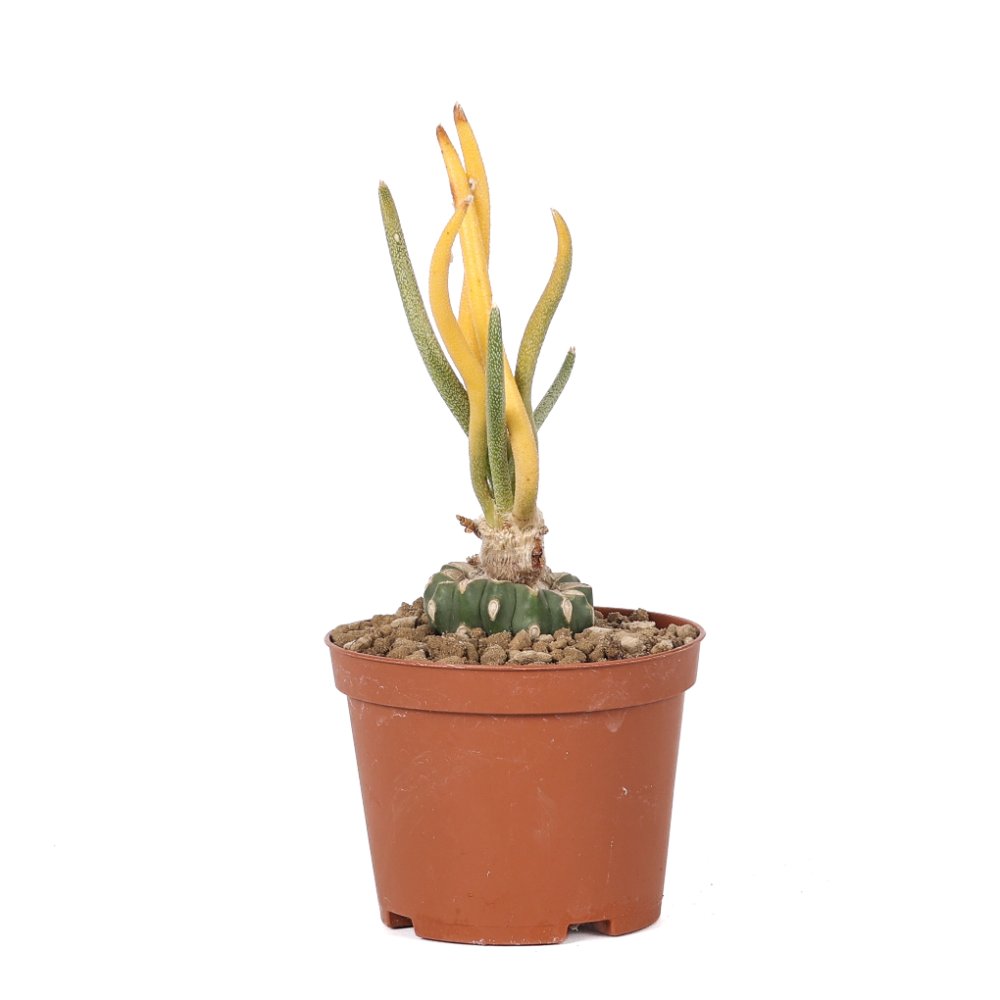
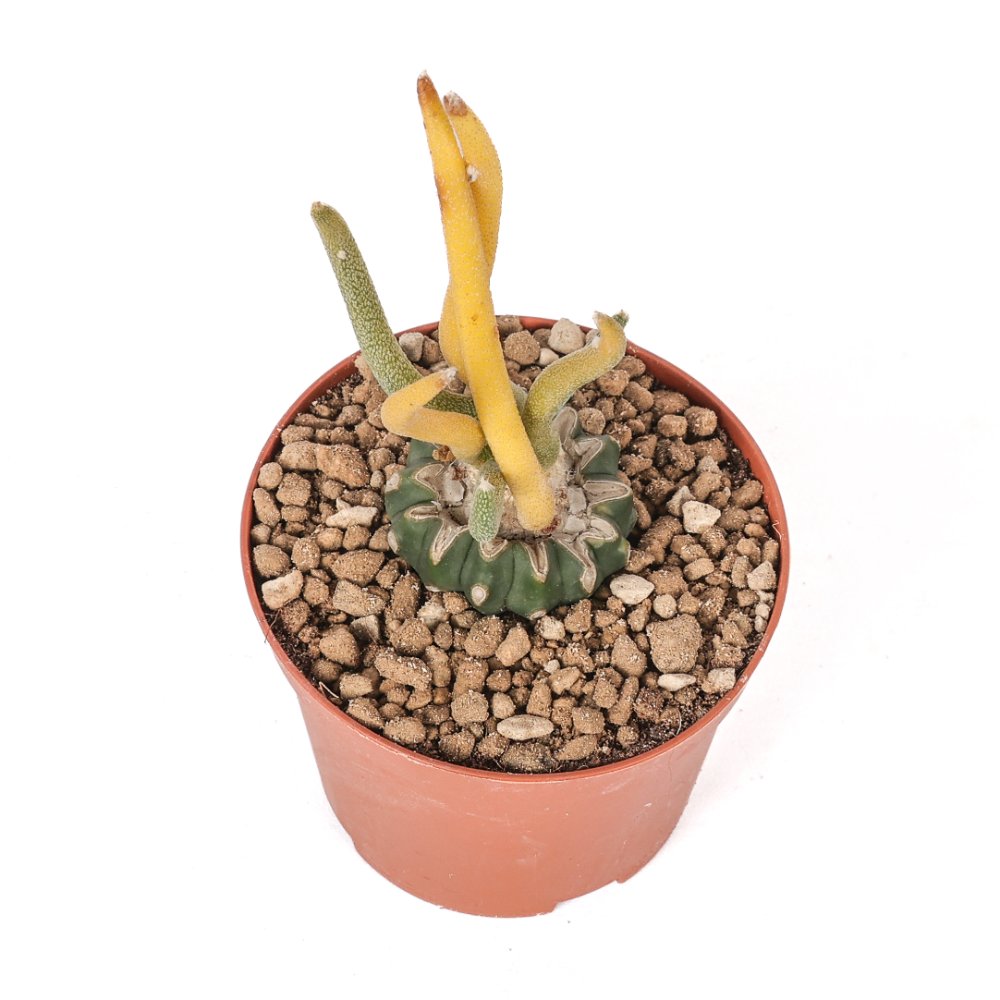
Astrophytum caput-medusae f. variegata – represents one of the most exclusive and unobtainable peaks in the world of cactus collecting. This incredibly rare genetic variant combines the amazing “tentacle” form of the typical species with a spectacular chromatic variegation, creating chlorophyll‑free areas in shades of bright yellow, orange, or red. The contrast between the variegated tissues, the green epidermis, and the characteristic white speckling of micro‑scales makes every single specimen an unrepeatable chromatic masterpiece.
If the geometric habit of the typical species is already a botanical marvel, the variegated form of Astrophytum caput-medusae ranks among the most precious gems a collector could ever own. This cultivar shows a partial lack of chlorophyll, appearing as stripes, sectors, or entire portions of stems coloured in intense yellow, cream, or reddish hues. The growth of this variegated form is noticeably slower and more delicate than the green plant, making every stable, well‑developed specimen a true cultivation milestone. It produces magnificent day‑blooming flowers on top of the tubercles, with cream‑yellow petals and an inner throat shaded in red.
Exposure: requires very intense light but never direct sun during the hottest hours. The variegated parts, lacking chlorophyll, are extremely sensitive to sunburn. Place it in a spot with filtered light or direct sun only in early morning or late afternoon. In winter, on the other hand, give it as much light as possible to preserve the intensity of the variegation.
Watering: extremely delicate and sparing. During the growing season (spring–summer), water very cautiously, allowing the substrate to dry out completely between waterings. Variegation slows photosynthesis and makes the plant more vulnerable to waterlogging. In autumn, gradually reduce watering; in winter, withhold water almost entirely, only lightly misting every 4‑5 weeks to prevent the roots from completely drying out.
Soil type: requires a mineral, ultra‑well‑draining mix. Ideally, a blend of coarse sand, pumice, volcanic grit, and perlite (about 80% mineral and 20% well‑sifted cactus soil). Adding a little zeolite helps keep the substrate clean and retain nutrients without compromising drainage.
Fertilising: from April to September, apply a specific low‑nitrogen cactus fertiliser, diluted to one‑quarter of the recommended strength, once a month. Variegated plants need fewer nutrients than green forms – doses that are too high could further alter the variegation or burn the roots. Cease completely in autumn and winter.
Flowering: in late spring or early summer, it produces magnificent day‑blooming flowers on top of the tubercles, with cream‑yellow petals and an inner throat shaded in red. Flowering is encouraged by a cool, dry winter (10‑12°C) and excellent light exposure. Note: variegated specimens flower less frequently and later than the green form.
Did you know? Variegation is a genetic mutation that reduces chlorophyll, making this plant one of the slowest and most difficult to grow in the cactus world. Every specimen has an absolutely unique variegation pattern – no two plants will ever be identical. Seed propagation is extremely complex, and the germination rate of variegated plants is very low, which explains its extreme rarity and exceptional collector’s value. Like all Astrophytum, it has a delicate root system – avoid frequent repotting and handle with the utmost care.
A plant not for beginners, but for the experienced collector it represents the most fascinating and sought‑after challenge. With patience and care, it will bring unimaginable rewards, becoming the most precious jewel in your collection.
Not grafted
Code 1714
€90,00
Availability: 3 in stock