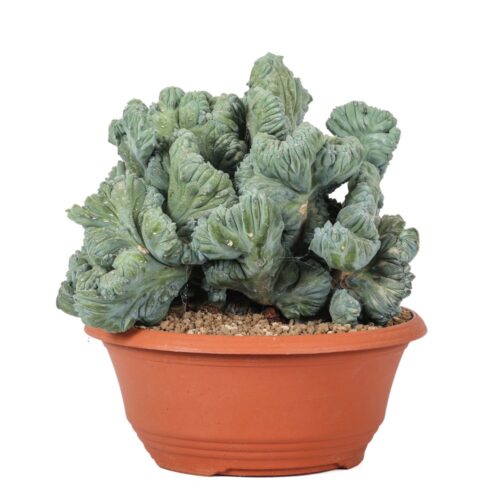
| Origin | Cultivar |
|---|---|
| Family | Cactaceae |
| Exposure | |
| Watering | Regular (every 10 days) from spring to late summer. Check that the earth is completely dry before watering again. |
| Fertilization | Cactaceae |
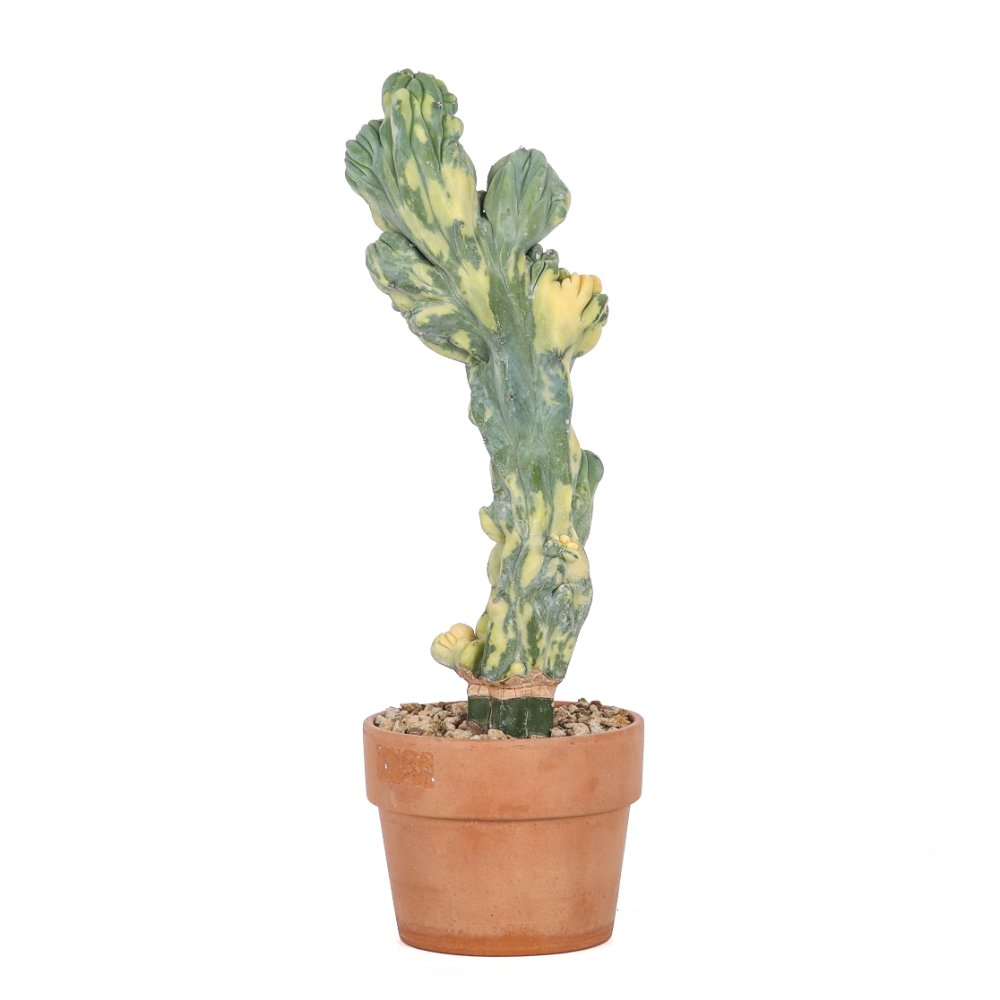
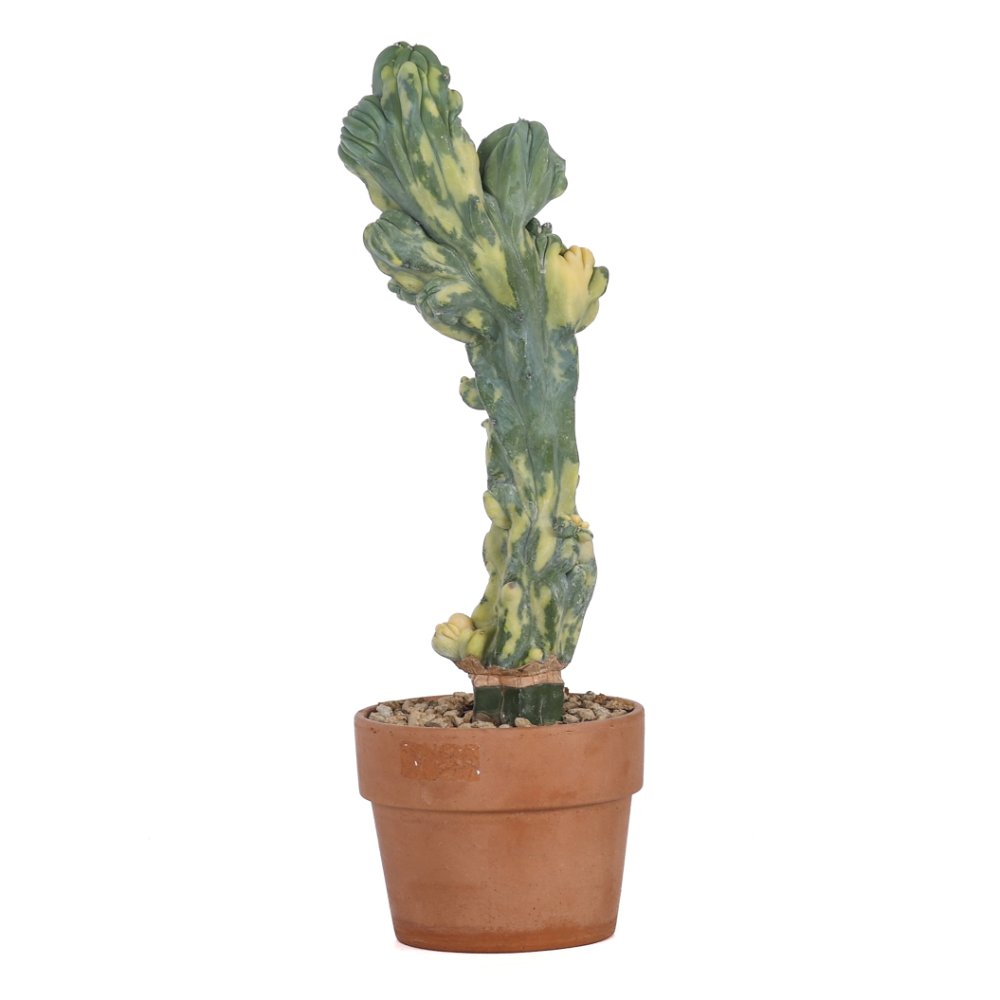
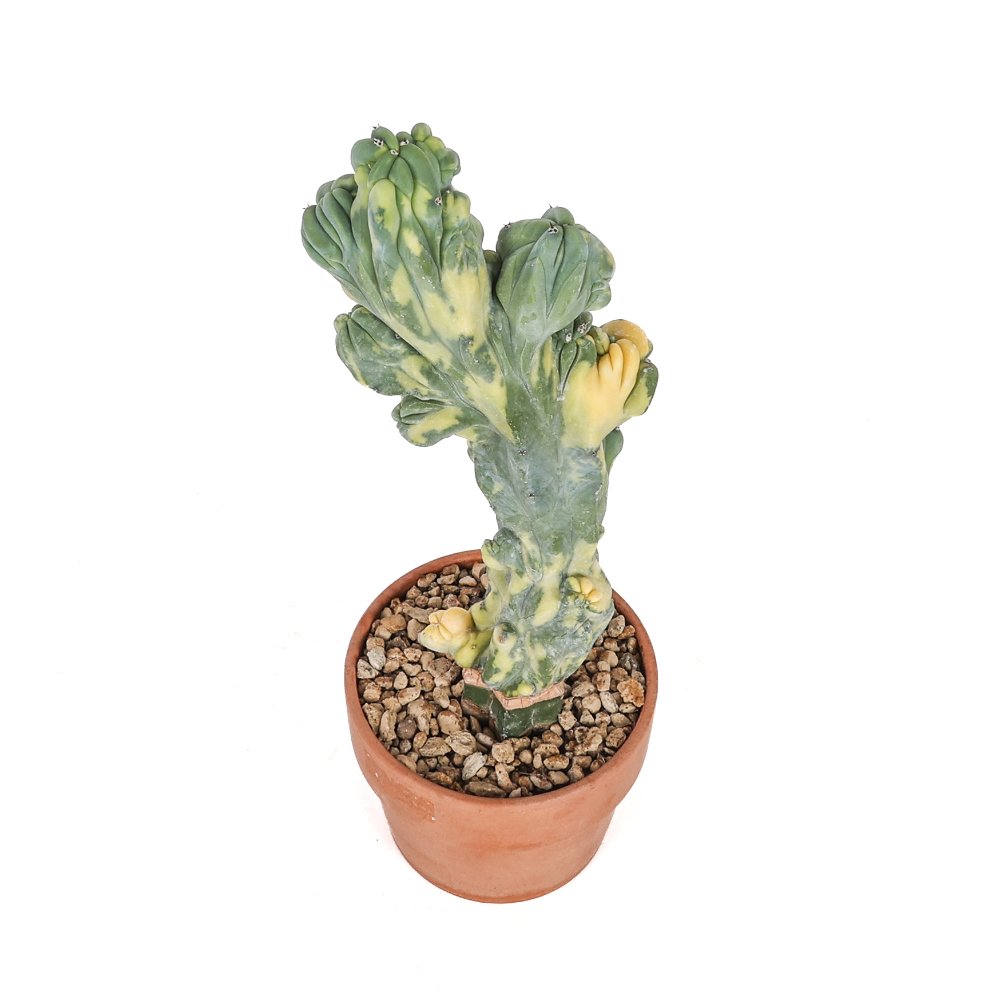
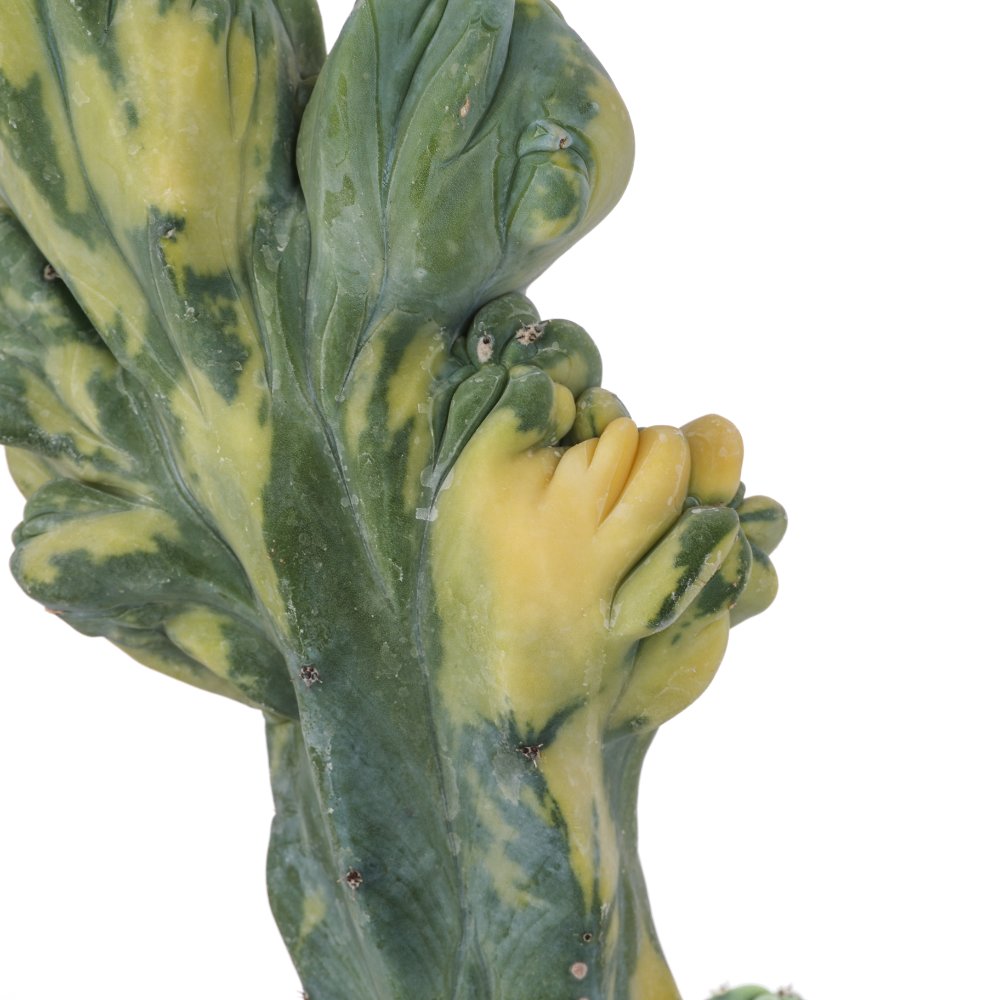
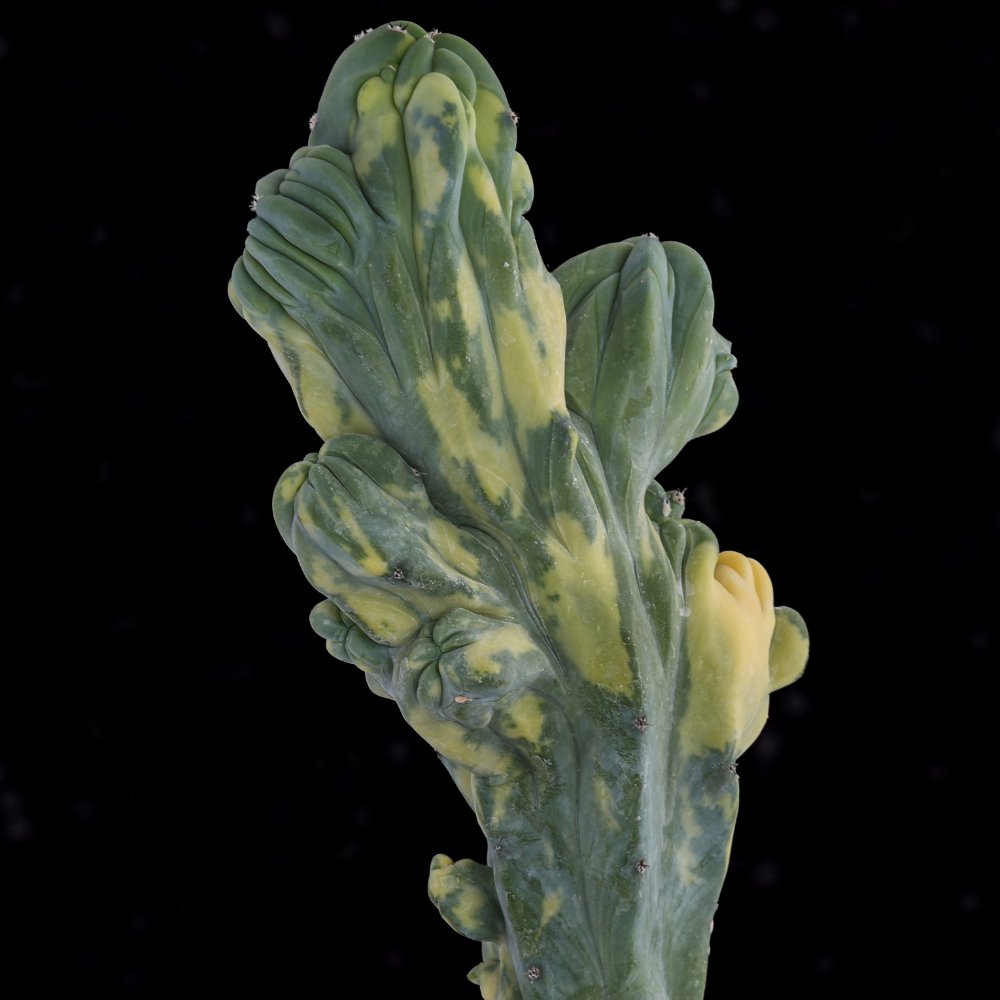
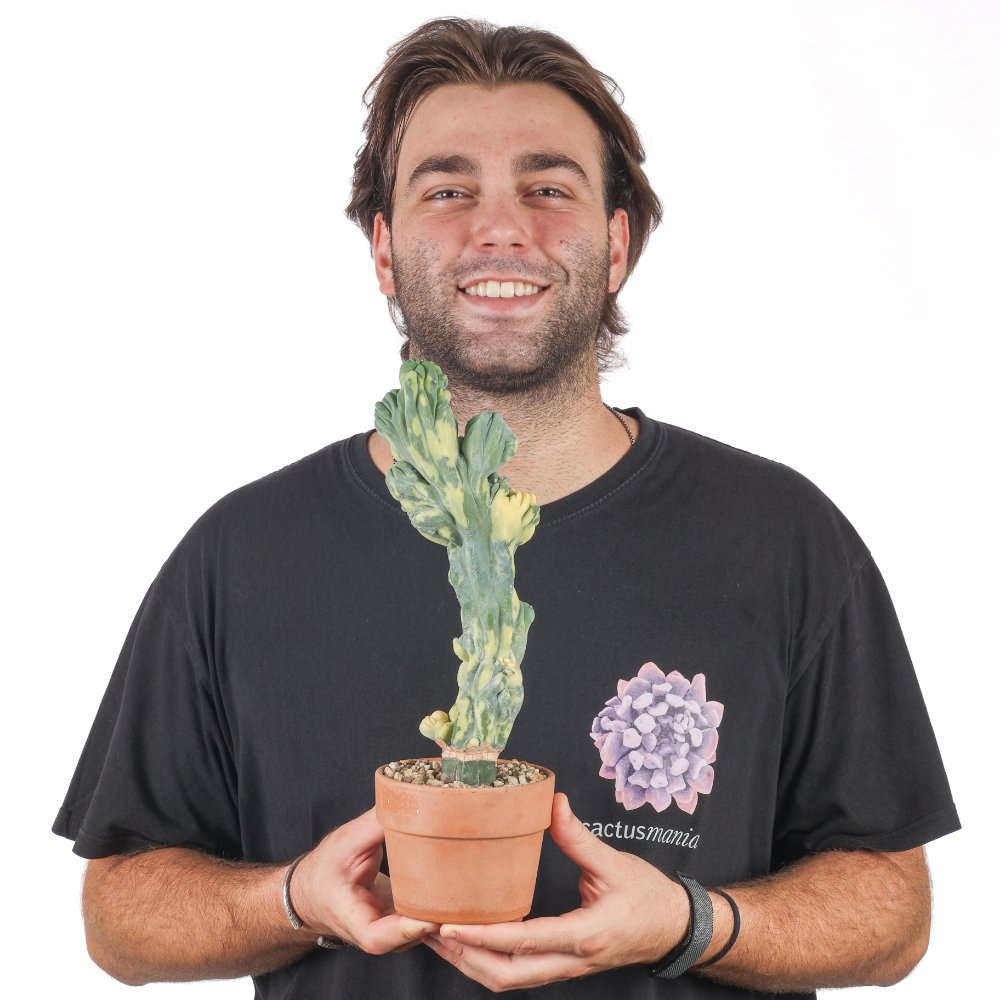
Myrtillocactus geometrizans f. crestata variegata Ø 12
The golden living sculpture no collector can ignore
An extraordinary and extremely rare double biological mutation. This gem combines elegant crested growth, developing into sinuous waves and sculptural fans resembling marine corals, with a breathtaking golden-yellow and cream variegation. The contrast between the waxy blue-glaucous skin typical of the species and the golden chlorophyll-free flames makes each specimen a living work of art, unique and of immense value. If the classic “Crested Cactus” is already one of the most decorative and sought-after forms in interior design and collecting, this rare stabilised variegated selection elevates the plant to a higher level of exclusivity. The chlorophyll-free portions create golden streaks, bands and patches that follow the curves and wavy ridges of the stem, ensuring that no two plants in the world are identical.
Growing notes
- Exposure: prefers bright but filtered light; avoid direct sun during the hottest hours to prevent burning the more sensitive variegated parts. A spot in a bright greenhouse or behind a shading net is ideal.
- Watering: water with care – only when the substrate is completely dry. In winter, reduce to a minimum, especially if temperatures drop below 12°C.
- Soil type: must be extremely well-draining. A cactus mix with plenty of pumice, lapilli and coarse sand (at least 70% inorganic component) prevents deadly waterlogging.
- Fertilising: in spring and summer, once a month, with a specific cactus fertiliser low in nitrogen and high in potassium and phosphorus, to promote compact growth and vibrant colouring.
- Flowers: if well grown, it produces small whitish-green or pinkish flowers in late spring, followed by edible bluish berries with a flavour reminiscent of blueberries (hence the name “Myrtillocactus”).
- Did you know? The crested form is caused by a mutation of the vegetative point that diverts growth from cylindrical to wavy. In this variegated variant, the double mutation makes it one of the most sought-after plants by collectors worldwide.
Unique piece
Grafted
Code 1732F
€120,00
Availability: 1 in stock