| Origin | Mexico |
|---|---|
| Family | Cactaceae |
| Exposure | |
| Watering | Regular (every 10 days) from spring to late summer. Check that the earth is completely dry before watering again. |
| Fertilization | Cactaceae |
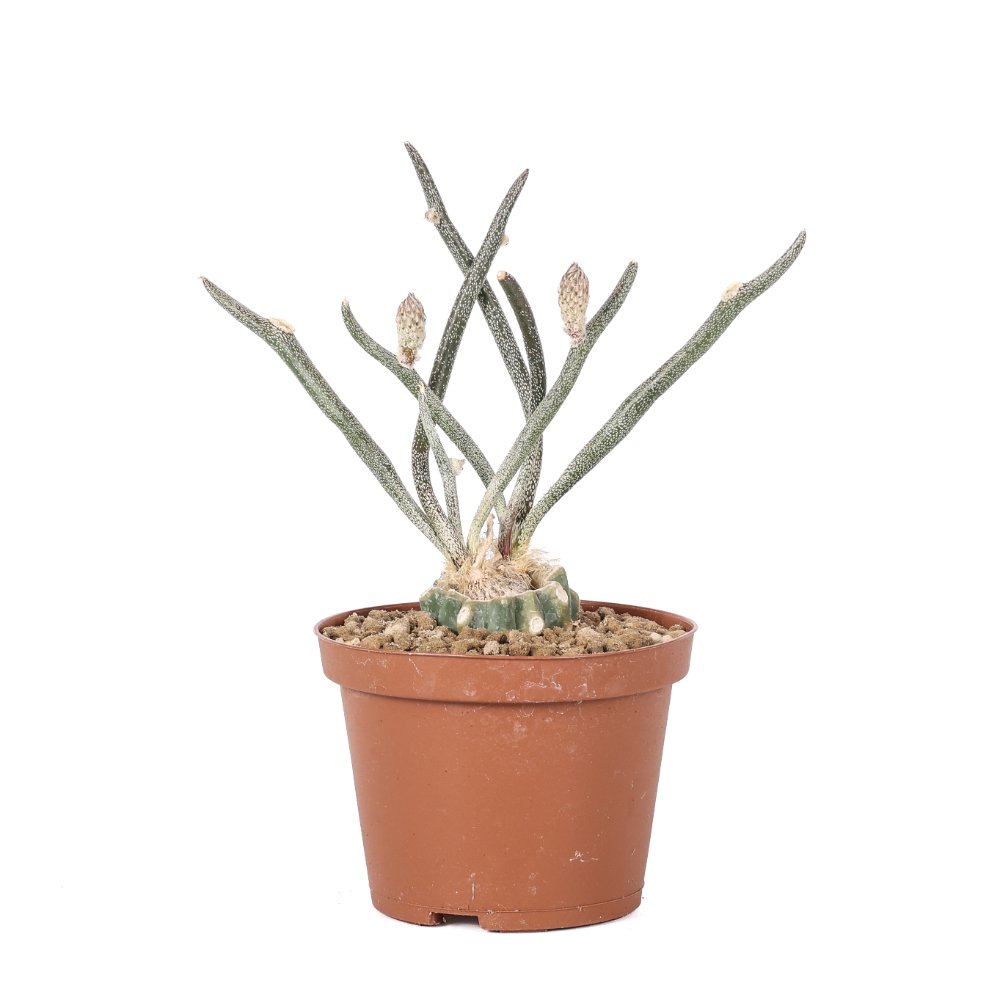
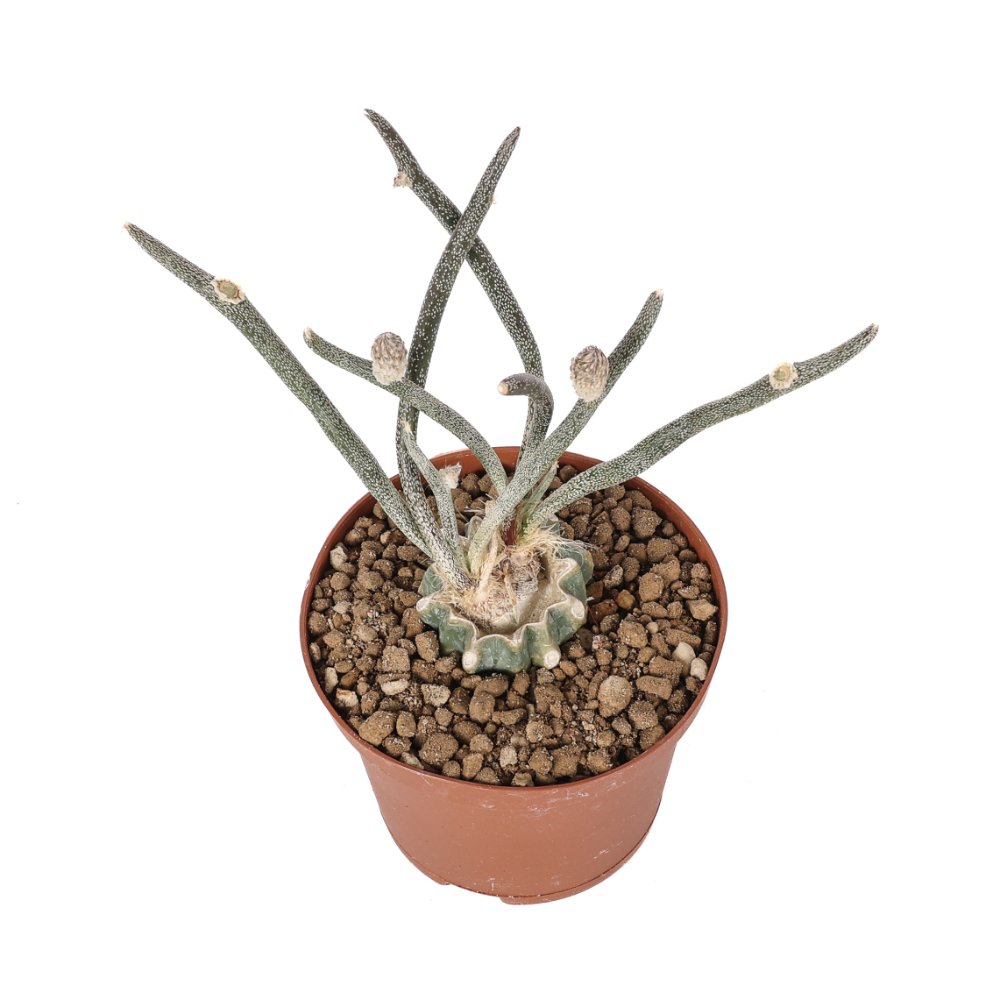
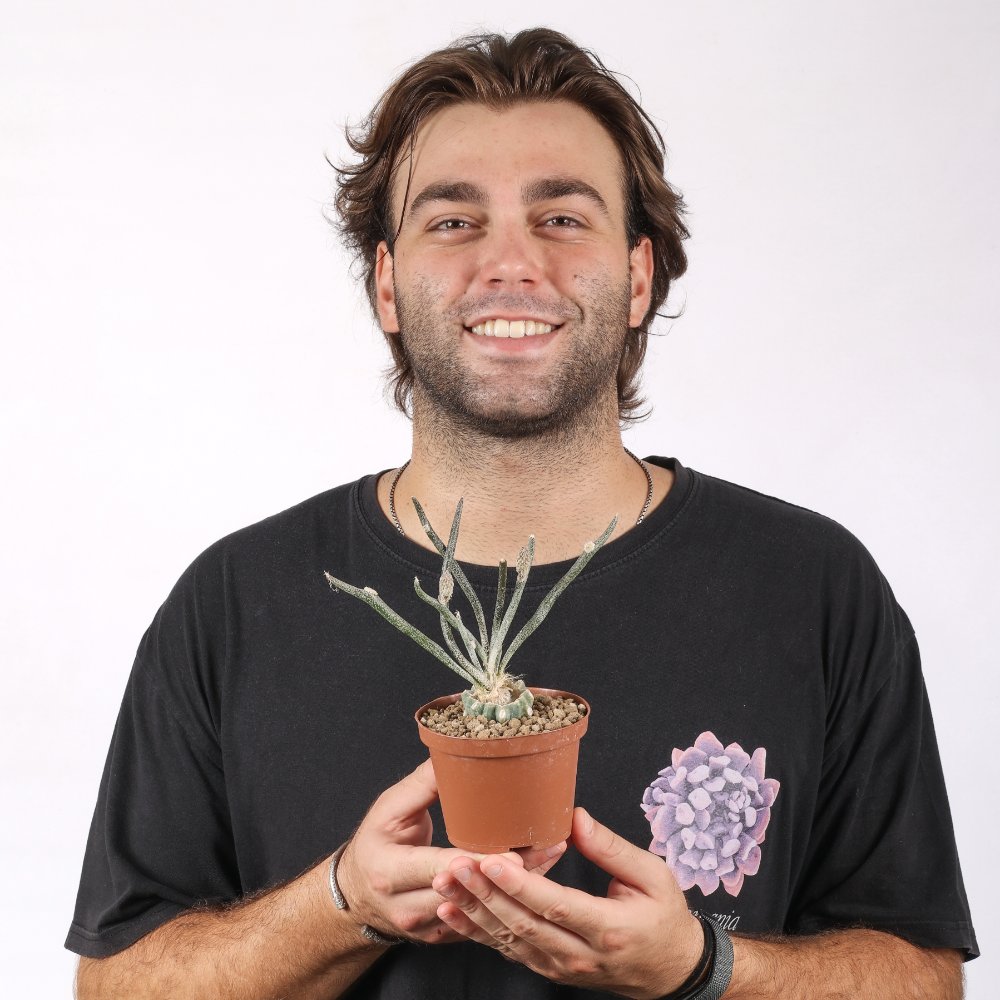
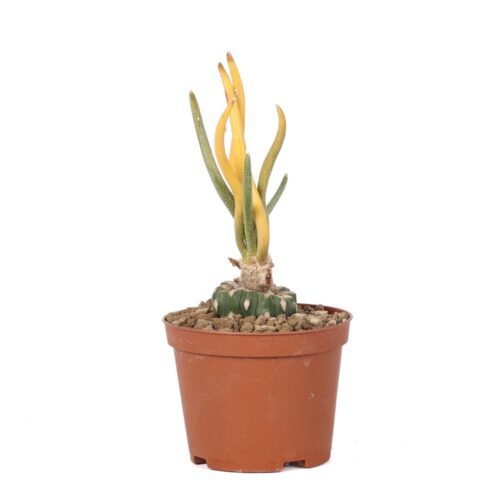
Astrophytum caput-medusae Ø 10,5
The medusa cactus that revolutionised botany
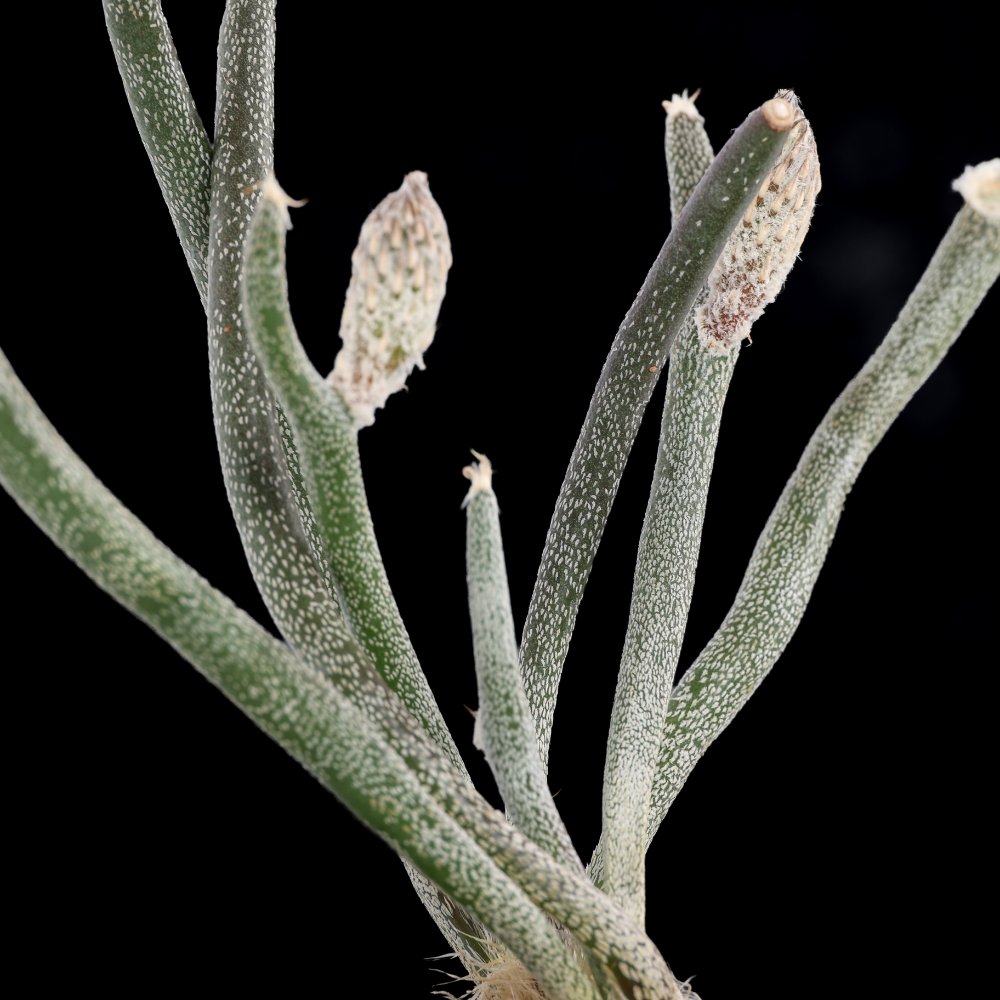
One of the most sensational and revolutionary discoveries in recent botany. Classified among the rarest, most unusual and most sought‑after cacti in the world, it completely overturns the classic aesthetic of cacti. Instead of the usual ribs, it develops long, cylindrical, flexible tubercles covered in dense white speckling. Discovered only in the early 2000s in northern Mexico, it represents a true evolutionary exception in the plant kingdom.
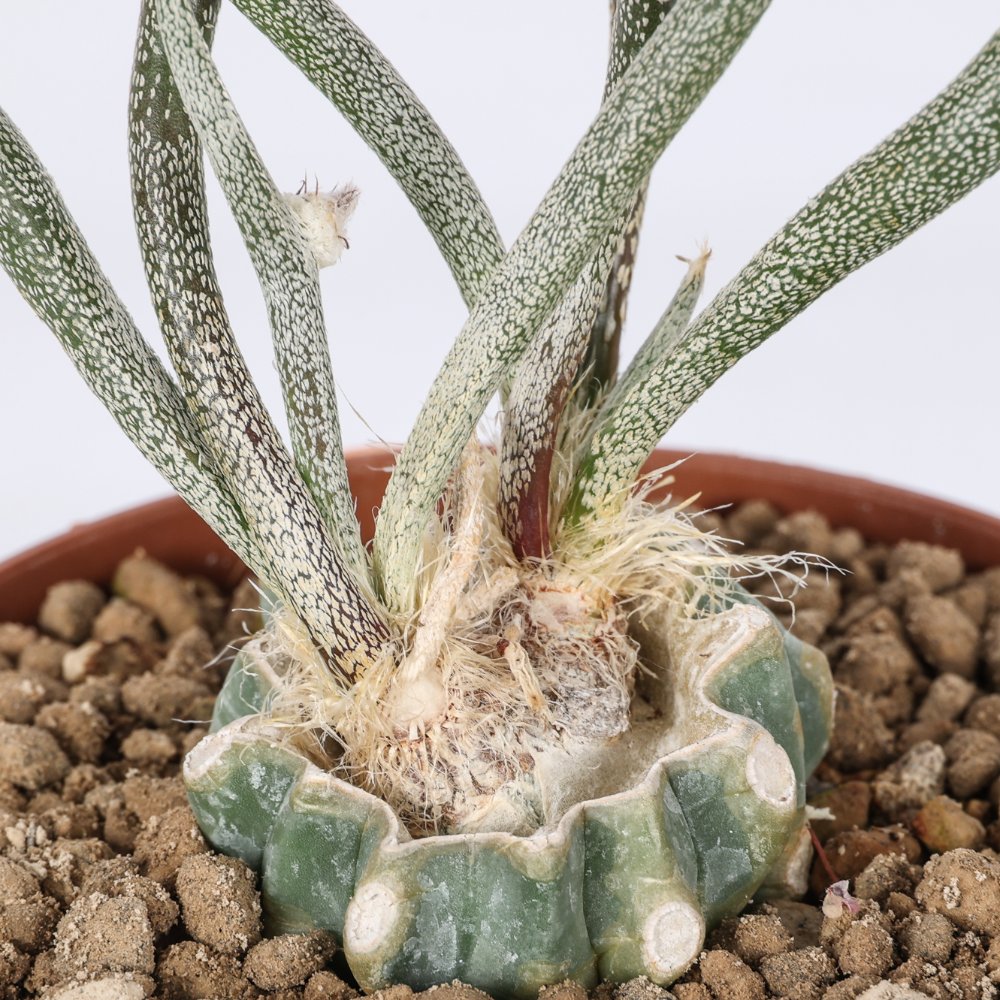
This plant does not have the typical globose shape of the Astrophytum genus, but consists of a thick, turnip‑shaped (tuberous) root underground, from which slender epidermal stems branch out. The epidermis is adorned with tiny trichomes (small white scaly dots) typical of the genus, which help the plant capture ambient moisture. A botanical gem of immense collector’s value, producing large and spectacular cream‑yellow flowers.
Exposure: prefers very intense light, with direct sun for several hours a day, especially in the morning and late afternoon. During the hottest summer hours, light filtering is advisable to prevent the epidermis from dehydrating or scorching. In winter, place it in the brightest spot available.
Watering: during the growing season (spring–summer), water very sparingly, waiting for the substrate to dry out completely between waterings. The tuberous root is highly sensitive to waterlogging. In autumn, gradually reduce watering; in winter, withhold water almost entirely, only occasionally misting lightly to mimic the night dew of its native habitat.
Soil type: needs a mineral, ultra‑well‑draining mix. Ideally, a blend of coarse sand, pumice, volcanic grit, and a small percentage of cactus soil (about 70% mineral and 30% organic). The pH should be slightly alkaline – the addition of a little gypsum or crushed limestone is appreciated.
Fertilising: from April to September, apply a specific low‑nitrogen cactus fertiliser, diluted to one‑quarter of the recommended strength, once a month. Cease completely in autumn and winter.
Flowering: in late spring or early summer, it produces large cream‑yellow flowers with a dark centre, reaching up to 5‑6 cm in diameter. They are spectacular and highly fragrant. To encourage flowering, a dry, cool winter rest period (around 10‑15°C) is essential.
Did you know? The name “caput-medusae” (Medusa’s head) recalls the long, sinuous tubercles that resemble the hair of the mythological Gorgon. Its relatively recent discovery has shaken the taxonomy of the genus Astrophytum. In the wild, it grows on calcareous and gravelly soils, often semi‑buried, with the tuberous root protected underground and the stems radiating outwards. Seed propagation is slow and difficult, which contributes to its rarity and high collector’s value.
Not a plant for beginners – it demands attention and respect for its rest periods. But for the experienced enthusiast, it represents one of the most fascinating and rewarding challenges in the cactus world.
Not grafted
Code 1713
€60,00
Availability: 3 in stock