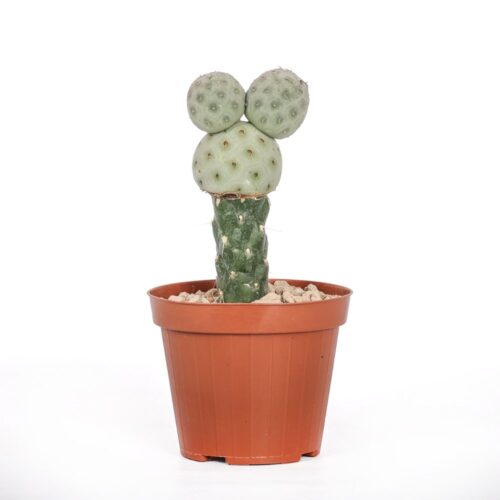
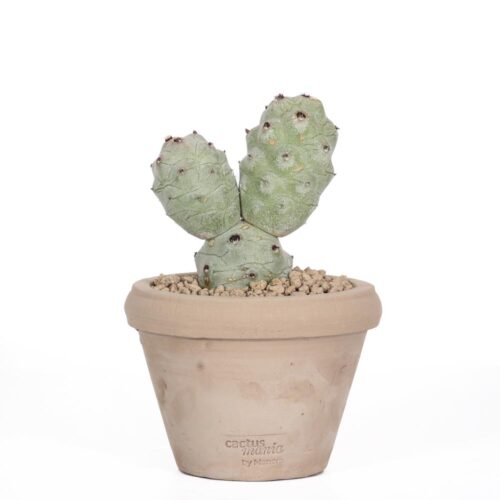
| Origin | South America |
|---|---|
| Family | Cactaceae |
| Exposure | |
| Watering | Regular (every 10 days) from spring to late summer. Check that the earth is completely dry before watering again. |
| Fertilization | Cactaceae |
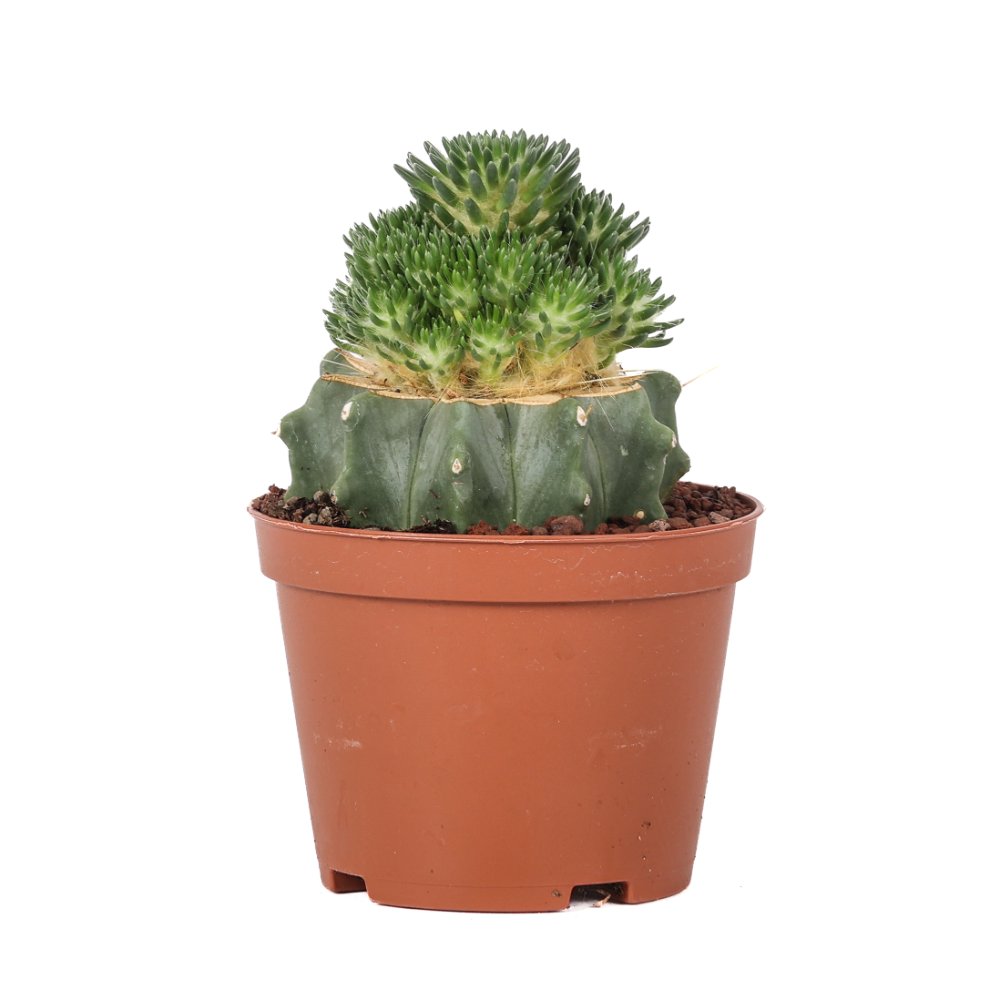
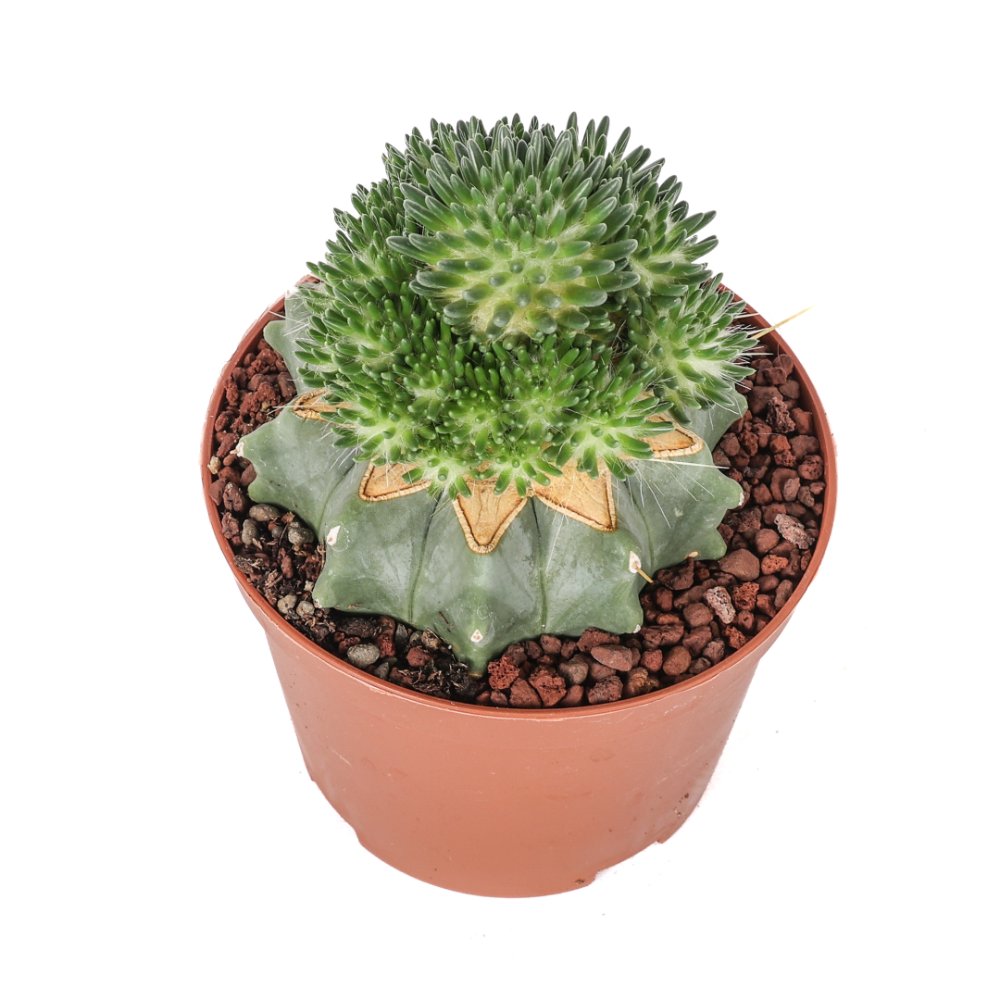
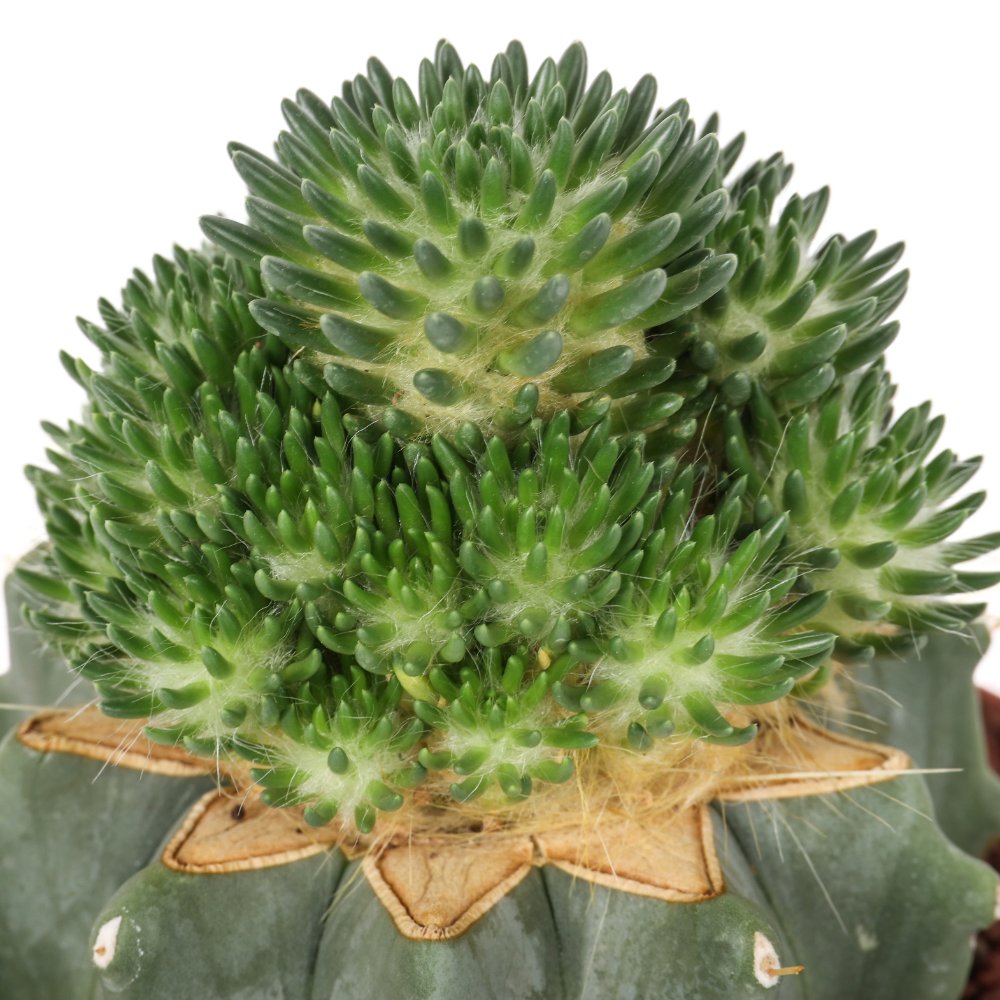
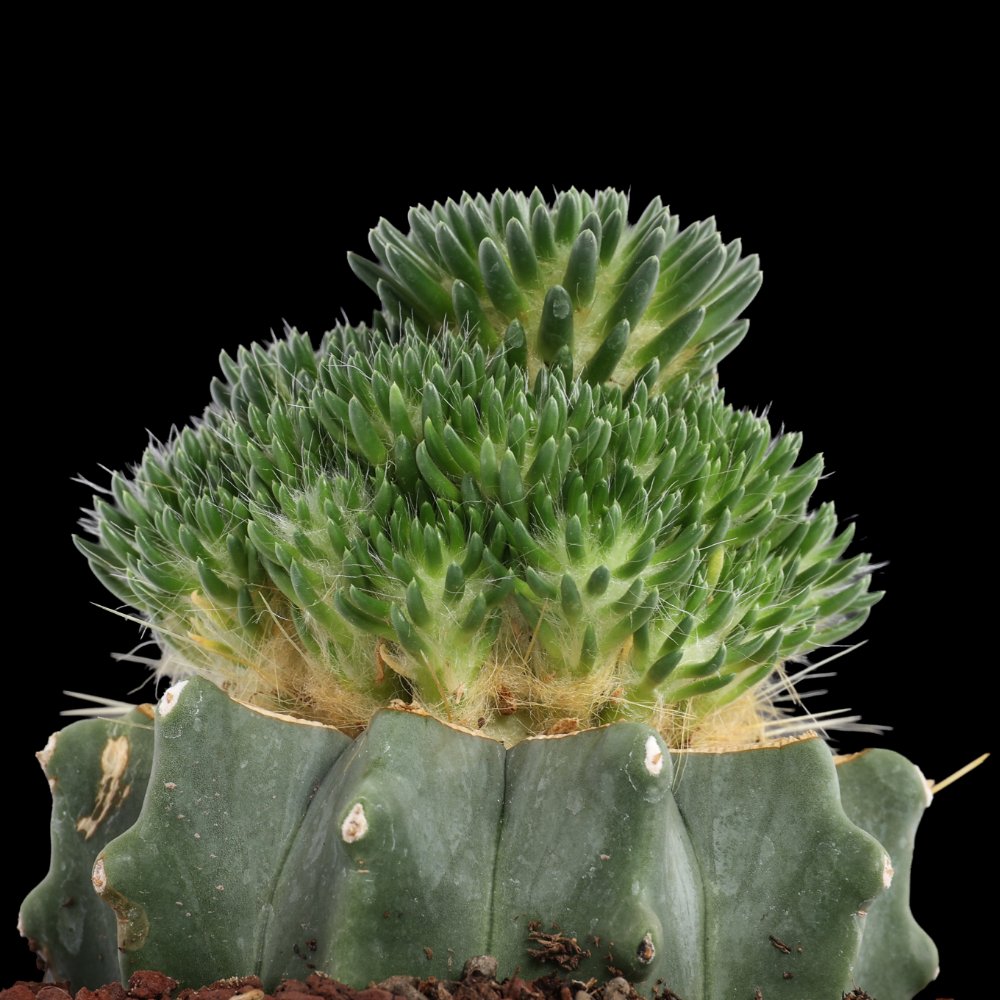

Tephrocactus malyanus Ø 10,5
A living woolly cushion from the Andes
This botanical gem from the high altitudes of the rugged Andean peaks breaks all visual conventions with its short, cylindrical stems almost entirely covered in a dense, incredible white fuzz, soft to the touch – an adaptation evolved in nature to protect against frost. Over time, it forms attractive, compact sculptural cushions. In spring and summer, the top of the plant can reward you with a display of vivid-colored flowers, creating a stunning contrast against the white woolly background.
Exposure: loves full sun or bright light. Indoors, place it in front of a south-facing window; outdoors, it enjoys direct sun hours but dislikes excessive heat buildup. Good air circulation is essential.
Watering: very sparse. In spring/summer, water only when the substrate is completely dry; in autumn/winter, reduce watering almost to zero. Be careful with humidity – the woolly coating can trap moisture and promote rot.
Soil type: must be extremely well-draining and mineral-based. Use a cactus mix with coarse sand, pumice, and lapilli, with at least 70% inorganic components. A terracotta pot with drainage holes helps ensure rapid drying.
Fertilization: from April to September, apply a specific cactus fertilizer, low in nitrogen and rich in potassium and phosphorus, diluted to half strength every 3-4 weeks. Avoid overfeeding, which could compromise stem compactness.
Flowers: in spring/summer, bright blooms (typically white, pink, or yellow) emerge from the stem tips, brilliantly contrasting with the woolly background. Flowering is encouraged by a cool, dry winter rest period.
Fun fact: the white fuzz is not just for show – in nature, it acts as thermal insulation against Andean night frosts. Moreover, this plant grows extremely slowly, taking years to form even a small cushion, making every specimen even more precious.
Spines: yes, but not easily visible. They are hidden within the dense fuzz – fine, short, flexible, light-colored spines that are not aggressive to the touch. Their presence remains a distinctive characteristic of the species.
- Tip: to enhance the contrast with the white wool, place it against a dark substrate or in a dark-colored pot.
- Caution: strictly avoid waterlogging and excessive ambient humidity.
Grafted
Code 1717
€60,00
Availability: 5 in stock